Wild cranberries: foraging for atoca in Quebec bogs
Long before cranberry farms, there was the atoca of the bogs. Two cranberry species grow wild in Quebec, and their small red fruits can be picked until late in the fall. Here is how to recognize them, where to look, which rules to follow and how to do it without damaging a fragile environment.
Only pick what you can identify with certainty, ideally with someone experienced. Some species are protected in Quebec (wild garlic, for example): check the rules before you harvest.
The big flooded fields of Centre-du-Québec make us forget one thing: the cranberry is first of all a wild plant from here. Native to North America, it grows naturally in bogs and sandy soils, Aliments du Québec points out. The word "atoca," of Iroquoian origin, is a reminder of that too. And in October, there is still time to go looking for it.
Here are the two wild species and how to recognize them, where and when to look for them, the rules to follow and the precautions to take in an environment as fragile as a bog. To cook your harvest, see our guide to cooking with fresh cranberries.
Two wild cranberries
According to the Office québécois de la langue française (OQLF), the word cranberry refers to the fruit of two species. The large cranberry (Vaccinium macrocarpon), also called "gros atoca," is the one that is farmed and dominates the trade. The small cranberry (Vaccinium oxycoccos), or bog cranberry, "petit atoca" and even "mocôques" among the old names recorded by the VASCAN botanical database, has a smaller fruit. In Europe, only the small one grows in the wild, the OQLF adds.
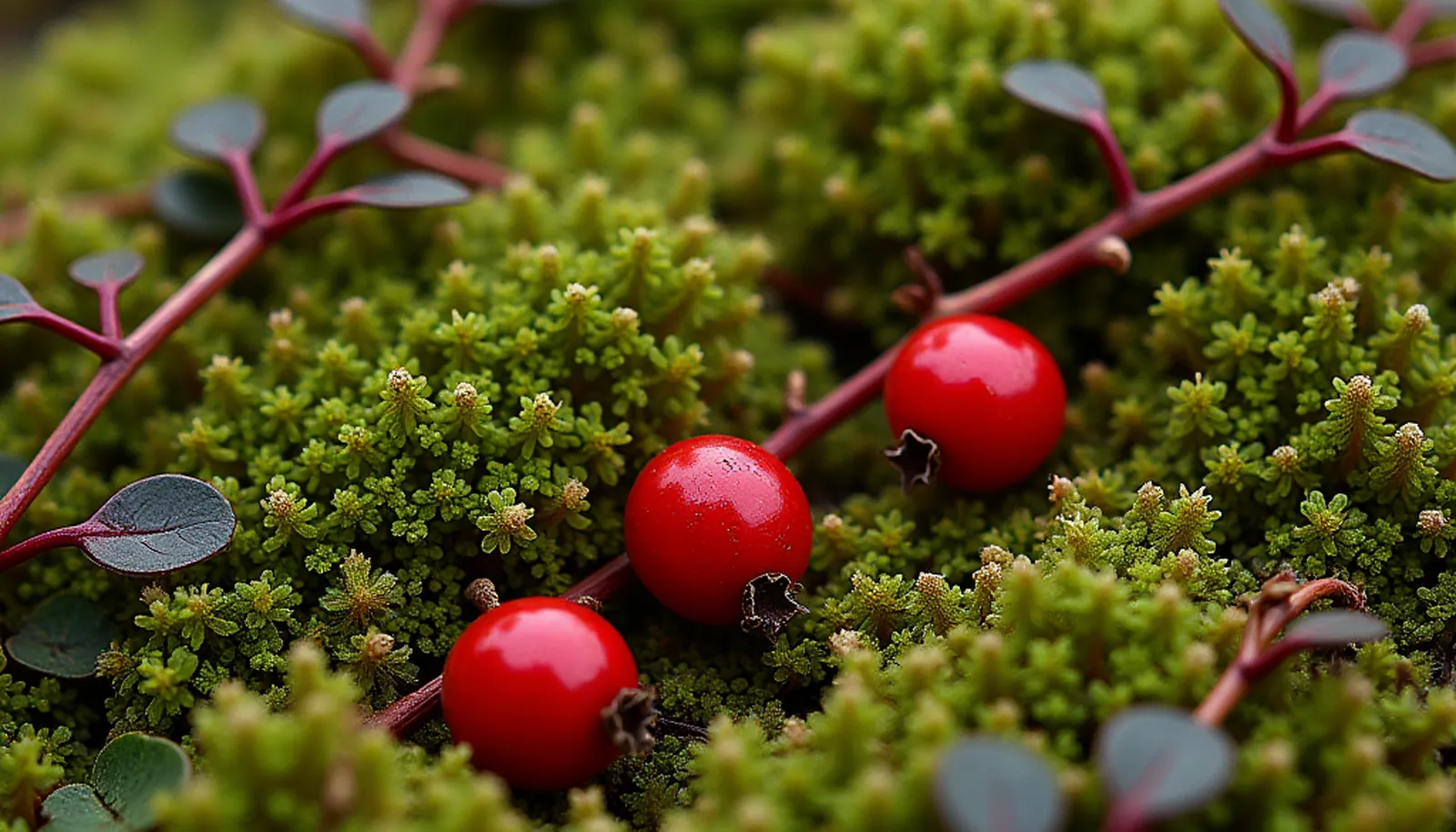
Both are tiny creeping shrubs, with thin stems and evergreen leaves that stay green all winter. You mostly notice them by their red fruits, sitting on the carpet of moss like beads.
| Feature | Small cranberry | Large cranberry |
|---|---|---|
| Leaves | 2 to 10 mm, pointed at the tip | 5 to 17 mm, rounded at the tip |
| Leaf edges | Strongly rolled under | Flat or only slightly rolled |
| Small bracts on the flower stalk | Red, 2 mm or shorter | Green, 2 mm or longer |
| Fruit | Red, smaller and drier | Red, larger, the one that is farmed |
| Habitats | Bogs, marshes, lake and river shores; the large one also on sandy shores | |
Source for the features: Go Botany, from the Native Plant Trust.
Where and when to look
The small cranberry grows mainly in sphagnum bogs, often on moss hummocks, and in the swamps of boreal and coastal forests, according to the U.S. Forest Service's FEIS database. It is widespread from one end of Canada to the other, as far as Labrador and Newfoundland. Both species grow only in wetlands, Go Botany notes: bogs, marshes and lake or river shores.
As for timing, small cranberry fruits ripen from August to October and often stay on the plants all winter, according to the same database. In Quebec, fall is the ideal season: the fruits are deep red, and the mosquitoes are gone.
Do not expect to fill buckets. The FEIS database notes that small cranberries taste good, but are seldom abundant enough to gather in large quantities. A small harvest is enough for a sauce or a jelly.
The rules: who manages the land?
Before you go, check: the right to pick depends on who manages the territory. We covered it in full in foraging in Quebec parks: what is allowed, but here is the essential for berries:
- Quebec national parks (Sépaq): picking berries is often allowed for personal consumption, in recreation zones only and without leaving the trails, according to each park's list of activities. Check it before you go.
- Canada's national parks, such as La Mauricie and Forillon: picking is prohibited, berries included.
- Ecological reserves: access itself is prohibited without authorization, under Quebec's Natural Heritage Conservation Act. Several remarkable bogs are ecological reserves.
- ZECs: picking is allowed responsibly, with mandatory registration, the Réseau Zec reminds visitors.
- Private land: always ask the owner for permission.
Picking without harming the bog, or putting yourself at risk
A bog is not a field. It forms slowly from mosses, sphagnum, which build up year after year and make the environment very acidic. A few simple habits protect it, and protect you too:
- Stay on trails and boardwalks. In developed bogs, it is often the rule. The guide to the Chute-Panet bog, in Portneuf, published by CAPSA, also warns that pools can be very deep, and recommends staying on the boardwalks to avoid accidents.
- Pick by hand, without pulling up the creeping stems: the plant is perennial, and the same stems will bear fruit next year.
- Leave some. The fruits feed a few birds, such as grouse, and small mammals, such as squirrels and hares, according to the FEIS database.
- Go with someone, with boots and a charged phone: bogs are often isolated, and the ground can be spongy.
Identify before you taste
The cranberry is fairly easy to recognize: a creeping plant with tiny evergreen leaves, red fruits hanging at the end of thin stalks, in a wet environment. But other small red fruits grow in the woods and around wetlands, and some are toxic, such as red baneberry and bittersweet nightshade. We present them in the small red fall fruits not to mix up. The golden rule of foraging applies here too: never eat a fruit you have not identified with certainty.
What to do with your harvest?
Sort the fruits at home: remove leaves, twigs and soft berries. Wild cranberries are used like farmed ones, in sauce, jelly or a dessert. They freeze as they are, spread on a tray, then bagged. You can take inspiration from our homemade cranberry sauce, our apple cranberry crisp or our cranberry orange muffins.
And to find out what else you can pick, month by month, see our Quebec foraging calendar.
Sources
- Canneberge (terminology record, in French), Office québécois de la langue française, 2015.
- Vaccinium oxycoccos, VASCAN, Canadensys.
- Vaccinium macrocarpon, VASCAN, Canadensys.
- Vaccinium oxycoccos, small cranberry, Go Botany, Native Plant Trust.
- Vaccinium macrocarpon, large cranberry, Go Botany, Native Plant Trust.
- Vaccinium oxycoccos, Robin F. Matthews, Fire Effects Information System, U.S. Forest Service, 1992.
- Canneberge (in French), Aliments du Québec / Mangez Québec.
- Chute-Panet bog self-guide (in French), CAPSA.
- Regulations in Quebec national parks (in French), Sépaq.
- National Parks General Regulations (SOR/78-213), section 10, Government of Canada.
- Natural Heritage Conservation Act (CQLR, c. C-61.01), LégisQuébec.
- Le guide de la cueillette en zec (in French), Réseau Zec.
Frequently asked questions
Which cranberries grow wild in Quebec?
Two species: the small cranberry (Vaccinium oxycoccos), also called bog cranberry or "petit atoca," and the large cranberry (Vaccinium macrocarpon), or "gros atoca," the species that is farmed. The Office québécois de la langue française notes that the cranberry is the fruit of these two species.
When should you pick wild cranberries?
Small cranberry fruits ripen from August to October and often stay on the plants all winter, according to the U.S. Forest Service's FEIS database. In Quebec, fall, from September to late October, is the most common season.
Is it allowed to pick cranberries in a national park?
In Quebec's national parks run by the Sépaq, picking berries is often allowed for personal consumption, in certain zones and without leaving the trails, according to each park's list of activities. In Canada's national parks, such as La Mauricie and Forillon, it is prohibited. In ecological reserves, access itself is prohibited without authorization.
How do you tell the small cranberry from the large one?
Look at the leaves. According to Go Botany, from the Native Plant Trust, the small cranberry has leaves 2 to 10 mm long, pointed, with edges strongly rolled under; the large cranberry has leaves 5 to 17 mm long, rounded at the tip, with flat or only slightly rolled edges. The small cranberry's fruit is also smaller.
Can wild cranberries be eaten raw?
Yes, but they are very sour, like farmed cranberries. They are most often cooked into sauce, jelly or jam. Never eat any if you are not certain of the identification.