Growing wild leek at home in Quebec: what the law really allows
In Quebec, you can't legally buy wild leek seeds or plants, and you can't dig some up in the woods to fill your garden. But if a patch already grows on your land, you can help it spread. Here's what the law says, what you can do, and what to plant instead for a garlicky taste.
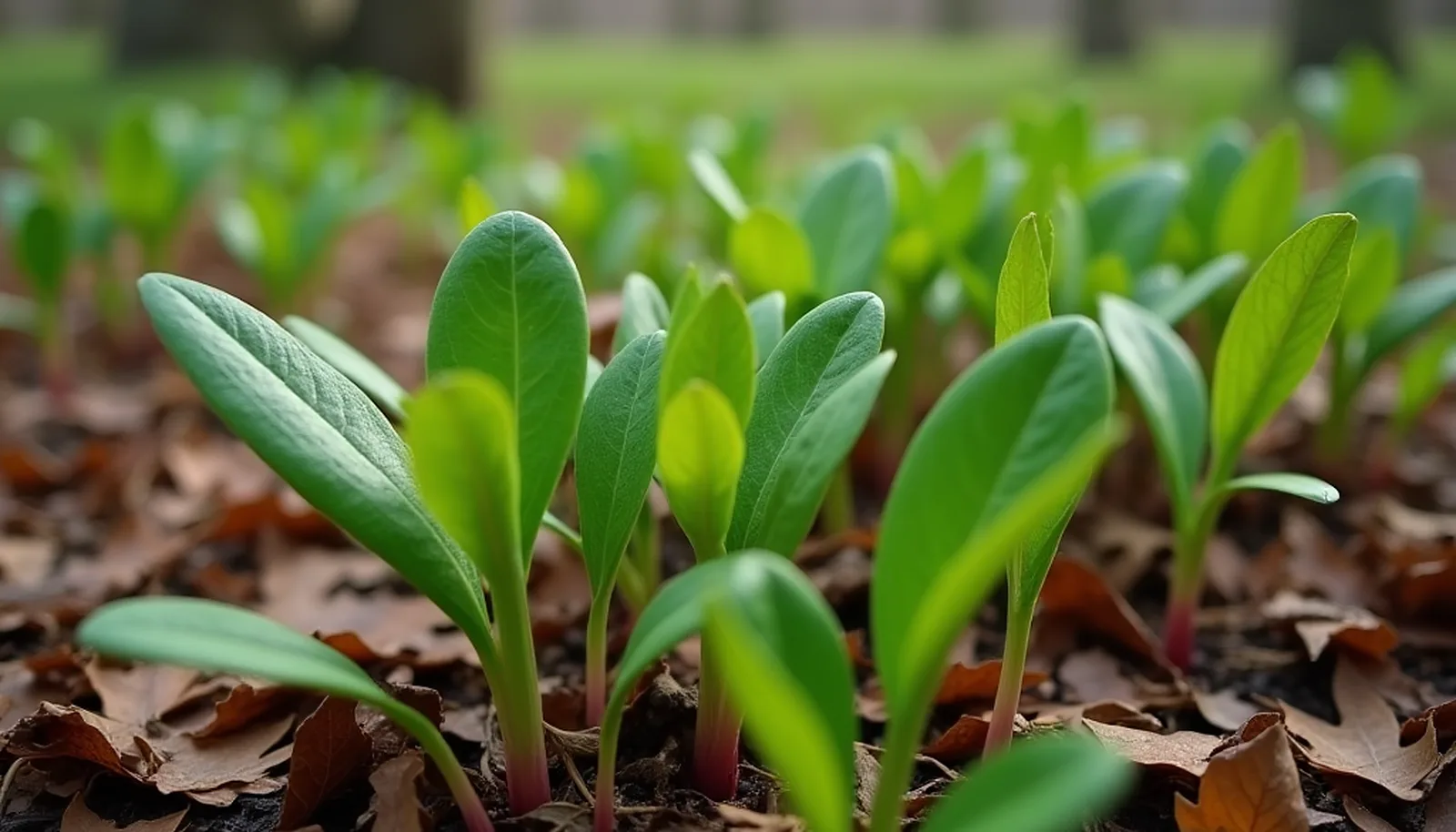
Every spring, the question comes up in foraging groups: "Can I plant some at home?" Online, most growing guides come from the United States or Ontario, where you can buy seeds or bulbs. Quebec is a different story: wild leek, also called ramps, has been designated a vulnerable species since 1995, and the law that protects it also covers seeds and cultivated plants. Here's what you can and can't do, according to the official texts.
The short answer
| You want to… | In Quebec |
|---|---|
| Buy seeds, bulbs or plants | No: all sales are prohibited, even seeds |
| Dig up plants in the woods to replant them at home | No, except to save plants that work is about to destroy, under strict conditions |
| Get seeds or plants from Ontario | The law prohibits acquiring the plant or its parts: check with the ministry first |
| Pick some for your own consumption | Yes: no more than 50 bulbs or 50 plants, or 200 g, per year, outside protected areas |
| Help a patch that already grows on your land | Yes, and it's what helps it most |
| Grow wild leek to sell it | No: selling it has been prohibited since 1995 |
What the law says
For a plant designated as vulnerable, like wild leek, Quebec's Act respecting threatened or vulnerable species prohibits, among other things, possessing it outside its natural environment, harvesting it, transplanting it, acquiring it or transferring it. The ban covers the whole plant or any of its parts, including any part "derived from reproduction." Seeds and plants grown from seed are therefore protected just like wild leek in the wild.
The regulation provides one exception for individuals: you can possess or pick wild leek for your own consumption, up to 200 g of any part of the plant, or 50 bulbs or 50 plants, per year. The exception does not apply in Quebec national parks, protected areas, wildlife refuges, regional parks on public land and some of Montreal's large parks, such as Mount Royal Park. It doesn't cover buying, selling or giving it away.
The fines are steep. For an individual, an activity prohibited by the Act costs $10,000 to $1,000,000, and administrative penalties of $2,000 to $10,000 can also apply. In May 2026, wildlife protection officers had issued tickets to 26 people who had exceeded the possession limits, according to The Canadian Press. And these rules apply everywhere, on public land as well as on your own property.
Why you can't find seeds or plants for sale
Because all sales of wild leek are prohibited in Quebec, including seeds. "Since it's impossible to obtain seeds legally, a black market has developed," Sam Chaib, of the Association pour la commercialisation des produits forestiers non-ligneux, a non-timber forest products association, told La Gazette de la Mauricie in 2023.
Seeds found online often hold surprises. According to The Canadian Press, most turn out to be chive seeds, others are bear's garlic, the Eurasian cousin of wild leek, and the ones that really are wild leek most likely come from the black market. In 2020, the Jardinier paresseux gardening blog had also spotted listings that were actually selling garlic bulbils.
What if I get seeds from Ontario?
In Ontario, no law governs wild leek: growers cultivate it and are allowed to sell it, and some Quebec restaurants buy from them, according to The Canadian Press. In Quebec, however, the law prohibits acquiring the plant or its parts, and the exception for individuals only covers picking and possessing it for your own consumption. We found no official page dealing with seeds or plants bought outside Quebec and planted here. Before ordering any, ask Quebec's environment ministry, at 1-800-561-1616.
A patch grows on your land? Here's how to help it
That's the best possible situation: a well-treated patch spreads on its own, slowly, through its bulbs and its seeds. You have nothing to buy or dig up. Here's what helps it.
- Keep the forest. Wild leek grows in forests dominated by sugar maple, on mid-slopes, at the foot of slopes and along streams. Its leaves come up early in spring, before the trees leaf out, then disappear in early summer. The Quebec government lists the total or substantial removal of the forest canopy among the main threats to the species.
- Keep machinery away. In a study in Outaouais sugar maple stands, a light cut of about 30% of the canopy did not change plant density. The researchers still recommend locating patches before laying out trails and roads. They consider work on frozen ground less risky and, in summer or fall, when the ground is likely to rut, they advise against any machinery within 60 m of a patch: altered drainage could seriously harm it.
- Leave the fallen leaves. Leaf litter keeps the soil moist, and wild leek doesn't handle drought well. Don't rake the understory.
- Don't trample the patch. Route your path around it.
- Let it flower and go to seed. It flowers in late June and July, after the leaves have already disappeared. Each capsule holds one to three shiny black seeds. Let them fall where they are: that's how the patch spreads.
- Be patient. The seeds have a double dormancy: they need a warm period, then a cold period, before coming up. The first year, a seed often grows only a root, and the first leaf comes up the second spring, sometimes the third. In the forest, it then takes 7 to 10 years from germination to the first flowers.
How much to pick without exhausting the patch
The law sets a maximum, not a target. For a patch that lasts, the recommendations go further.
- Take leaves, not bulbs. One leaf per plant is enough, and the bulb stays in the ground to grow back next year.
- Take little. In a study in southern Quebec, simulated harvests of only 5 to 15% of the plants were enough to send a population into decline. The wild leek fact sheet from the Fédération des producteurs forestiers du Québec, the province's private woodlot owners' federation, advises never taking more than 5% of the plants in a patch and avoiding patches of fewer than 1,000 plants.
- Leave the biggest plants. They're the ones that keep the patch growing.
- Report poaching. If you see someone filling bags with wild leek, call SOS Braconnage at 1-800-463-2191.
Before you pick, make sure you identify the plant correctly. Wild leek leaves smell and taste of garlic, unlike those of bluebead lily and trout lily, which look similar. False hellebore, a very toxic plant, is often mistaken for wild leek, warns the Centre antipoison du Québec. Our guide to wild leek's toxic look-alikes shows you how to tell them apart. When in doubt, don't pick. If someone swallows something, call the Centre antipoison du Québec at 1-800-463-5060.
A patch threatened by work: rescue transplanting
The regulation allows transplanting wild leek in one case only: when the plants would otherwise be destroyed by an activity carried out on their site under the Environment Quality Act, such as infrastructure work. All of these conditions then apply:
- transplant between April 15 and June 15;
- work by hand;
- choose a receiving site with conditions that favour the plants' survival;
- have the work supervised by someone qualified in biology, ecology, forestry, horticulture or landscaping, for 500 plants or more;
- send an activity report to the ministry within 30 days.
The ministry strongly encourages transplanting the plants close by, in the same habitat, in moist, well-drained soil rich in organic matter, away from passers-by. It recommends lifting them in clumps, with their soil, replanting them the same day and setting the top of the bulb at ground level: planted too deep, it struggles to come up. Wild leek is an understory plant, and a flower bed in full sun won't suit it. And if the plants are on someone else's land, ask permission first.
If growing it is allowed one day
Amateur growers, researchers and the industry have been asking for years to be allowed to grow wild leek for sale. In 2021, the Association pour la commercialisation des produits forestiers non-ligneux filed a request to that effect. Professor Line Lapointe, of Université Laval, argues for a regulated trade, with a registry of growers, traceability and, if needed, quotas. Selling seeds often comes up as a compromise: botanist Andrée Nault considers it possible, as long as existing patches are respected.
In July 2026, Quebec's environment ministry was not considering any regulatory change, while saying it remained open to discussion. It has also argued that one cannot assume such a trade would necessarily have a positive effect.
Research does show that wild leek grows well under a forest canopy. At Université Laval, Line Lapointe's team transplanted 3,200 plants, many of them seized from poachers, into four sugar maple stands in the Oka area. The plants established well, fertilizers allowed in organic farming increased leaf and bulb growth, and yields were better at 44 plants per square metre or fewer, while natural patches can be six times denser. According to the team, commercial cultivation would have to rely on seeds: each plant produces 5 to 25 a year. And under cultivation, some growers see plants flower and start dividing after about four years, compared with seven to ten years in the forest.
A garlicky taste in the garden, within the law
- Garlic, simply. Now is the time: in Quebec, you plant it in October. In June, you cut the scapes of hardneck garlic, which are delicious sautéed, grilled or in pesto. It's all in our guide to planting garlic in October and our article on growing garlic in Quebec.
- Garlic chives. Also called Chinese chives (Allium tuberosum), they have flat leaves with a stronger taste than chives. According to the Montreal Botanical Garden, the leaves and flowers make a nice substitute for garlic as a seasoning. This perennial grows in sun or part shade, but it's less hardy than common chives. Sow it indoors in March or in the garden in May.
And in spring, if you pick wild leek in the woods, follow our guide to picking wild leek in Quebec, see our Quebec foraging calendar to know what to pick and when, and our guide to foraging in Quebec parks to know where it's allowed.
Sources
- Loi sur les espèces menacées ou vulnérables (CQLR, c. E-12.01) (in French), LégisQuébec, 2026.
- Règlement sur les espèces floristiques menacées ou vulnérables et leurs habitats (CQLR, c. E-12.01, r. 3) (in French), LégisQuébec, 2026.
- Ail des bois (in French), Government of Quebec, 2026.
- Bonnes pratiques de transplantation de l'ail des bois (in French), Quebec Ministry of the Environment.
- Québec veut mieux protéger l'ail des bois (in French), Office of Quebec's environment minister, 2023.
- Des citoyens souhaitent pouvoir un jour mettre en marché un ail des bois cultivé (in French), The Canadian Press, 2026.
- Cultiver l'ail des bois pour en assurer la sauvegarde (in French), La Gazette de la Mauricie, 2023.
- Cultiver l'ail des bois dans le but de le protéger (in French), Radio-Canada, La semaine verte.
- La culture au secours de la nature (in French), ULaval nouvelles, 2014.
- Nault and Gagnon, Ramet demography of Allium tricoccum, a spring ephemeral, perennial forest herb, Journal of Ecology, 1993.
- Delagrange, Blanchet and Riopel, Évaluation de la sensibilité de l'ail des bois à la coupe de jardinage (in French), ISFORT and Nova Sylva, 2013.
- Jean Arsenault, Les cultures sous couvert forestier : le cas de l'ail des bois (in French), 2018.
- Semences d'ail des bois (in French), Jardinier paresseux, 2020.
- Dans le jardin de mère Nature : l'ail des bois (in French), Jardinier paresseux, 2023.
- Fiche ail des bois (in French), Fédération des producteurs forestiers du Québec.
- Ramps Cultivation & Growing Guide, United Plant Savers, 2022.
- Plantes et champignons toxiques du Québec (in French), Centre antipoison du Québec, 2022.
- Ciboulette chinoise (in French), Espace pour la vie, Montreal Botanical Garden.
Frequently asked questions
Can you buy wild leek seeds in Quebec?
No. Selling wild leek has been prohibited in Quebec since 1995, and that includes seeds and plants. Seeds sold online often turn out to be chives or bear's garlic, and the ones that really are wild leek most likely come from the black market.
Can you transplant wild leek into your garden?
Only to save plants that work is about to destroy: between April 15 and June 15, by hand, to a site where they can survive, with an activity report sent to the environment ministry within 30 days. Digging up plants in the woods to fill your garden is prohibited.
How long does wild leek take to grow?
A long time. In the forest, it takes 7 to 10 years from the germination of a seed to the first flowers. Under cultivation, some growers see plants flower and start dividing after about four years.
Does the wild leek growing on my land belong to me?
You can pick some for your own consumption, no more than 50 bulbs or 50 plants, or 200 g, per year, like anywhere else. The law also applies on private land: you can't sell it, give it away or transplant it elsewhere, except to save plants threatened by work.
What can I plant for a garlicky taste in the garden?
Garlic, which you plant in October and whose scapes you cook in June, and garlic chives, whose leaves and flowers make a nice substitute for garlic as a seasoning, according to the Montreal Botanical Garden.