Picking wild leek in Quebec: when, where, how much and how
Wild leek is one of the first edible plants of spring in Quebec, and one of the most protected. Here's when to pick it, where it's prohibited, how much the law allows and how to take some without exhausting the patches.
Only pick what you can identify with certainty, ideally with someone experienced. Some species are protected in Quebec (wild garlic, for example): check the rules before you harvest.
In spring, before the maples even leaf out, the forest floor turns green: it's wild leek season. Its mild garlic taste has made it a star of Quebec tables, and that's exactly what put it in danger. Wild leek, also called ramps, has been designated a vulnerable species in Quebec since 1995, and picking it is regulated by law. Here's how to enjoy it without breaking the rules or exhausting the patches.
At a glance
| Question | Answer |
|---|---|
| When? | From late April to May, in southern Quebec |
| Where? | In rich, moist maple forests, on land where you have permission |
| How much? | No more than 200 g, or 50 bulbs or 50 plants, per person per year |
| How? | One leaf per plant, cut with a knife: the bulb stays in the ground |
| Prohibited | Selling, picking to sell, picking in parks and protected areas |
When to pick it
Wild leek is a spring ephemeral: its leaves make the most of the light before the trees leaf out. In southern Quebec, they come up around the end of April and are completely gone by the end of June. The right time for the leaves is therefore late April to May. Farther north, at higher elevations or in the east, allow a delay of one to three weeks, and a warm or cold spring can move everything earlier or later.
The plant flowers in late June and July, once its leaves have disappeared. That's the time to leave it alone: its seeds are the next generation of the patch.
Where to find it, and where it's prohibited
Wild leek grows in forests dominated by sugar maple, on mid-slopes, at the foot of slopes and along streams, in rich, moist, well-drained soils. It has been observed at more than 500 sites in Quebec, mostly in the southern part of the province.
On private land, always ask the owner's permission. And some places are off limits, no matter the quantity:
- Quebec national parks, protected areas and wildlife refuges;
- regional parks on public land;
- some of Montreal's large parks, such as Mount Royal Park and Bois-de-Liesse Park;
- Parks Canada national parks and Gatineau Park, where you pick nothing. In the spring of 2021, the National Capital Commission seized 7,000 wild leek bulbs there.
About a hundred of the known wild leek sites lie entirely or partly in protected areas. For the rules on each type of land, see our guide to foraging in Quebec parks.
How much the law allows
For your own consumption, you can pick and possess no more than 200 g of any part of the plant, or 50 bulbs or 50 plants, per year. The limit applies per person, on public land as well as on private property. Selling wild leek and picking it to sell have been prohibited since 1995.
The fines are steep: for an individual, an activity prohibited by the Act costs $10,000 to $1,000,000, and administrative penalties of $2,000 to $10,000 can also apply. In May 2026, wildlife protection officers had issued tickets to 26 people who had exceeded the possession limits, according to The Canadian Press.
How to pick without exhausting the patch
The law sets a maximum, not a target. Wild leek grows very slowly: in the forest, it takes 7 to 10 years from the germination of a seed to the first flowers. A patch therefore recovers poorly when too much is taken. In a study in southern Quebec, simulated harvests of only 5 to 15% of the plants were enough to send a population into decline.
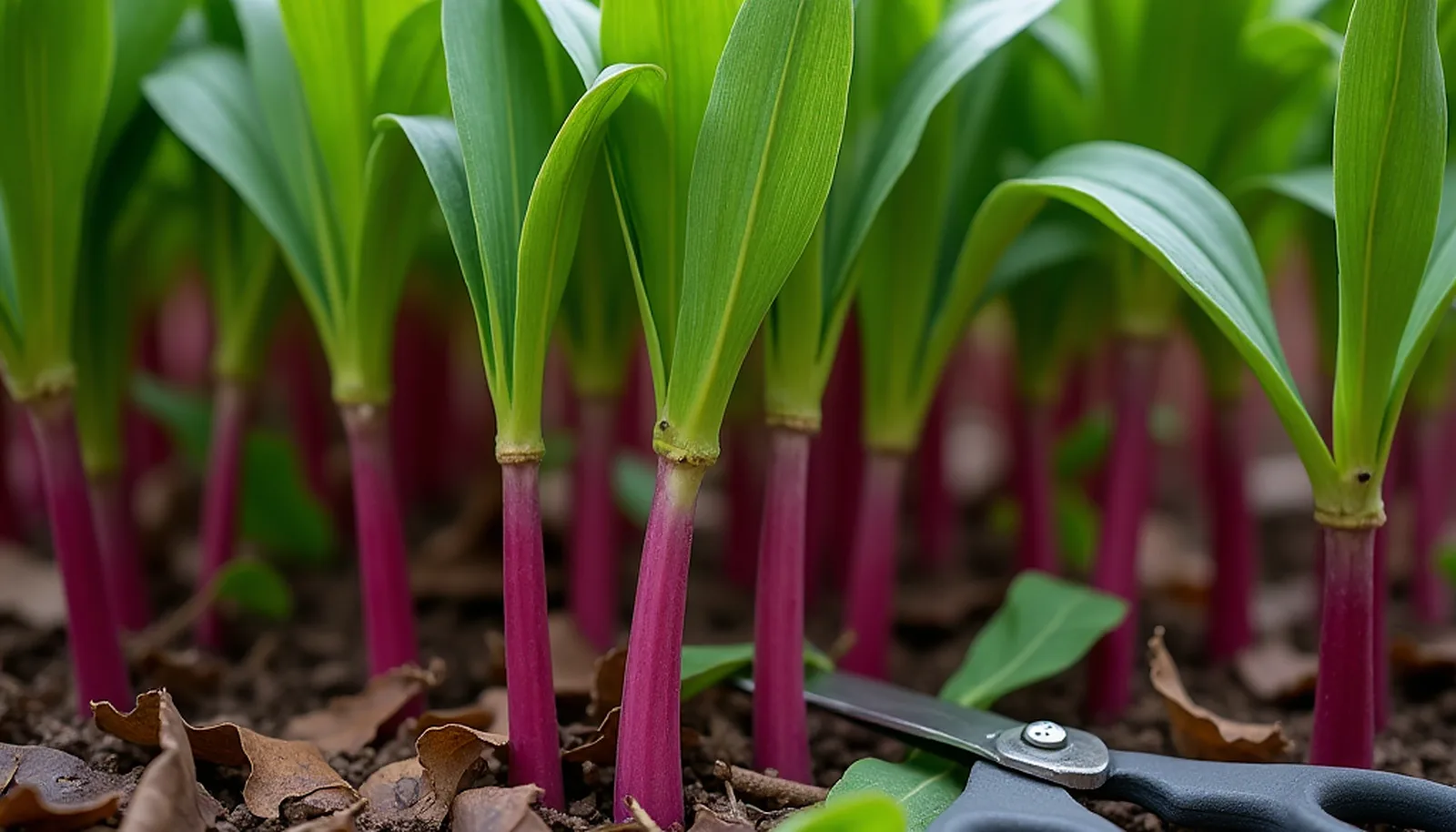
- Take leaves, not bulbs. One leaf per plant is enough. Cut it with a knife or scissors, above the ground: the bulb stays in the soil and grows back next year.
- Take little. The wild leek fact sheet from the Fédération des producteurs forestiers du Québec, the province's private woodlot owners' federation, advises never taking more than 5% of the plants in a patch and avoiding patches of fewer than 1,000 plants.
- Leave the biggest plants. They're the ones that keep the patch growing.
- Don't trample. Walk beside the patch rather than through it.
- Take only what you'll eat. A small handful of leaves is enough for a jar of pesto.
Identifying it correctly
Wild leek has one to three smooth, lance-shaped leaves, 10 to 30 cm long and 2 to 8 cm wide. They rise straight from the ground, and their stalk is greenish or reddish purple. Above all, they smell and taste of garlic when you crush them.
Several plants look like it. Bluebead lily and trout lily don't smell of garlic. False hellebore, a very toxic plant, is often mistaken for wild leek, warns the Centre antipoison du Québec: its pleated leaves grow along a stalk, in wet areas. Lily of the valley, which escapes from gardens, is toxic too. Our guide to wild leek's toxic look-alikes shows you how to tell them apart.
The smell test has a catch: the garlic smell stays on your fingers and can make you think a toxic plant smells of garlic. Crush each leaf, one at a time, never pick by the handful and wash your hands if a plant doesn't smell of anything. When in doubt, don't pick. If someone swallows something, call the Centre antipoison du Québec at 1-800-463-5060.
What to do with your harvest
The leaves are eaten raw or cooked: as pesto, sautéed or in a compound butter. Our wild leek pesto recipe also explains how to store it safely. A word of caution: an oil flavoured with wild leek kept at room temperature can grow the bacteria that cause botulism. Keep your preparations in oil in the fridge, or freeze them.
See poaching?
Someone filling bags with wild leek, or selling it by the roadside? Report it to SOS Braconnage, at 1-800-463-2191. Wildlife protection officers handle offences involving threatened or vulnerable plant species.
And if you dream of growing some, first read what the law allows for growing wild leek at home. To know what to pick the rest of the year, our Quebec foraging calendar follows you month by month.
Sources
- Ail des bois (in French), Government of Quebec, 2026.
- Règlement sur les espèces floristiques menacées ou vulnérables et leurs habitats (CQLR, c. E-12.01, r. 3) (in French), LégisQuébec, 2026.
- Loi sur les espèces menacées ou vulnérables (CQLR, c. E-12.01) (in French), LégisQuébec, 2026.
- Québec veut mieux protéger l'ail des bois (in French), Office of Quebec's environment minister, 2023.
- Des citoyens souhaitent pouvoir un jour mettre en marché un ail des bois cultivé (in French), The Canadian Press, 2026.
- Les effets de la cueillette dans la capitale (in French), National Capital Commission.
- Fiche ail des bois (in French), Fédération des producteurs forestiers du Québec.
- Nault and Gagnon, Ramet demography of Allium tricoccum, a spring ephemeral, perennial forest herb, Journal of Ecology, 1993.
- Dans le jardin de mère Nature : l'ail des bois (in French), Jardinier paresseux, 2023.
- Plantes et champignons toxiques du Québec (in French), Centre antipoison du Québec, 2022.
- State officials warn Vermonters about false hellebore, Vermont Department of Health, 2021.
- Odour test with pitfalls: what to look out for when collecting wild garlic, German Federal Institute for Risk Assessment (BfR), 2025.
- Confusion entre colchique et ail des ours (in French), Anses, 2025.
- Prevention of botulism, Public Health Agency of Canada, 2020.
Frequently asked questions
When do you pick wild leek in Quebec?
From late April to May in southern Quebec. The leaves come up around the end of April and are completely gone by the end of June. Farther north, at higher elevations or in the east, allow a delay of one to three weeks.
How much wild leek can you pick?
For your own consumption, no more than 200 g of any part of the plant, or 50 bulbs or 50 plants, per person per year. Selling it and picking it to sell have been prohibited since 1995.
Can you pick wild leek in a park?
No. Picking is prohibited in Quebec national parks, protected areas, wildlife refuges, regional parks on public land and some of Montreal's large parks. It's also prohibited in Parks Canada parks and in Gatineau Park.
Should you take the bulb or the leaves?
The leaves. One leaf per plant is enough, and the bulb stays in the ground to grow back next year. Pulling up the bulb kills the plant, and a wild leek takes 7 to 10 years to flower for the first time.
How can you be sure it's wild leek?
Its leaves smell of garlic when you crush them, unlike its look-alikes, including false hellebore, which is very toxic. Do the test on every leaf and wash your hands between plants: the smell left on your fingers can fool you. When in doubt, don't pick.