Heat pumps in Quebec in 2026: LogisVert rebate, costs and choosing an installer
In 2026, Hydro-Québec pays $120 per 1,000 BTU/h of heating capacity at -8°C for an ENERGY STAR "cold climate" heat pump, or about $2,400 for a 2-ton wall-mounted unit. Yet several well-known programs are closed, and the federal rebate announced on October 8 is not open yet. Here are the real amounts, a full calculation, the savings you can honestly expect and how to choose your installer.
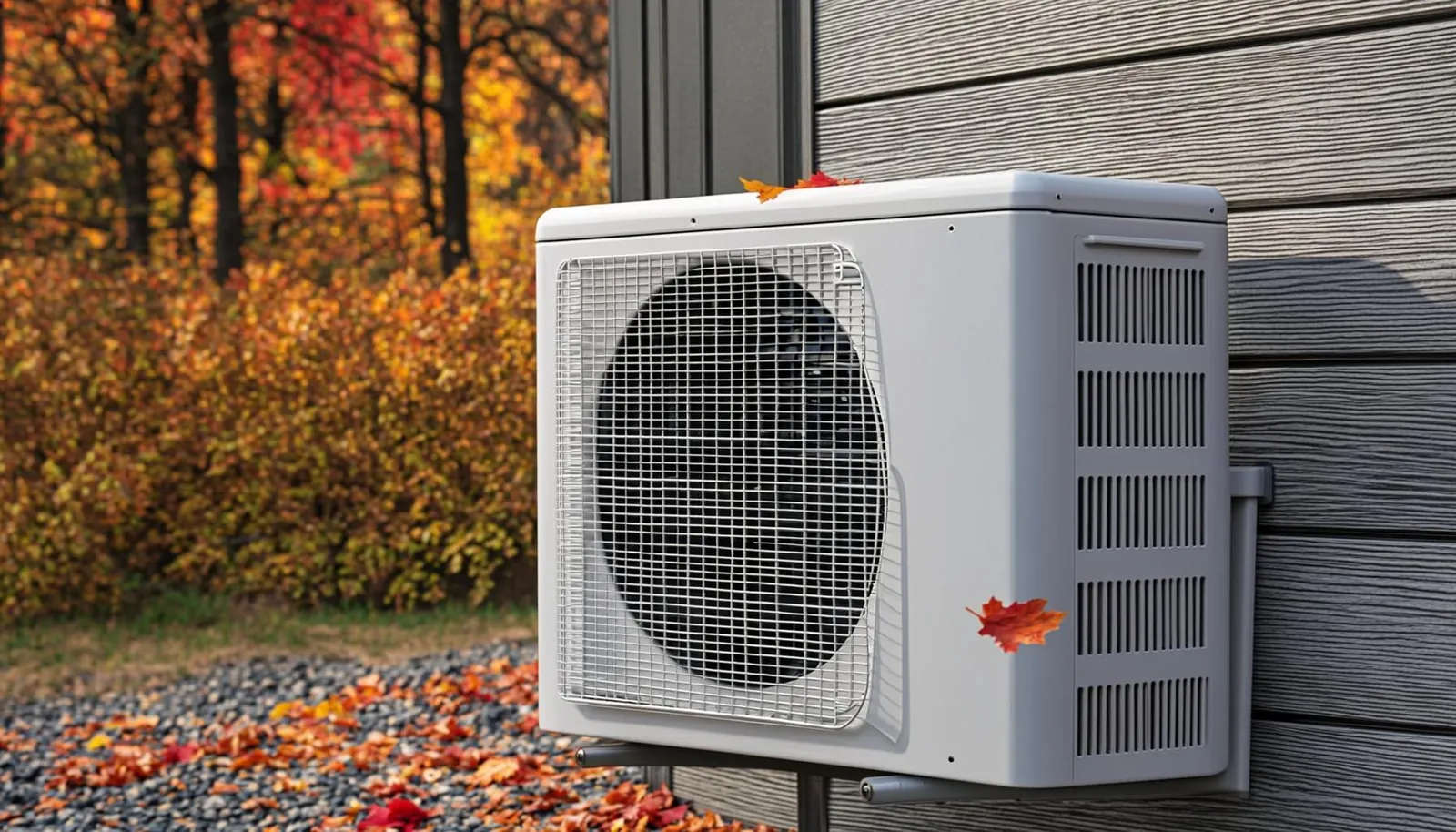
Financial help for installing a heat pump changed a lot in 2026: the federal oil-to-heat-pump program is closed in Quebec, the free heat pump for modest-income households is no longer taking registrations this season, Rénoclimat no longer funds heating systems, and the federal rebate announced on October 8 is not open yet. The grant that remains open to all homeowners is the one from LogisVert, Hydro-Québec's program, calculated on the unit's heating capacity at -8°C.
Here is what you need to know before you buy, backed by official figures from October 2026; amounts are before taxes. For your quotes, our directory of heat pump installers in Quebec lists companies region by region.
Wall-mounted, multi-zone, central or geothermal: what each type really heats
A heat pump does not turn electricity into heat the way a baseboard heater does: it uses electricity to pump heat from outdoors to indoors in winter, and the other way around in summer to cool the house.
- Wall-mounted (mini-split): one indoor unit mounted on the wall, connected to an outdoor unit. According to Natural Resources Canada (NRCan), these ductless units heat the space where they are installed directly. A closed bedroom at the end of the hallway therefore still depends on its supplementary heating, often baseboards.
- Multi-zone: a single outdoor unit serves several indoor units, one per zone.
- Central (ducted split system): the coil sits in the ductwork, which distributes air throughout the house. NRCan notes that a heat pump delivers more air, but at a lower temperature (25 to 45°C, compared with 55 to 60°C for a furnace), which may require changes to the ducts.
- Geothermal (ground-source): it draws heat from the ground through a buried loop and distributes it through ducts or a hot-water system. Since the ground stays warmer than the air, it keeps a coefficient of performance of about 3 in the depths of winter, according to NRCan.
An air-source heat pump does not make supplementary heating disappear: most recent models stop working somewhere between -15 and -25°C, NRCan points out, and the backup system then carries the whole load. If the backup is an oil or gas furnace, the two do not run at the same time.
| Type | What it heats | LogisVert grant (October 2026) | Published cost | Life expectancy (NRCan) |
|---|---|---|---|---|
| Wall-mounted (mini-split) | The room or open area where it is installed | $50 or $120 (cold climate) per 1,000 BTU/h at -8°C | Not published | 15 to 20 years |
| Multi-zone | One zone per indoor unit | Same rates, based on the system's capacity | Not published | 15 to 20 years |
| Central (ducted) | The whole house, through the ducts | Same rates; $22,000 with an electric thermal storage system installed by an authorized company | About $15,000 (federal government's Quebec example, 2026) | 15 to 20 years |
| Geothermal | The whole house, through ducts or hot water | $750 per 1,000 BTU/h (purchase and installation); $250 to replace an end-of-life unit | Varies with the site | 20 to 25 years; loop: close to 75 years |
"Cold climate" and capacity at -8°C: what makes the amount vary
In cold weather, an air-source heat pump loses capacity and efficiency. According to NRCan, its coefficient of performance (the kWh of heat delivered per kWh of electricity) typically ranges from 2.0 to 5.4 at 8°C, but from 1.1 to 3.7 at -8°C. For LogisVert, the capacity that counts is therefore not the model's nominal capacity, measured in cooling mode, but its heating capacity at -8°C: in Hydro-Québec's list, that is the capacity measured at 17°F (-8.3°C).
The gap is significant. In the list in effect on October 16, 2026, a "cold climate" unit rated at 24,000 BTU/h (2 tons) delivers a median 20,000 BTU/h at -8°C, or 83% of its nominal capacity. A regular ENERGY STAR unit of the same size delivers only a median 14,900, or 62%.
The ENERGY STAR "cold climate" designation rests on specific tests: at -15°C, the unit must deliver at least 1.75 kWh of heat per kWh of electricity and keep at least 70% of the capacity measured at 8.3°C, in addition to reaching a seasonal efficiency (HSPF2) of at least 8.5 without ducts or 8.1 with ducts.
The result: a cold-climate unit brings in $120 per 1,000 BTU/h at -8°C instead of $50, and leaves less work for the baseboards. Before you sign, ask for the AHRI number of the proposed combination and look it up in Hydro-Québec's search tool: you will see the capacity at -8°C, the cold-climate designation and the grant amount.
LogisVert in detail: amounts, conditions and process
What follows comes from the LogisVert participant's guide (version 1.10, September 15, 2026) and the program page, both consulted on October 16, 2026. Hydro-Québec can change the program at any time, and the amount is the one in effect on the installation date.
The amounts
- ENERGY STAR heat pump: $50 per 1,000 BTU/h at -8°C, or $120 if it is a cold-climate model.
- Multiple measures: 5% more on the total if the same application includes at least two eligible measures, for example a heat pump and solar panels ($1,000 per kW) or an induction range ($250).
- Multi-unit buildings: $100 more per 1,000 BTU/h, or $220 in total, for a cold-climate wall-mounted heat pump installed since June 15, 2026, in an eligible rental building (built in 1995 or earlier, in an area designated "energy insecure" by Hydro-Québec, heated mainly with electricity, one meter per unit, property value per unit below the regional median). It cannot be combined with the 5% bonus.
- Replacing an end-of-life geothermal heat pump: $250 per 1,000 BTU/h, up to $18,000 per house (the equivalent of 72,000 BTU/h).
- Central system to replace: the program page also announces $750 per 1,000 BTU/h for a new geothermal heat pump and $22,000 for an electric thermal storage system combined with a central heat pump, deducted directly from the installer's invoice. The guide does not detail these offers: get the conditions in writing.
Hydro-Québec advertises "up to $6,700," but that ceiling does not appear in the guide, which only limits the grant to 100% of the cost before taxes. At the cold-climate rate, $6,700 corresponds to about 55,800 BTU/h at -8°C (6,700 ÷ 120 × 1,000), a capacity that fewer than 1% of the cold-climate combinations on the list reach.
The conditions
- The applicant: the owner. Tenants are only eligible for the induction range and the heat pump dryer.
- The home: house, condo, plex or building (above 19 units, a unit with its own meter), in Quebec, habitable year-round and supplied by Hydro-Québec, a municipal or cooperative system, or an off-grid system. Off-grid, a heat pump that replaces or is added to a fuel-fired heating system is excluded.
- The equipment: a complete, new central or wall-mounted system, ENERGY STAR certified (mandatory since November 26, 2025), with an outdoor unit rated at least 12,000 BTU/h, bought in a Quebec store or from an online business with a Quebec address.
- The company: listed with the Registraire des entreprises, holding the appropriate licences from the Régie du bâtiment du Québec (RBQ) and a member of the professional body for its sector.
- Exclusions: indoor units or ducts outside the insulated envelope (in the attic, for example), replacing a single coil or a single unit, replacements covered by a warranty or insurance, and a central heat pump in a home that already has a geothermal system.
The process and timelines
- Before you buy, check the model in Hydro-Québec's search tool, using its AHRI or ENERGY STAR number.
- During installation, have a photo taken of the outdoor unit's nameplate, with the model and serial numbers legible.
- Insist on a paid invoice showing, among other things, the installation date, the company's GST, QST and RBQ licence numbers, the AHRI or ENERGY STAR number and the cost. Also keep your proof of ownership (municipal tax bill or deed of sale).
- Within nine months of installation, apply on the LogisVert portal; applications sent by email or mail are not processed. If you group several measures, the nine months start with the first one installed.
- Hydro-Québec lets you know within about 20 business days if your application is incomplete. Processing takes 10 to 12 weeks from a complete application, then the cheque arrives by mail. A verification visit is possible within six months.
Hydro-Québec never does telephone or door-to-door solicitation for LogisVert: anyone who calls "on its behalf" to sell you a heat pump is probably running a fraud.
Sample calculation: a 2-ton wall-mounted unit, then a 3-ton system
Take a cold-climate ENERGY STAR wall-mounted heat pump rated at 24,000 BTU/h, with the median capacity on Hydro-Québec's list for that size: 20,000 BTU/h at -8°C.
- Capacity at -8°C in thousands of BTU/h: 20,000 ÷ 1,000 = 20.
- Grant: 20 × $120 = $2,400.
- With an induction range in the same application: $2,400 + $250 = $2,650, plus 5% ($132.50), for a total of $2,782.50.
- Ceiling: if the invoice before taxes were below $2,400, the grant would be reduced to that cost.
| Unit (list of October 16, 2026) | Median capacity at -8°C | Calculation | Grant |
|---|---|---|---|
| 24,000 BTU/h, cold climate | 20,000 BTU/h | 20 × $120 | $2,400 |
| 24,000 BTU/h, regular ENERGY STAR | 14,900 BTU/h | 14.9 × $50 | $745 |
| 36,000 BTU/h (3 tons), cold climate | 31,000 BTU/h | 31 × $120 | $3,720 |
| 36,000 BTU/h (3 tons), regular ENERGY STAR | 22,400 BTU/h | 22.4 × $50 | $1,120 |
| 24,000 BTU/h cold-climate wall unit, multi-unit bonus | 20,000 BTU/h | 20 × $220 | $4,400 |
For the same size, the cold-climate version brings in more than three times as much: the rate is higher and the capacity at -8°C is greater. Even among cold-climate models, the gap matters: the most powerful 24,000 BTU/h cold-climate unit on the list delivers 32,000 BTU/h at -8°C, or $3,840 (32 × $120). So compare the capacity at -8°C in your quotes.
Other financial help in October 2026: open, closed or announced
Statuses checked on the official pages:
| Program | What it offers | Status on October 16, 2026 |
|---|---|---|
| No-cost heat pump for modest-income households (a LogisVert component) | Cold-climate wall-mounted heat pump supplied and installed for free, after an Éconologis visit done after September 30, 2025 | Registration closed for the 2026-2027 season |
| Rénoclimat (Quebec), new version | Insulation, windows, permanent battery (up to $4,000), energy evaluation | In force since October 1, 2026 (the application portal is due to open this fall), with no heating equipment among eligible work |
| Federal heat pump rebate | $2,000, up to $10,000 for below-median-income households; online application approved within 24 hours, no energy audit | Announced October 8, 2026; portal "accessible by January"; details not yet known |
| Oil to Heat Pump Affordability program (federal) | Median- or lower-income homeowners heating with oil | Closed in Quebec (deadline: July 31, 2026) |
| Canada Greener Homes Grant and Loan | Energy-efficient renovations | Closed |
Will LogisVert and the federal rebate stack? Impossible to say today. The Prime Minister adds the two together and counts on "the Hydro-Québec rebate of about $3,000." Yet when you accept LogisVert, you agree not to file any other government grant application for the same equipment, and to repay if you receive one. Hydro-Québec only says that the details of the federal offers, expected starting in 2027, are not known. The speech says nothing about retroactivity either. If your heating has to be replaced now, do the math with LogisVert alone.
Rénoclimat no longer pays for heat pumps, but it helps with insulation and, new this year, with a permanent battery: see our guide to home batteries in Quebec. And if your electricity comes from a municipal system, LogisVert applies too.
Electricity savings, without magic numbers
Hydro-Québec describes the cold-climate wall-mounted heat pump as up to three times more efficient than electric baseboard heating. That does not mean your bill will drop by two thirds:
- Cold reduces efficiency. The coefficient of performance drops with the temperature, and the unit stops in extreme cold, precisely when the house uses the most energy.
- A wall unit does not heat everything. Baseboards in closed rooms keep working.
- Heating is only part of the bill, and air conditioning in summer adds kWh.
Hydro-Québec advertises savings of up to 40% on winter heating costs: that is a maximum, not an average. NRCan does not give a single figure: it all depends on the climate, the existing system, the unit and the settings. For geothermal, the official sources disagree: 25% to 35% savings according to the LogisVert page, which does not say what it compares against, versus about 65% compared with electric furnaces according to NRCan.
The calculation to do with your bill
Under Rate D, in effect since April 1, 2026, a kWh costs 7.065¢ up to an average of 40 kWh per day over the billing period, then 11.142¢ beyond that. Divide the consumption on a winter bill by its number of days: above 40 kWh per day, each kWh you save is worth 11.142¢. The formula: kWh of heating per year × percentage saved × price per kWh. For every 10,000 kWh of heating, a 40% saving gives 4,000 kWh × 11.142¢ = $445.68 a year.
On October 8, the Prime Minister cited a Quebec family replacing an electric furnace: about $15,000 for a heat pump instead of $6,000 for a furnace, and about $1,400 in savings a year, without explaining that figure. At 11.142¢, $1,400 represents 12,565 kWh avoided ($1,400 ÷ $0.11142); at a 40% saving, that would take heating of some 31,400 kWh a year. If your home uses less for heating, your savings will be smaller. Redo the calculation with your own kWh or with our heat pump calculator, and for the rest of your bill, see our guide to reducing energy use at home.
Sizing and installation: half the result
According to NRCan, a heat pump that is too small leaves the backup system working more often, and one that is too big cycles on and off constantly in mild weather: discomfort, wear and missed savings in both cases. NRCan recommends having a professional calculate the heating and cooling loads with a recognized method such as the CSA F280-12 standard; a square-foot rule of thumb is no substitute for that calculation. And if your home leaks, start there: by cutting heat loss, you can make do with a smaller, cheaper heat pump. Our comparison of eco-friendly vs conventional insulation will help you choose an insulation material.
Things to settle with the installer:
- demand defrost, which NRCan recommends because it only kicks in when needed;
- the noise of the outdoor unit: most heat pumps have a sound rating of 76 dB or less, and the lower the number, the better for your neighbours;
- the electrical service: an all-electric air-source heat pump or a geothermal system normally requires a 200-amp service;
- for geothermal, a loop matched to the heat pump's capacity, or performance drops year after year. Like an air-source heat pump, it should cover most of the annual heating needs, not all of them.
Maintenance, settings and life expectancy
According to NRCan, a heat pump's efficient operation and service life depend above all on maintenance: annual maintenance by a qualified contractor, a filter changed or cleaned every three months, and air vents kept clear. Set the backup heating 2 to 3°C lower than the heat pump, and do not set the temperature back by more than 2°C at night: a heat pump warms up slowly, and the backup would take over. For peak periods, see also our article on saving energy in winter.
Life expectancy and warranties. An air-source heat pump lasts 15 to 20 years, and the compressor is its most critical component. A geothermal heat pump lasts 20 to 25 years, and its underground loop lasts close to 75 years. Most air-source heat pumps come with a one-year parts and labour warranty, plus five to ten years on the compressor, parts only; for geothermal, it is one year, sometimes extended by the manufacturer (NRCan). Read the fine print, and ask what the installer's own warranty on labour covers.
Choosing your installer: licence, professional body, quotes and warranties
In Quebec, anyone who does home renovation work for you must hold an RBQ licence, with the subclasses that cover the work. For a wall-mounted or central heat pump, LogisVert requires a licence that combines:
- subclass 15.1 (forced-air heating systems), 15.7 (residential ventilation) or 15.8 (ventilation);
- and subclass 15.9 (small refrigeration systems) or 15.10 (refrigeration);
- plus subclass 16 (electricity) for electrical work.
For geothermal, it is 15.1 or 15.4 (hydronic heating), and 15.9 or 15.10, plus 16. A company offering turnkey service must hold all of these subclasses, unless it has a general contractor licence (1.2 or 1.3) and subcontracts the work to contractors who hold them. In the RBQ repertory, also look at licence security claims over the past five years: according to the RBQ, they mean the contractor breached a contract and failed to refund the client. Our guide to checking a contractor's licence in Quebec walks you through each check.
The professional body. LogisVert requires the company to be a member of "the professional body associated with the activity sector," without naming it. The Quebec government suggests checking with the Corporation des maîtres mécaniciens en tuyauterie du Québec (CMMTQ) for heating, and with the Corporation des maîtres électriciens du Québec (CMEQ) for electrical work. CETAF, a non-profit corporation, brings together on a voluntary basis more than 380 air conditioning, refrigeration, ventilation and geothermal companies, and publishes a directory of its members. Ask the company which body it belongs to, and check.
At least three written, comparable quotes. The RBQ recommends asking for at least three quotes and comparing, among other things, the level of detail, the schedule, the price, the payment terms and the guarantees offered on top of the licence security. Insist that each one specifies:
- the models of the outdoor unit and the indoor units, and the AHRI number of the combination;
- the nominal capacity, the capacity at -8°C and the cold-climate designation, if any;
- the load calculation, or how the capacity was chosen;
- the work included: outdoor unit mount, electrical connection, ducts, permits, removal of the old unit;
- the manufacturer's and the installer's warranties, in writing;
- the estimated LogisVert grant and a commitment to provide an invoice that meets the guide's requirements.
Then insist on a detailed written contract, with a schedule, in the name of the company that holds the licence. And be careful: itinerant merchants are prohibited from signing contracts for heat pumps, the RBQ points out, and it lists warning signs of fraud such as an unsolicited call, a free inspection that reveals urgent work and the promise of considerable savings through grants. To find companies near you, see our directory of heat pump installers.
Sources
- Participant's guide for residential customers — LogisVert Efficient Homes Program, version 1.10, Hydro-Québec, 2026.
- LogisVert Efficient Homes Program – Residential customers, Hydro-Québec, 2026 (consulted on October 16, 2026).
- Search efficient heat pumps (list of eligible heat pumps), Hydro-Québec, 2026 (list of October 16, 2026).
- No-Cost Heat Pump – Modest Income Households, Hydro-Québec, 2026.
- Electricity Rates effective April 1, 2026, Hydro-Québec, 2026.
- Heating and cooling with a heat pump, Natural Resources Canada, 2025.
- Heat Pump Equipment Key Product Criteria, ENERGY STAR, U.S. Environmental Protection Agency, 2026 (criteria consulted in October 2026).
- Choosing a contractor, Régie du bâtiment du Québec, 2026.
- Aide financière Rénoclimat pour améliorer la performance énergétique d'une habitation et l'adapter aux inondations (Rénoclimat financial assistance; in French), Gouvernement du Québec, 2026.
- Canada Greener Homes Initiative, Natural Resources Canada, 2026.
- Prime Minister Carney announces landmark investment to retrofit one million homes, cutting energy costs and emissions, Office of the Prime Minister of Canada, 2026.
- À propos de la CETAF : mission (About CETAF; in French), CETAF, 2026.
Frequently asked questions
How much does Hydro-Québec pay for a heat pump in 2026?
Through LogisVert, $50 per 1,000 BTU/h of heating capacity at -8°C for an ENERGY STAR certified heat pump, or $120 if it is a "cold climate" model. For a cold-climate wall-mounted unit that delivers 20,000 BTU/h at -8°C, that comes to $2,400. You apply online, no later than nine months after installation.
Do I really need a "cold climate" heat pump?
No, but it brings in the most money: $120 instead of $50 per 1,000 BTU/h, on a capacity at -8°C that is generally higher. In Hydro-Québec's list of October 16, 2026, a 24,000 BTU/h unit gets a median grant of $2,400 in its cold-climate version, compared with $745 for a regular model. It also keeps more of its capacity in very cold weather.
Can LogisVert be combined with the federal rebate announced in October 2026?
Nobody knows yet. The Prime Minister added the two together in his October 8, 2026 speech, but the current LogisVert guide forbids filing another government grant application for the same equipment. Hydro-Québec says the details of the federal offers, expected starting in 2027, are not yet known.
Which RBQ licence does my heat pump installer need?
For LogisVert, a licence that combines subclass 15.1, 15.7 or 15.8 with subclass 15.9 or 15.10, plus subclass 16 for electrical work. The company must also be listed with the Registraire des entreprises and be a member of the professional body for its sector. Check the licence in the RBQ repertory before you sign.
How long does a heat pump last, and what maintenance does it need?
According to Natural Resources Canada, 15 to 20 years for an air-source heat pump, and 20 to 25 years for a ground-source (geothermal) heat pump, whose underground loop lasts close to 75 years. Plan on annual maintenance by a qualified contractor, and change or clean the filter every three months.
Do you offer this service?
Readers of this page are looking for this kind of pro (heat pump installer). Join our recommended partners.
Become a partner