Balsam fir tea: preparation and precautions
Long before pharmacy syrups, Indigenous peoples in Quebec boiled balsam fir branches to relieve cough and congestion. This fragrant tea still has its place in winter. Here is how to make it according to Cree tradition, what science knows about it, and the most important precaution: not confusing fir with yew, a toxic shrub.
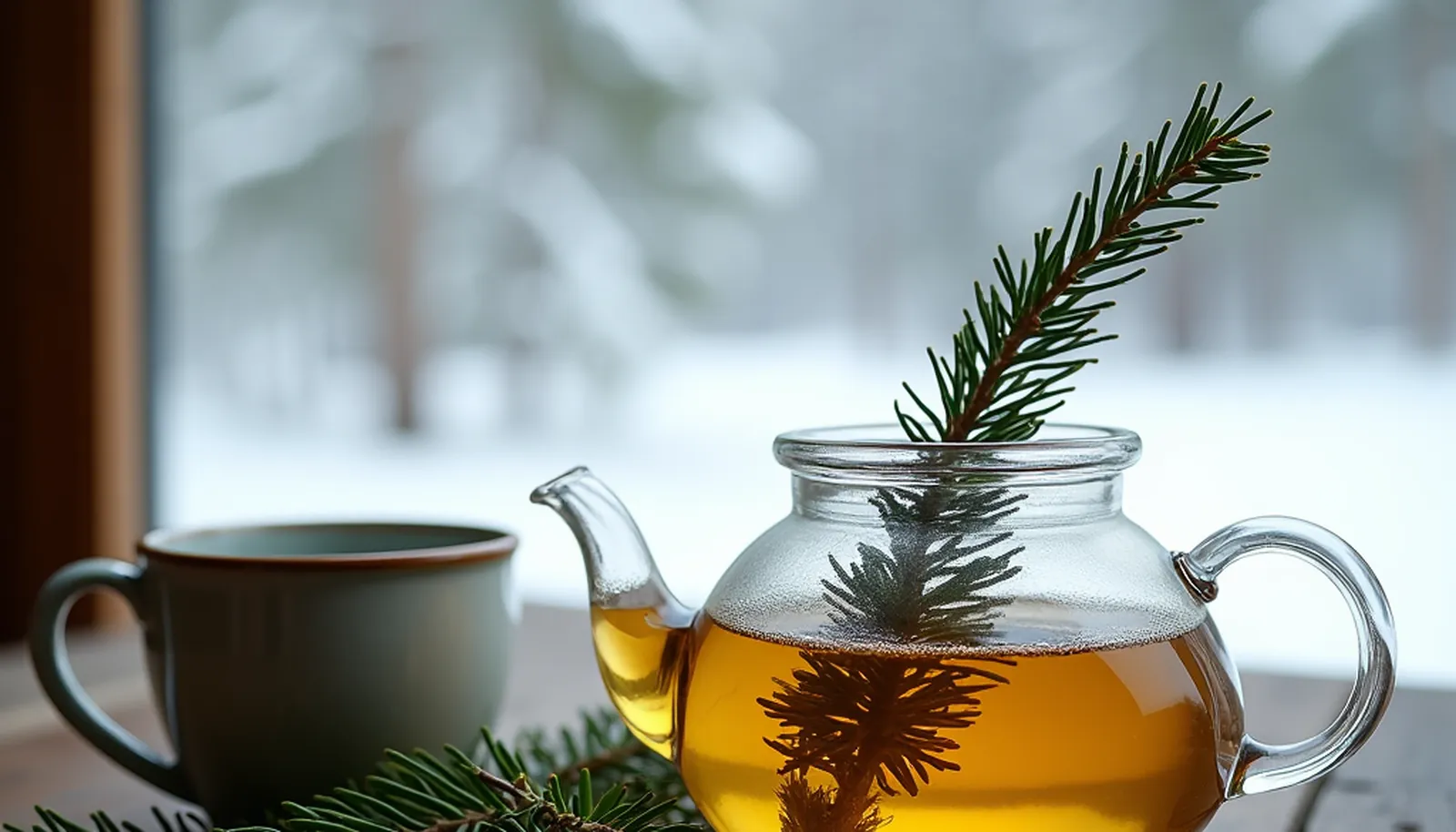
The smell of a warming fir branch is the smell of a Quebec winter. For several Indigenous peoples, balsam fir is much more than a Christmas tree: it is a remedy, a material, a respected plant. Its tea, drunk warm on cold-ridden evenings, is one of the traditional remedies still very much alive.
This article explains how to make it, what we know about it, and the precautions to take, starting with the most important: identifying the tree correctly. It is part of our guide to herbal remedies for colds and flu.
This article is for information only and does not replace the advice of a health professional.
A well-documented Cree remedy
The Cree Board of Health and Social Services of James Bay has published a fact sheet on balsam fir, called iiyaashiht in Cree, prepared by the Nishiiyuu Miyupimaatisiiun traditional medicine team. It describes several traditional uses:
- the boughs are used as flooring in the teepee, and boiled to purify the air in the home;
- the needles and resin, as a paste, are used on cuts and burns;
- as a tea, fir helps sleep and relieves cold symptoms, such as cough, sore throat and chest or sinus congestion.
The fact sheet also reminds readers that harvesting follows traditional protocols: you thank the Creator and the spirit of the plant, say why you need it, and return to the land what you do not use. It is a way of doing things that deserves respect, even if you are not part of that culture.
The traditional preparation
Here is the preparation described in the Cree fact sheet:
- Break the fir branches into small pieces.
- Put them in a large pot with about 4 L of water.
- Boil for about 20 minutes, until the aroma fills the home. You can breathe in the steam, over the pot or a bowl.
- Remove from the heat, let cool, then strain into a clean container.
- Warm a cup when you are ready to drink. You can sweeten with maple syrup or honey.
The fact sheet recommends a maximum of 2 to 3 cups per day, for example one in the morning and one before bed, and stresses not to exceed the recommended amount. The rest keeps in the refrigerator in a tightly closed jar.
A note on sweetening: if the tea is for a child under 1 year old, no honey, because of the risk of infant botulism. Maple syrup works very well. But for babies, it is best to avoid medicinal teas without professional advice anyway.
The taste, and a few variations
Do not expect a mild, floral tea. Fir tea tastes resinous and woody, a bit like the smell of the forest in winter. The longer it boils, the stronger it gets. If it is your first time, you can soften it:
- with a drizzle of maple syrup, as the Cree fact sheet suggests;
- with a slice of lemon or orange;
- by cutting it by half with hot water.
To breathe in the steam, as the fact sheet describes, be careful: boiling water in a bowl is a burn risk, especially with children around. Let it cool a little, keep a good distance, and never leave a child alone near a bowl of hot water.
What science knows
Let us be frank: no clinical trial has evaluated balsam fir tea for colds. As far as we know, there is no Cochrane review or study comparing this tea with a placebo.
That does not mean it is useless. A hot drink soothes the throat, steam can make your nose feel clearer, and drinking often is part of the basic flu care recommended by Québec.ca. But the specific effect of fir has not been measured. It is a traditional remedy, passed on through experience rather than clinical trials.
The tea should also be distinguished from fir essential oil, sold in small bottles. Essential oil is a much more powerful concentrate, meant for diffusion or diluted external use, and not for drinking.
Precaution number one: do not confuse it with yew
In Quebec, the most dangerous mix-up is with Canada yew (Taxus canadensis), a shrub that grows in the understory of eastern Canada. Like fir, it has flat needles. But it is toxic: according to The Canadian Encyclopedia, its leaves, bark and seeds are toxic, and the Government of Ontario states that yew is toxic to humans, especially children, whether fresh or dried. Its toxins, taxines, attack the heart.
| Feature | Balsam fir | Canada yew |
|---|---|---|
| Form | Slender tree, up to about 30 m, with a pointed top and grey bark dotted with resin blisters | Low, sprawling shrub |
| Needles, top | Dark green, glossy, 2 to 4 cm | Dark green, flat, pointed, 2 to 3 cm |
| Needles, underside | Two clearly visible white bands | Pale green, no white bands |
| Fruit | Cones | Seed surrounded by a bright red fleshy cup, like a small berry |
Other local conifers can also cause confusion, without being as dangerous as yew. Spruce needles are prickly and four-sided: they roll between your fingers, while flat fir needles do not. Fir cones, for their part, stand upright on the branches near the top. The traditional tea described here is made from balsam fir, and nothing else.
Turn a branch over: the two white bands under fir needles are the easiest sign to check. And remember the golden rule of foraging: if you are not 100% sure, do not pick. It is the same logic as for wild leeks and their toxic look-alikes.
If someone has eaten yew, or if you are unsure, call the Centre antipoison du Québec immediately at 1-800-463-5060. If there are serious symptoms, such as feeling faint, palpitations or loss of consciousness, call 911.
Harvesting well
A few simple rules for safe and respectful harvesting:
- Ask permission from the landowner. On public land and in parks, check the rules before cutting anything.
- Avoid roadsides, treated land and polluted areas.
- Take little, from several trees, a few branch tips at a time, without damaging the top or the trunk.
- Reuse: the lower branches of a cut fir, or those of a natural Christmas tree that has not been treated, can also be used. For what to do with the holiday tree afterwards, see our article on what to do with your tree after the holidays.
Who should avoid it
- Pregnant or breastfeeding women: the Cree fact sheet advises against this tea, like any other traditional medicine, except under the direct advice of a traditional healer. Talk to a health professional too.
- Babies and young children: Health Canada advises consulting a health professional before giving a natural health product to a child. It is a good rule for medicinal teas as well.
- People who take medications or have a chronic illness: ask your pharmacist.
And as with any cold or flu, see a doctor if the fever persists, if breathing becomes difficult or if the skin changes colour. If in doubt, 811, option 1.
In short
Balsam fir tea is a traditional Cree remedy, simple and fragrant, that comforts on coughing evenings. No study has measured its effectiveness, but a hot drink feels good. Fir grows everywhere in Quebec: you just need to learn to recognize it well. Stick to the maximum of 2 to 3 cups per day, avoid it during pregnancy and breastfeeding, and above all, check for the two white bands under the needles so you never confuse it with yew.
For another local tea, tangier, try our rose hip tea.
Sources
- Traditional Medicine: Balsam Fir, Cree Board of Health and Social Services of James Bay, 2025.
- Traditional Medicine Card: Balsam Fir, Cree Board of Health and Social Services of James Bay.
- Balsam fir, Government of Ontario.
- Yew poisoning in horses and ruminants, Government of Ontario.
- Yew, The Canadian Encyclopedia.
- Information about the flu (influenza), Government of Quebec.
- Safe Use of Natural Health Products, Health Canada.
Frequently asked questions
Does balsam fir tea cure colds?
No clinical trial has evaluated it. Among the Cree of James Bay, it is traditionally used to help sleep and relieve cough, sore throat and congestion. It is a comfort remedy, which does not replace seeing a doctor when symptoms are worrying.
How many cups of fir tea can you drink a day?
The Cree Board of Health and Social Services of James Bay fact sheet recommends a maximum of 2 to 3 cups per day, and not exceeding the recommended amount.
How do you recognize a balsam fir?
Its needles are flat, 2 to 4 cm long, dark green and glossy, with two white bands on the underside. Its grey bark is dotted with resin blisters. Canada yew, which is toxic, has flat needles that are pale green underneath, with no white bands, and grows as a low, sprawling shrub.
Can you drink fir tea while pregnant?
The Cree fact sheet advises pregnant or breastfeeding women not to drink this tea, like any other traditional medicine, except under the direct advice of a traditional healer. Talk to a health professional too.