Microwaving plastic: what Health Canada really says about bisphenols
Health Canada considers Canadians' exposure to bisphenol A low and not a health risk, but Europe has lowered its safety threshold dramatically and BPA substitutes are still being studied. Here is what is proven, what is under review, and the few habits that really lower your exposure in the microwave.
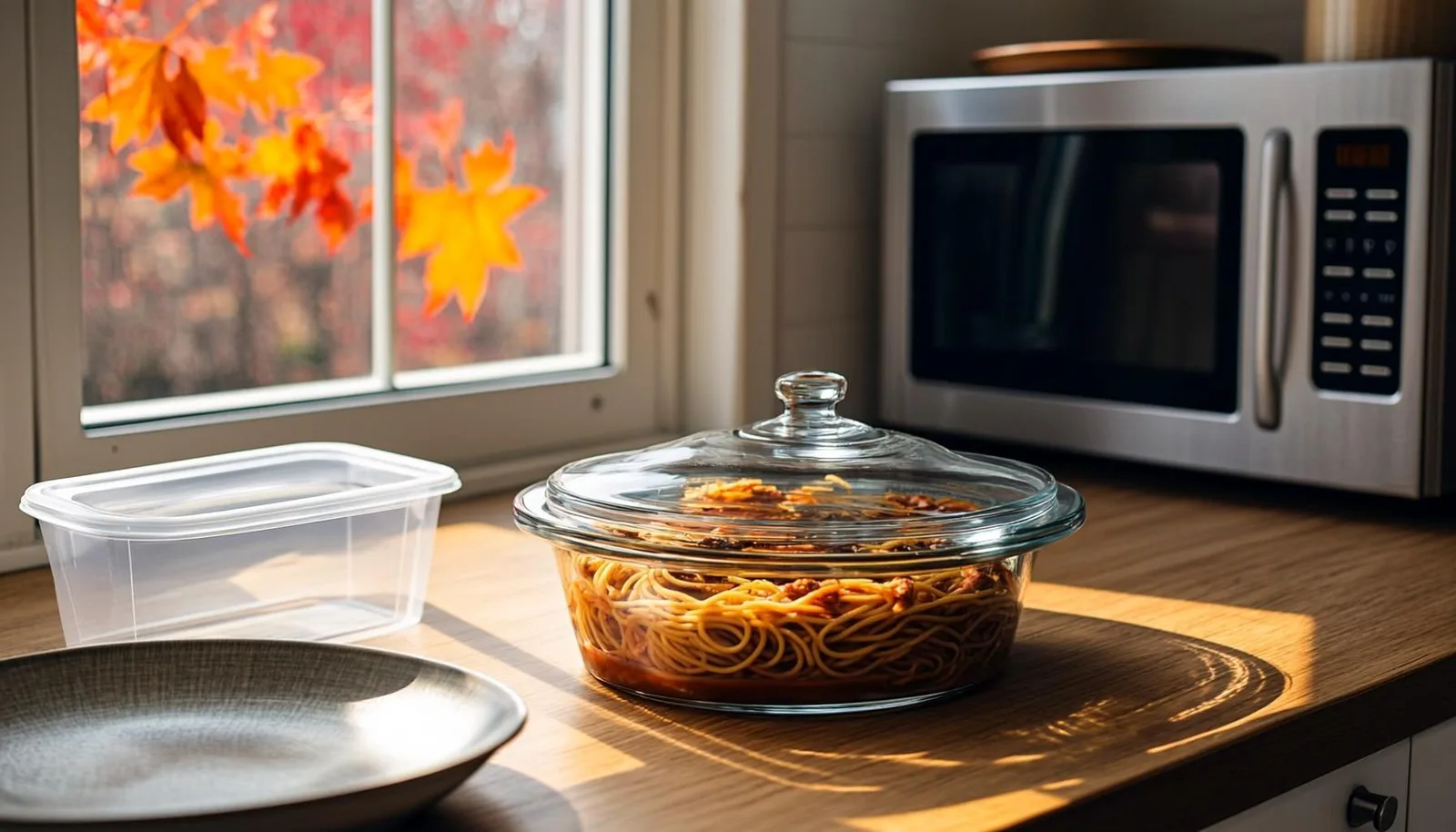
You take out yesterday's pasta, slide it into the microwave in its plastic container, and a little voice asks whether that is really a good idea. Between alarming headlines about bisphenol A, "BPA-free" labels everywhere and studies on microplastics, it is hard to know what to think.
The good news: Canada has a clear official position, and it is anything but alarmist. The less good news: the science is moving, Europe has taken a very different direction, and BPA substitutes remain poorly understood. Let's sort out what is proven, what is still under review and the simple habits that lower your exposure, without throwing out all your dishes.
What is BPA and where is it found?
Bisphenol A (BPA) is an industrial chemical used mainly to make polycarbonate (PC), a hard, clear plastic. It is also used in some epoxy resins that line the inside of food and drink cans. Health Canada says it may be found in pitchers, tableware, reusable water bottles, food storage containers and older polycarbonate baby bottles.
BPA is not the only "bisphenol". It is the best-known member of a large family of related molecules, such as BPS, BPF and BPE, often used to replace it. We come back to them below, because that is where the real open questions lie.
How does it get into the body? According to Health Canada, the main route is food: BPA migrates from packaging and repeat-use polycarbonate containers into food. Skin contact with thermal paper, the kind used for store receipts, prescription labels and boarding passes, is considered an important secondary route.
What Health Canada concluded
The Canadian position rests on a risk assessment carried out in 2008, based on the uses and data available at the time. Its conclusions, still repeated on the department's current pages, come down to three points:
- most Canadians have low to very low exposure to BPA, which does not pose a risk to their health;
- exposure to BPA from food packaging does not pose a health risk to Canadians, including infants;
- for infants, the assessment nonetheless identified a potential concern, which justified additional protective measures.
Those measures are concrete. Canadian law prohibits manufacturing, importing, advertising or selling polycarbonate baby bottles that contain BPA. Health Canada also worked with industry to phase out BPA from the packaging of liquid infant formula sold in the country. BPA is also identified as toxic under the Canadian Environmental Protection Act, 1999.
Finally, Health Canada acknowledges that BPA may affect the liver and kidneys, with potential effects on reproduction, development, neurodevelopment and behaviour. That nuance matters: a substance can have effects at certain doses without the population's actual exposure reaching those doses. That is exactly what the Canadian assessment concludes for the general population.
In its food surveys, the department adds a quiet but important recommendation: apply the ALARA principle, which means keeping exposure "as low as reasonably achievable". In other words, no demonstrated risk at current levels, but no reason to add more than you need to.
The microwave: where heat changes things
In the microwave, what matters is heat and the container. Heat sharply increases BPA migration. Health Canada says so plainly about polycarbonate baby bottles: do not pour hot or boiling water into them, precisely because heat greatly increases the release of BPA. The department suggests letting boiled water cool in a BPA-free container before pouring it in.
Its microwave advice points the same way:
- use only glass or food-grade plastic labelled microwave-safe;
- take food out of packaging not made for the microwave: foam trays and some plastic containers can melt or warp and release chemicals into food;
- never reuse trays from microwave dinners or takeout containers for reheating;
- cover with a lid or microwave-safe wrap that does not touch the food, and leave a small gap for steam;
- set aside plastics that are visibly damaged, stained or have an unpleasant smell.
What about wear and tear? You often read that a scratched container releases much more BPA. The data are less clear-cut than you might think. In 2008, Quebec's public health institute, the Institut national de santé publique du Québec (INSPQ), measured the BPA released by polycarbonate baby bottles into milk and apple juice. New bottles released 0.2 to 1.5 µg per litre, while glass bottles and plastic bags released no detectable amount. The surprise: used bottles with visible scratches released no more than new ones, and 30 dishwasher cycles did not increase migration. Health Canada still advises setting damaged plastics aside, and that is reasonable: a worn container has done its time, whatever the reason.
The same INSPQ study made an often-forgotten point: canned infant formula was then a source of BPA equal to or greater than the bottles themselves. Even in the worst-case scenario studied, the authors estimated the intake at about 10,000 times below the no-adverse-effect dose observed in animals. For details on baby bottles and children's dishes today, see our article baby bottles and children's dishes: is BPA still a risk in Canada?
What measurements say about Canadians' exposure
Rather than guess, Health Canada measures. In the Canadian Health Measures Survey (CHMS), BPA has been measured in the urine of a representative sample of the population since 2007. The results show a clear downward trend: the average concentration fell from 1.2 µg per litre in 2007–2009 to 0.68 µg per litre in 2018–2019, a 43% decrease.
In children aged 3 to 5, the average went from 1.4 µg per litre in 2009–2011 to 0.80 µg per litre in 2018–2019. In 2018–2019, concentrations were similar across age groups. Health Canada stresses a key rule of interpretation: the presence of a substance in your body does not mean it will affect your health. Urine mostly reflects recent exposure.
Two comparisons help put these numbers in context. In the United States, the average measured in the national NHANES survey was higher than in Canada, but it fell from 2.1 µg per litre in 2007–2008 to 1.1 µg per litre in 2015–2016, so the gap between the two countries has narrowed. Among First Nations adults living on reserve, a 2011 survey measured an average of 1.6 µg per litre, compared with 1.2 µg per litre in the general population at the same time. These differences remain modest, and on their own they say nothing about a health effect.
On the food side, the Canadian Food Inspection Agency (CFIA) analyzed 576 canned products sold in Canada in 2012–2013. No BPA was detected in 74.8% of them. The highest level, 0.381 ppm, was found in coconut milk, and higher concentrations showed up in foods packed in syrup, tomato sauce and brine. Health Canada's Bureau of Chemical Safety found no sample to be a concern for human health.
Europe changed its mind, and the experts disagree
This is where the picture gets complicated. In April 2023, the European Food Safety Authority (EFSA) published a re-evaluation of BPA that made a lot of noise. It lowered the tolerable daily intake (TDI) to 0.2 nanograms per kilo of body weight per day, 20,000 times lower than the temporary value of 4 micrograms set in 2015. With this new threshold, EFSA concluded that European consumers of all ages were likely exceeding it.
The European Commission followed: on December 19, 2024, it adopted a ban on BPA in food contact materials, based on that assessment. EFSA is also preparing a statement on the information needed to assess other bisphenols considered hazardous; put to public consultation in March 2026, it is expected by January 2027.
But the experts are far from unanimous. Germany's Federal Institute for Risk Assessment (BfR) proposed a TDI of 0.2 micrograms per kilo, 1,000 times higher than EFSA's. The European Medicines Agency (EMA) also raised concerns about the approach. The UK Committee on Toxicity (COT) considers that the weight of evidence does not support a TDI that low. Food Standards Australia New Zealand (FSANZ) says the effect EFSA relied on is not a typical toxicology endpoint and its significance is uncertain; it considers Australian exposure low and unlikely to pose a risk.
And Health Canada? The department pages we consulted do not comment on the European re-evaluation, and its 2008 conclusion is still the one it displays. It is only fair to say so: the Canadian position has not changed, but it has not been publicly re-examined in light of the 2023 opinion either. The department does say it continues to monitor Canadians' exposure and review new research.
"BPA-free": the substitutes we know little about
When BPA fell out of favour, industry often replaced it with other bisphenols. The problem is that these cousins have a similar structure. Health Canada writes that BPA analogues may have health effects similar to BPA because of their comparable structures and properties, and that there is less information on the health effects of BPE, BPF and BPS.
Canadian measurements also show different trends. Between 2014 and 2019, the average urine concentration of BPF fell by 37% and that of BPE by 28%, while BPS stayed roughly stable, around 0.37 µg per litre. Among Inuit in Nunavik, the 2017 Qanuilirpitaa? health survey found a higher average BPS level than in the Canadian population.
Health Canada has taken the file seriously, in its own way: rather than assess substitutes one by one, it defined a large group of 343 BPA structural analogues and functional alternatives, which are to go through a "problem formulation" step to set priorities. In November 2021, a notice published in the Canada Gazette required industry to provide data on 188 substances: commercial status, processes, releases and uses. That information is meant to guide prioritization, risk assessment and, if needed, risk management. No conclusion has been published yet.
So remember this: a "BPA-free" label is a marketing claim about what a product does not contain. It says nothing about what took BPA's place. That does not mean these products are dangerous, only that the question remains open. It is also why the simple habits below rely on glass and stainless steel rather than on one specific type of plastic. If you want to decode the numbers in the triangle under your containers, our article what the numbers in the recycling triangle mean covers it all.
What about microplastics in the microwave?
Since 2023, another concern has been added: the plastic particles themselves. A team at the University of Nebraska–Lincoln published a widely covered study in the journal Environmental Science & Technology. It filled two polypropylene baby food containers and a polyethylene reusable pouch with water or a mildly acidic solution, then heated them for three minutes at full power in a 1,000-watt microwave. In some cases, each square centimetre of container released more than two billion nanoplastics and four million microplastics. Six months of storage in the fridge or at room temperature also released particles.
The researchers then exposed cultured embryonic kidney cells to the released particles: after two days, only 23% of the cells exposed to the highest concentrations had survived. It is a striking result, but it has to be read for what it is: a lab test on cells, not an observation in humans. The authors themselves acknowledge that the actual effects of ingesting micro- and nanoplastics remain uncertain.
Authorities remain cautious. EFSA says it has not yet completed a full risk assessment of micro- and nanoplastics in food and therefore cannot draw conclusions on their health effects. A literature review it published in October 2025 concludes that food contact materials can release particles, but at levels well below what some earlier studies suggested. Its full scientific opinion is expected by the end of 2027. For the state of knowledge, read our article microplastics in food: what we know, what we are waiting for, and for everyday action, our guide to limiting microplastics in daily life.
Proven, under review, unknown: the table
Here, at a glance, is where the main claims in circulation stand.
| Claim | Status | What we know |
|---|---|---|
| Heat increases BPA migration from polycarbonate | Established | Health Canada says so for baby bottles and advises against hot or boiling water in polycarbonate. |
| Canadians' exposure to BPA is not a health risk | Official Canadian position (2008) | Low to very low exposure according to Health Canada; down 43% in urine between 2007–2009 and 2018–2019. |
| Packaging and containers that melt can contaminate food | Established | Health Canada advises against takeout containers and foam in the microwave. |
| BPA is dangerous at current exposure levels | Disputed | Yes for EFSA (2023); disputed by the BfR, the UK COT and FSANZ. Health Canada has not changed its position. |
| "BPA-free" substitutes (BPS, BPF) are safe | Under review | Possibly similar effects to BPA, limited data; 343 substances to be examined by Health Canada. |
| Scratched containers release much more BPA | Not demonstrated | The INSPQ did not measure more BPA from worn bottles; Health Canada still advises setting damaged plastics aside. |
| The microwave releases microplastics harmful to health | Unknown | Release measured in the lab, effects in humans not established; EFSA opinion expected by end of 2027. |
Simple habits, no panic
No need to empty your cupboards tonight. The habits that matter most are also the easiest, and they reduce BPA, its substitutes and plastic particles all at once.
- Reheat in glass or ceramic. This is habit number one. Keep your plastic containers for transport and the fridge, and move the portion to a plate or glass dish when it is time to heat it. An old Mason jar works very well; our article on reusing glass jars gives you the precautions to take.
- Never put a takeout container or a microwave dinner tray back in the microwave a second time. This packaging is not designed to be reused.
- Cover without touching. An upside-down plate, a glass lid or a microwave-safe wrap that does not touch the food, with a small gap for steam.
- No boiling liquids in polycarbonate. If you still have an old bottle or pitcher marked "PC" or number 7, keep it for cold water, or retire it.
- Set aside tired plastics. Warped, stained, smelly: into the recycling bin if they are accepted, otherwise the garbage. No need to replace what is in good shape. For storing food, Health Canada names three options: stainless steel, glass and food-grade plastic.
- Vary your sources rather than chasing a single molecule. Fewer cans packed in syrup or tomato sauce, more fresh or frozen foods, and an electronic receipt when it is offered: those are the two other exposure routes Health Canada documents.
To replace your containers gradually without throwing everything out at once, follow the order suggested in our article replacing plastic containers without waste. And before turning to "bamboo fibre" dishes, often presented as the natural alternative, read our article bamboo fibre tableware: why Europe pulled it. If you want to go beyond the kitchen, our plan to reduce your plastic use starts with an audit of your garbage.
In the end, Health Canada's message sums up well: at current levels, no reason to panic, but no reason either to add an exposure you can avoid in ten seconds by taking out a glass plate. The day the assessment of substitutes or the European opinion on microplastics changes the picture, we will update this article.
Sources
- Le bisphénol A (BPA) (in French), Health Canada, page modified in 2018.
- Bisphenol A (BPA), Health Canada, page modified in 2020.
- Food safety tips for microwaves, Health Canada, 2018.
- Bisphenol A (BPA) in Canadians, Health Canada, 2023.
- Bisphenol analogues in people living in Canada, Health Canada, 2026.
- Bisphenol A (BPA) structural analogues and functional alternatives, Health Canada, Chemicals Management Plan, 2023.
- 2012-2013 Bisphenol A in Canned Foods, Canadian Food Inspection Agency, 2018.
- Étude sur la migration du bisphénol A dans les biberons de polycarbonate (in French), Dumas, St-Laurent, Ayotte and Lefebvre, Bulletin d'information toxicologique, INSPQ, 2008.
- Bisphenol A and other bisphenols, European Food Safety Authority (EFSA), updated 2026.
- Bisphenol A (BPA), Food Standards Australia New Zealand, 2025.
- Microplastics and nanoplastics in food, EFSA, 2026.
- Nebraska study finds billions of nanoplastics released when microwaving containers, University of Nebraska–Lincoln, 2023.
Frequently asked questions
Is it dangerous to reheat my lunch in a plastic dish in the microwave?
Health Canada does not forbid it, but asks you to use only containers made for the microwave. Takeout containers, microwave dinner trays and foam can melt or warp and release substances into food. The simplest fix: move the portion to a glass or ceramic dish.
According to Health Canada, is BPA from packaging a risk?
According to its 2008 assessment, still cited on its pages, exposure to BPA from food packaging is not a health risk for the population, newborns included. Health Canada still took precautionary measures for babies and recommends keeping exposure as low as reasonably achievable.
Is a "BPA-free" container necessarily safer?
Not necessarily. BPA has often been replaced by other bisphenols, such as BPS or BPF, which have a similar structure. Health Canada says there is less information on their effects and has placed them in a broad group of 343 substances to examine. "BPA-free" says nothing about what replaced it.
How can I tell if an old container contains BPA?
Look at the recycling symbol: the number 7 can signal BPA, but most number 7 plastics do not contain it. Then look for the words "PC" or "polycarbonate". Without them, BPA is unlikely. If in doubt, Health Canada suggests contacting the manufacturer.
Why did Europe ban BPA in food containers and not Canada?
In 2023, the European Food Safety Authority set a tolerable daily intake 20,000 times lower than before, and the European Union banned BPA in food contact materials in December 2024. Other bodies, including Germany's BfR and the Australia and New Zealand food agency, dispute that conclusion. Health Canada has not changed its public position.