Carrot and beet greens: 6 ways to eat them
A bunch of carrots or beets with their leaves is two vegetables for the price of one. Carrot tops have a hint of parsley, and beet greens cook just like spinach. Here is how to keep them fresh, six ways to eat them and the few precautions to know about.
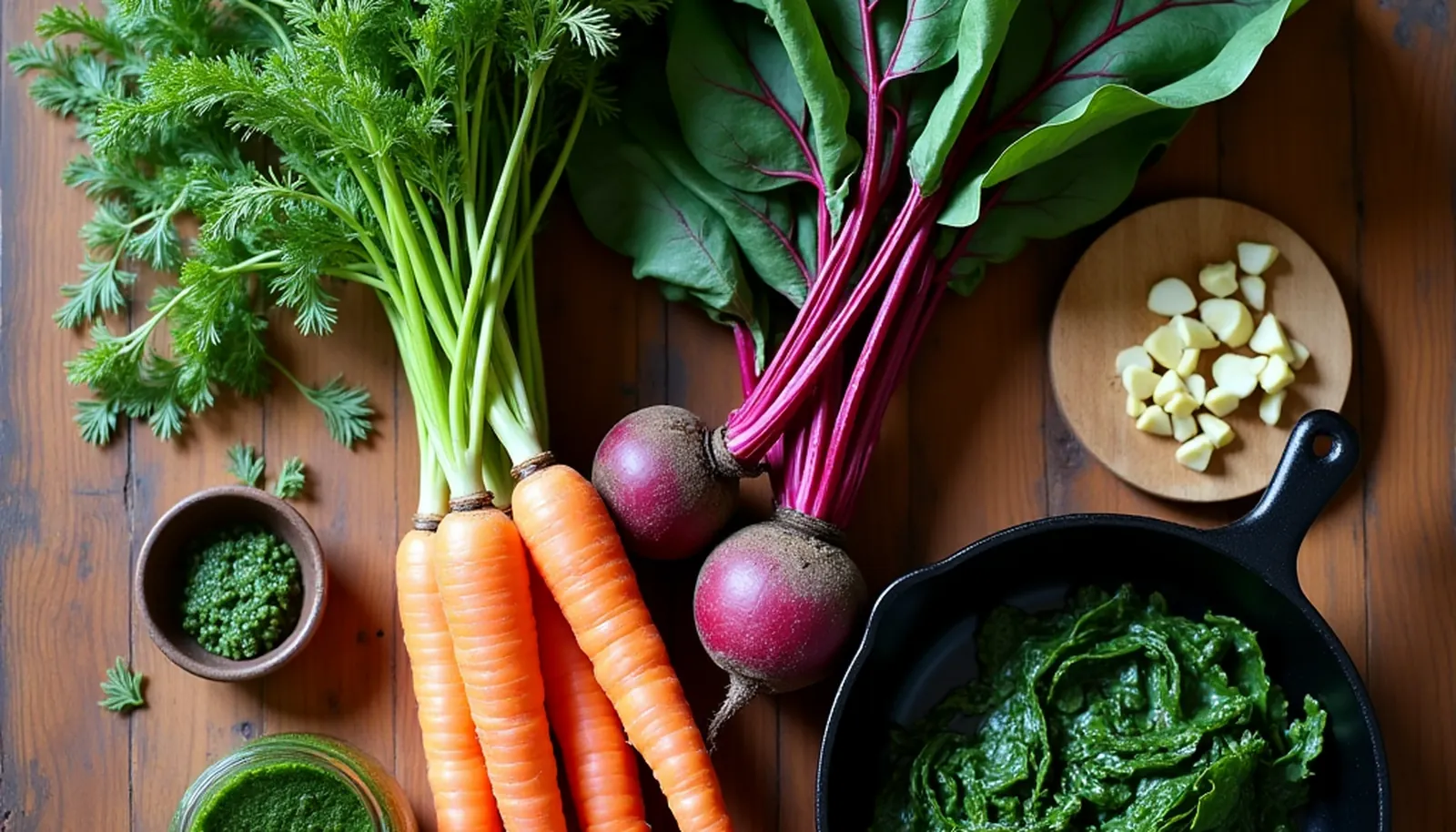
At the market, carrots and beets sold in bunches come with a big bouquet of leaves. Most of the time, that bouquet ends up in the compost, sometimes before it even leaves the stand. Too bad: carrot tops have a flavour reminiscent of parsley, and beet greens, which look a lot like Swiss chard, cook just like spinach. It is one more vegetable, free, that just needs a little attention.
Here is how to keep them fresh, six simple ways to eat them, how to freeze them and the three precautions to know about. For everything about the roots themselves, from harvest to cold room, see our guide to fall root vegetables.
Can you really eat the greens?
Yes. The idea that carrot tops are poisonous has been around for a long time, but it is a myth, explains Quebec gardener and columnist Larry Hodgson, the Laidback Gardener: not only are they not poisonous, they are edible and genuinely tasty. Their flavour is somewhere between parsley and carrot. Mature leaves can be bitter, but blanching or cooking tones that bitterness down. Young leaves, like those from the carrots you thin out in the garden, have almost no bitterness and can be eaten as is.
For beets, it is even simpler. The Mangez Québec fact sheet points out that the leaves are eaten like spinach, raw in a salad or cooked. They are light: 250 ml (1 cup) of raw leaves, about 40 g, has around ten calories and provides 50 mg of calcium. Their taste is mild and slightly earthy, and their crisp red stems are edible too, like those of Swiss chard, notes cook Jeanine Donofrio of the Love and Lemons blog.
We are focusing here on the two most plentiful greens of the fall. As for parsnip leaves, leave them for the compost: our root vegetable guide explains why.
As soon as you get home from the market: cut, wash, store
The first reflex is to separate the leaves from the roots as soon as you get home. Jeanine Donofrio explains that the leaves, if left attached, keep drawing moisture out of the beet. Cut them off, leaving a bit of stem on the root, then store the roots on one side and the leaves on the other.
Then wash the leaves in plenty of water: they are often full of sand or soil. The most effective way is to plunge them into a big bowl of cold water, swish them around, then lift them out and leave the sand at the bottom, and repeat if needed. Dry them well, in a salad spinner or a clean towel.
For storage, wrap the leaves in a reusable bag or a plastic bag in the fridge crisper drawer, as Love and Lemons suggests. Start with leaves that are not wilted, and cook them quickly: they are more perishable than the root, according to Mangez Québec. For carrot tops, Julie Aubé, in her pesto recipe published by Caribou magazine, advises keeping the tender tips and sending the tough stems to the compost.
6 ways to eat them
1. As pesto
It is the best-known use, and the best one for carrot tops, whose hint of parsley works wonders in a pesto. In her version published by Caribou, Julie Aubé blends roughly equal parts carrot tops, dill and cilantro with toasted sunflower seeds, a clove of garlic, salt, a mix of sunflower and camelina oil and a splash of cider vinegar. She notes that basil works well too, and that pumpkin seeds or Quebec hazelnuts can stand in for the sunflower seeds.
Like any pesto, which keeps fresh leaves in oil, this one goes in the fridge and should be eaten quickly: we explain why in our wild leek pesto, along with the steps to follow. To keep it longer, freeze it in ice cube trays: according to Julie Aubé, it freezes well.
2. Sautéed with garlic, like spinach
For beet greens, this is the basic recipe, ready in five minutes. Jeanine Donofrio finely chops the stems and roughly chops the leaves, cooks the garlic and stems for a minute in a drizzle of olive oil, then adds the leaves, salt and pepper, and takes the pan off the heat as soon as they are just wilted. She finishes with a squeeze of lemon juice, a few golden raisins and chopped nuts. One bunch of greens makes two to four side servings, alongside fish, pork or a lentil dish.
3. Raw, in a salad
Young beet greens can be eaten raw in a salad, like baby spinach. Toss them with lettuce, diced cooked beets, a local cheese and toasted nuts. Young carrot tops, finely chopped, can be used like parsley: in a vinaigrette, over roasted carrots or in a tabbouleh.
4. With eggs
Sautéed beet greens slip easily into an omelette, scrambled eggs or a frittata, Love and Lemons suggests. Wilt them in a skillet with an onion, pour the beaten eggs over them, add a little cheese and finish in the oven. It is also a good way to use up leftover leaves that are starting to go limp.
5. In soups and stews
Chopped beet greens and carrot tops can go in at the end of cooking a vegetable soup, a minestrone or a puréed soup, just long enough to wilt them. A handful of carrot tops blended into a carrot soup gives it a lovely colour and a fresh herb flavour. Beet greens pair well with lentils, white beans and pasta; Love and Lemons serves them with pasta, walnuts, feta and chili flakes, among other ideas.
6. As fresh herbs, even in a smoothie
Very finely chopped, carrot tops can replace some of the parsley in a green sauce, a chimichurri, a bean salad or a tabbouleh. Larry Hodgson also suggests adding a few to a smoothie: the sweet fruit masks any bitterness. Beet greens, for their part, can go into a grain bowl with quinoa or brown rice, a protein and a sauce, as Love and Lemons suggests.
For the winter: freezing beet greens
Too many beet greens at once? Freeze them like spinach. Here is the method from Colorado State University, in its Preserve Smart guide:
- choose young, tender leaves, with no rot or mould, and wash them thoroughly;
- remove tough stems and damaged parts, then cut the leaves into pieces if you like;
- blanch them for 2 minutes in a big pot of boiling water (about 4 litres per 450 g of leaves), starting the timer as soon as the leaves are plunged into vigorously boiling water;
- cool them in ice water for the same amount of time, then drain them well;
- pack them tightly in bags, pressing out the air, or spread them on a tray to freeze them loose before bagging them; label and date them.
At -18°C or below, most frozen vegetables keep good quality for 12 to 18 months, according to the same source. For carrot tops, the simplest option is still to freeze them as pesto, in small cubes.
Three precautions before you dive in
Kidney stones. Beet greens are high in oxalates, like spinach and Swiss chard. UPMC, a major university hospital network in Pittsburgh, lists beets, beet greens, spinach and Swiss chard among high-oxalate foods (more than 10 mg per serving), to be limited when you follow a low-oxalate diet to prevent calcium oxalate stones. If you have been prescribed that kind of diet, ask your dietitian before making them an everyday vegetable.
Warfarin. Leafy greens are rich in vitamin K, which affects how warfarin (Coumadin) works. According to HealthLinkBC, 125 ml (½ cup) of cooked beet greens contains about 368 µg. No need to give them up, though: what matters, HealthLinkBC points out, is eating about the same amount of vitamin K day after day, without big changes from one day to the next. Talk to your pharmacist.
Wild look-alikes. All of the above applies to carrot tops from the garden or the market, not to plants picked in the wild. Poison hemlock, a highly toxic plant, looks like wild carrot and wild parsnip in particular, warns HealthLinkBC, and eating it by mistake can have potentially fatal consequences. When in doubt, do not pick; in case of ingestion, call the Centre antipoison du Québec (Quebec Poison Control Centre) at 1-800-463-5060.
Greens, peels, stems: root vegetables can be eaten almost whole. Peels, for example, turn into oven-baked peel chips. For more ideas, see our tips for cooking without waste, and for what is truly left over, our article on composting food scraps.
Sources
- Garden Myth: Carrot Tops Are Poisonous, Larry Hodgson, Laidback Gardener, 2017.
- Betterave du Québec (beet fact sheet; in French), Mangez Québec, 2020.
- Sautéed Beet Greens, Jeanine Donofrio, Love and Lemons.
- Pesto de fanes de carottes (carrot top pesto; in French), Julie Aubé, Caribou magazine, 2024.
- Freezing Greens, Preserve Smart, Colorado State University Extension, 2026.
- Help Prevent Kidney Stones with a Low-Oxalate Diet, UPMC HealthBeat, 2016.
- Healthy Eating Guidelines for People Taking Warfarin Anticoagulants (Coumadin), HealthLinkBC, Province of British Columbia, 2023.
- Poison Hemlock (Conium maculatum), HealthLinkBC File #130c, HealthLinkBC, 2025.
Frequently asked questions
Are carrot tops poisonous?
No. It is a stubborn myth, one that gardener and columnist Larry Hodgson debunked: carrot tops are edible, and they taste like a mix of parsley and carrot. The only caveat: we are talking about carrot tops from the garden or the market, never wild plants that look like them, such as poison hemlock.
How do you take the bitterness out of carrot tops?
Choose young, tender leaves, which have little or no bitterness, and send the thick stems to the compost. Older leaves mellow if you blanch or cook them, explains Larry Hodgson. Mixing them with other herbs, as in Julie Aubé's pesto, also helps.
How long do beet greens keep?
Not long: they are more perishable than the root, Mangez Québec points out. Separate them from the beets as soon as you get home, wrap them in a bag in the crisper drawer and cook them within the next few days. To keep them longer, blanch and freeze them.
Can you freeze the greens?
Yes. Beet greens are blanched for 2 minutes, cooled in ice water and frozen, according to Colorado State University, which notes that most frozen vegetables keep good quality for 12 to 18 months at -18°C. Carrot tops are best frozen as pesto, in small cubes.
I take warfarin: can I eat beet greens?
Yes, but consistently. HealthLinkBC points out that there is no need to stop eating green vegetables rich in vitamin K when you take warfarin, but that you should eat about the same amount every day. Cooked beet greens contain a lot of it: talk to your pharmacist or dietitian.