Cranberry juice and health: what the science really says
Cranberry juice has a reputation for "curing" urinary tract infections. The reality is more nuanced: cranberry products may help some people prevent repeat infections, but they do not treat an infection, and a cranberry "cocktail" is mostly a sugary drink. Here is what the best studies say, group by group.
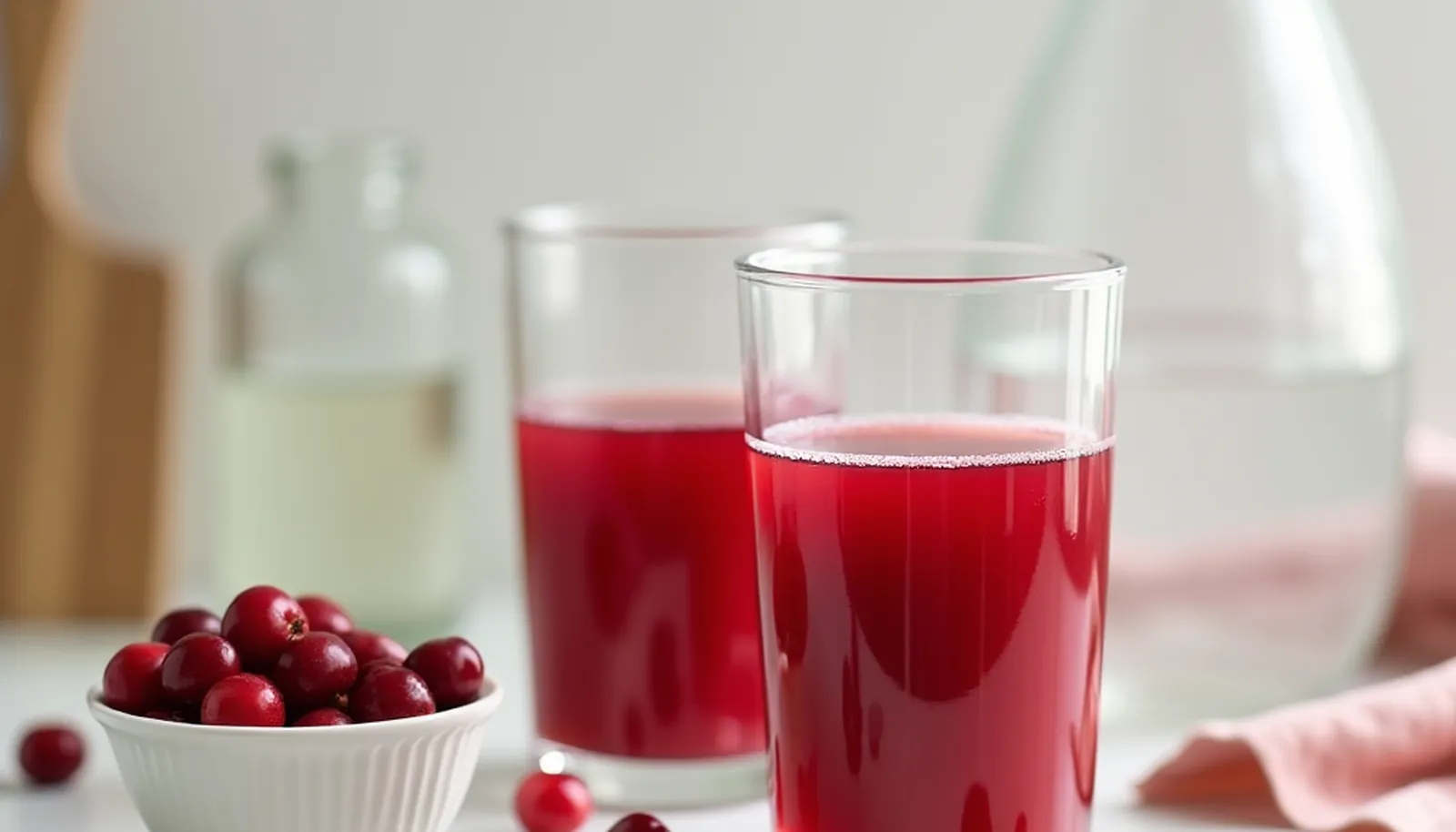
"Drink some cranberry juice!" The advice gets passed down from generation to generation as soon as a urinary tract infection shows up. There is some truth to it, but only some. For years, researchers have tested cranberry juices, tablets and capsules, and the largest review on the subject, published by Cochrane in 2023, finally helps sort out what holds up and what does not.
Here is what the studies say, group by group, what to know about sugar and medications, and how to enjoy cranberries without falling into the sugary cocktail trap. For the fruit itself, see our guide to cooking with fresh cranberries.
Preventing is not curing
Let us start with the essentials. The National Center for Complementary and Integrative Health (NCCIH), a U.S. public agency, is clear: cranberry is not recommended as a treatment for an existing urinary tract infection in any population. If you think you have a urinary tract infection, see a health professional rather than replacing a proven treatment with juice. Your pharmacist is a good first point of contact to find out where to go.
What cranberry can do, in some people, is reduce the risk of getting another one. The most often cited mechanism, according to the NCCIH, is that compounds in cranberries, proanthocyanidins (PACs), may stop bacteria from sticking to the bladder wall.
What the 2023 Cochrane review says
The review by Gabrielle Williams and colleagues, published in the Cochrane Database of Systematic Reviews, brings together 50 studies and 8,857 participants. Overall, cranberry products reduce the risk of symptomatic, laboratory-confirmed urinary tract infections by about 30% (26 studies, 6,211 participants, moderate certainty). But the result varies a lot by group.
| Group | Observed effect | Certainty of evidence |
|---|---|---|
| Women with recurrent infections | Risk reduced by about 26% (8 studies, 1,555 participants) | Moderate |
| Children | Risk reduced by about half (5 studies, 504 children) | Moderate |
| People at risk after a medical intervention | Risk reduced by about half (6 studies, 1,434 participants) | Low |
| Older adults in care facilities | Little or no effect (3 studies, 1,489 participants) | Low to moderate |
| Pregnant women | Little or no effect (3 studies, 765 participants) | Low |
| People with bladder emptying problems | Little or no effect (3 studies, 464 participants) | Low |
The authors conclude that these data support the use of cranberry products to reduce the risk of urinary tract infections in women with recurrent infections, in children and in people more susceptible after an intervention, but not in older adults, pregnant women or people with bladder emptying problems.
The NCCIH, which updated its fact sheet in 2024, remains more cautious and describes the findings as still inconsistent. So remember this: for a woman with recurrent urinary tract infections, cranberry can be part of prevention, ideally after talking with a health professional. It is not a guarantee.
Juice, cocktail or capsule: not the same thing
The studies in the Cochrane review tested juices, tablets and capsules, at varying doses. At the grocery store, though, three products sit side by side, and they are very different.
- Cranberry cocktail or "drink": water, cranberry juice and added sugar. Read the ingredient list: if sugar or glucose-fructose comes right after water, it is first of all a sugary drink.
- 100% juice: only fruit juice, often blended with apple or grape juice, because cranberry alone is very sour. No added sugar, but the fruit's natural sugar is still there.
- Tablets and capsules: sold as natural health products. In Canada, look for the natural product number (NPN) on the label: it shows that the product is licensed by Health Canada.
For drinks, Canada's Food Guide is unambiguous: it lists fruit juices, like fruit-flavoured drinks and punches, among sugary drinks, and recommends choosing water. Drinking sugary drinks can increase the risk of obesity, type 2 diabetes and, in children, cavities.
Safety and medications
Taken by mouth, cranberry is generally considered safe, according to the NCCIH. Very large amounts can cause stomach upset and diarrhea, especially in young children. During pregnancy and breastfeeding, studies suggest it is safe in the amounts found in food; for larger amounts, such as supplements, talk to a health professional first.
For warfarin, a blood thinner, the evidence is conflicting: the NCCIH recommends that people who take it, or other medications, talk to a health professional before taking cranberry supplements. Your pharmacist is the right person to check.
Cranberries, better on the plate
To enjoy cranberries every day, the simplest option is the whole fruit, which you sweeten yourself, in moderation. Fresh in October, frozen the rest of the year, Quebec cranberries fit in everywhere:
- in fresh cranberry orange muffins;
- in an apple cranberry crisp, sweetened with maple syrup;
- in a savoury sauce, with cranberry, maple and rosemary chicken thighs;
- and, of course, in homemade cranberry sauce.
To buy, store and freeze them, our guide to Quebec cranberries tells you everything.
This article is for information only and does not replace the advice of a health professional.
Sources
- Cranberries for preventing urinary tract infections, G. Williams, D. Hahn, J. H. Stephens, J. C. Craig and E. M. Hodson, Cochrane Database of Systematic Reviews, 2023.
- Cranberry, National Center for Complementary and Integrative Health, 2024.
- Sugary drinks, Canada's Food Guide, Health Canada.
Frequently asked questions
Does cranberry juice cure a urinary tract infection?
No. According to the U.S. National Center for Complementary and Integrative Health (NCCIH), cranberry is not recommended as a treatment for an existing urinary tract infection in any population. If you think you have a UTI, see a health professional, such as a pharmacist or a doctor.
Does cranberry help prevent urinary tract infections?
In some people, yes. The 2023 Cochrane review concludes that cranberry products reduce the risk of symptomatic UTIs in women with recurrent infections, in children and in people more susceptible after a medical intervention. The data show no benefit in older adults in care facilities, pregnant women or people with bladder emptying problems.
Does cranberry juice interact with medications?
For warfarin, a blood thinner, the evidence is conflicting, according to the NCCIH, which recommends talking to a health professional before taking cranberry. The same goes for any other medication: your pharmacist can check.
What is the difference between cranberry juice and cranberry cocktail?
A 100% juice is made only of fruit juice, often a blend, because cranberry alone is very sour. A cranberry cocktail or drink contains water and added sugar. Either way, Canada's Food Guide lists fruit juices among sugary drinks and recommends choosing water.
Are fresh cranberries better than juice?
For everyday eating, yes: the whole fruit provides fibre, and you control the sugar you add. The studies on urinary tract infections tested juices, tablets or capsules, not fresh cranberries in cooking.