Echinacea: what the Cochrane review concludes
Echinacea is probably the most studied plant for colds. Dozens of clinical trials, a Cochrane review, and yet an answer that often disappoints: the effect is small, if it exists. Here is what researchers conclude, why products are so hard to compare, and the precautions to know before taking it.
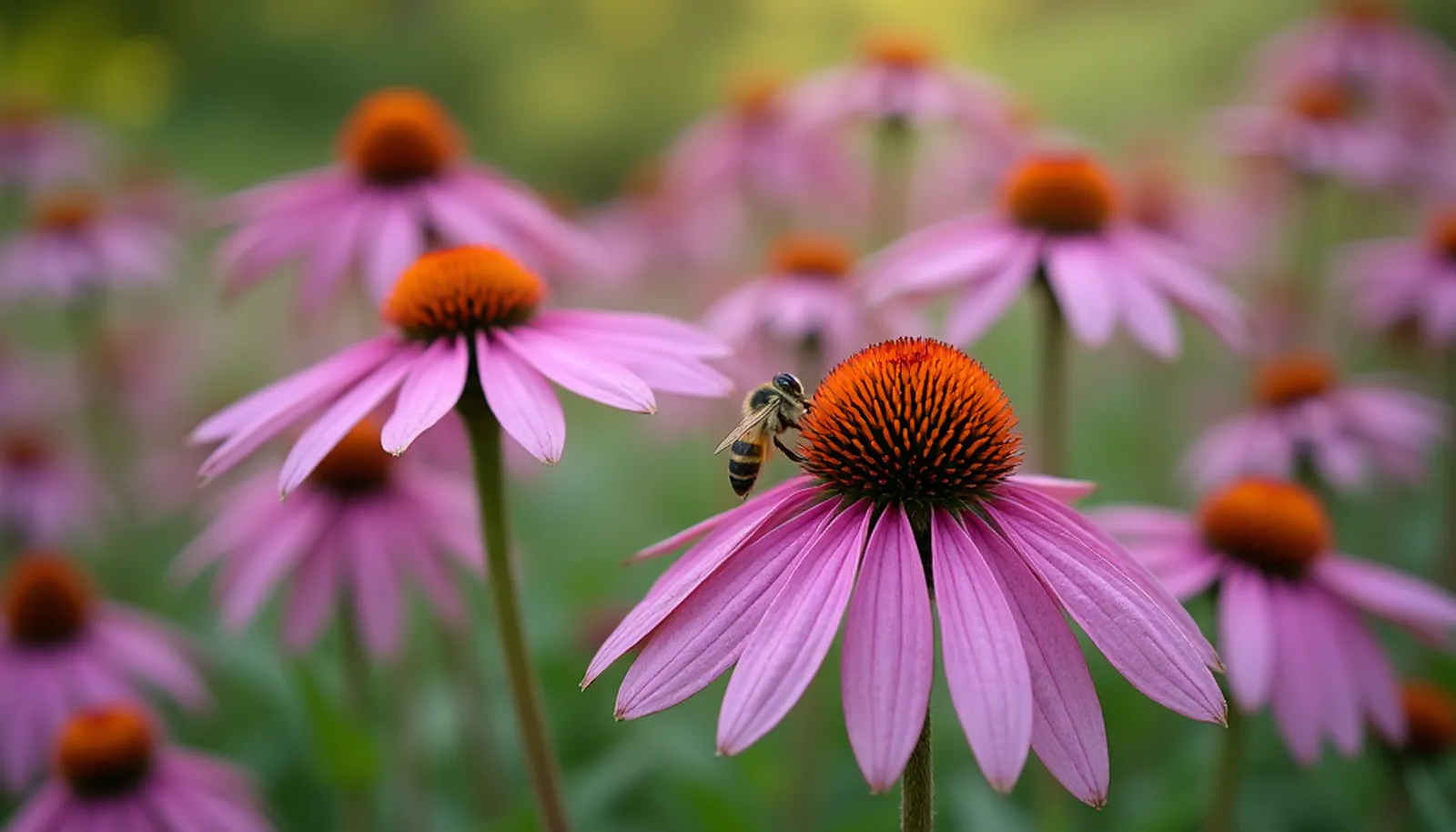
With its pinkish-purple petals drooping around a spiky orange centre, echinacea is a star of Quebec garden beds. It has also been, for decades, one of the best-selling natural products for colds, as drops, tablets or tea.
So it is a plant that has been studied a lot. And that is exactly what makes the answer interesting. This article is part of our guide to herbal remedies for colds and flu.
This article is for information only and does not replace the advice of a health professional.
The Cochrane review in numbers
Cochrane is an independent international network that gathers all the quality studies on a question to draw an overall conclusion. Its review on echinacea and colds, by Karsch-Völk and colleagues, was published in February 2014. It is based on studies published up to July 2013.
- 24 trials, double-blind and randomized;
- 4,631 participants;
- 33 comparisons between an echinacea product and a placebo.
"Double-blind" means that neither the participants nor the researchers knew who was getting echinacea and who was getting the placebo, an identical product with no active plant. "Randomized" means chance decided each person's group. These are the two conditions that make it possible to separate a product's real effect from the placebo effect and from a cold's natural recovery.
In terms of quality, 10 trials had a low risk of bias, 6 an unclear risk and 8 a high risk. That is a solid base, far more than for most plants sold for colds.
Treating a cold: no benefit shown
Fifteen trials, with 20 comparisons, tested echinacea in people who already had a cold. Of the 6 comparisons that measured cold duration, only 2 showed a significant effect of echinacea over placebo.
The authors' conclusion is clear: echinacea products have not been shown to provide benefits for treating colds. They acknowledge it is possible that some products have a weak effect, but without being able to show it.
Preventing it: maybe a small effect
Ten trials, with 13 comparisons, tested echinacea for prevention, in healthy people. None of the 12 comparisons that counted the number of people who caught at least one cold found a significant difference.
Pooling the results after the fact, the authors observe a relative risk reduction of 10 to 20%. In other words, if 10 people out of 100 caught a cold without echinacea, perhaps 8 or 9 would with it. The authors consider this effect of questionable clinical relevance.
The National Center for Complementary and Integrative Health (NCCIH), a U.S. public agency, sums up the situation in 2024 the same way: echinacea may slightly lower the chance of catching a cold, but it is unclear whether it shortens one, and more research is needed.
The real problem: which echinacea?
Why do so many studies give such unclear results? The Cochrane authors point to a major problem: the products tested varied enormously.
- Three species are used: purple coneflower (Echinacea purpurea), narrow-leaved coneflower (E. angustifolia) and pale purple coneflower (E. pallida).
- Different parts of the plant: root, aerial parts, flowers, or whole plant.
- Different preparations: fresh pressed plant juice, tinctures, dry extracts, teas.
A trial showing a small effect with pressed purple coneflower juice says nothing about a pale coneflower root tea. And the jar you find at the pharmacy does not necessarily match what was tested. That is one reason it is so hard to draw conclusions.
What Europe says
The European Medicines Agency has published a monograph on the juice of fresh purple coneflower herb, adopted in 2014. It recognizes a well-established use for the short-term prevention and treatment of colds, with specific conditions:
- Not before age 12, for lack of sufficient safety data.
- No more than 10 days. If symptoms persist beyond that, see a doctor or pharmacist.
- Not recommended in cases of autoimmune disease, immunodeficiency, immunosuppression or white blood cell disorders.
- Contraindicated in people allergic to echinacea or to other plants in the Asteraceae family.
- Pregnancy and breastfeeding: not recommended, except on a doctor's advice.
These conditions apply to that specific type of product, the fresh plant juice, and they show that echinacea is not a harmless product to take continuously all winter.
Precautions
For most adults, echinacea taken short-term causes few problems. In the Cochrane review, dropouts and adverse effects were not significantly different between echinacea and placebo, although prevention trials showed a trend toward more dropouts due to adverse effects with echinacea.
The NCCIH still flags a few important points:
- Allergies: some people have allergic reactions to echinacea, which may be severe. It is closely related to sunflowers, daisies and ragweed. If you are allergic to ragweed, be especially careful. The European agency also flags a possible risk of severe reactions in atopic people, who should see a doctor before taking it.
- Digestion: the most common side effects are digestive, such as stomach pain and nausea.
- Children: a clinical trial in children reported rashes. Talk to a health professional before giving it.
- Medications: data on interactions are conflicting. If you take medications, especially immunosuppressants, talk to your pharmacist.
For pregnancy, the NCCIH says some studies suggest extracts are possibly safe for up to 7 days in the first trimester, but recommends checking with a health professional before taking it. Little is known about safety during breastfeeding.
If you still want to try it
Nothing stops a healthy adult from trying echinacea to see, as long as they know its limits. A few habits help you choose:
- Look for the NPN on the label: it is the number that shows Health Canada has authorized the product.
- Check the species and part used. A serious product specifies whether it is purple, narrow-leaved or pale coneflower, and root or aerial parts.
- Follow the stated duration. Echinacea is not meant to be taken continuously all winter.
- Be wary of promises like "boosts immunity": studies do not support that.
And save your money for what has proven itself: for cough in people over age 1, a spoonful of honey at night has better data than most products sold for colds. It is all explained in our article on honey for cough.
And in the garden?
If echinacea disappoints at the pharmacy, it delivers in the garden. Purple coneflower is a hardy perennial that blooms for a long time in summer, attracts bees and butterflies, and whose dried seed heads feed birds in winter if you leave them standing in the fall. It is an excellent plant for a pollinator-friendly garden.
One precaution if you are thinking of making your own tincture or tea from garden plants: you will not know how much of the active compounds you are taking, and studies do not cover this kind of preparation. The allergy warnings also apply.
In short
Echinacea has been well studied, and that is what allows a conclusion with some confidence: it does not cure colds, and its preventive effect, if it exists, is small. If you still want to try it, choose a licensed product with an NPN, follow the stated duration, and avoid it if you are allergic to the Asteraceae family. To compare with honey, elderberry or vitamin C, see our guide to cold remedies, and to decode the label, our article on the NPN.
Sources
- Echinacea for preventing and treating the common cold, M. Karsch-Völk, B. Barrett, D. Kiefer, R. Bauer, K. Ardjomand-Woelkart and K. Linde, Cochrane, 2014.
- Echinacea, National Center for Complementary and Integrative Health, 2024.
- European Union herbal monograph on Echinacea purpurea (L.) Moench, herba recens, European Medicines Agency, 2015.
- The Common Cold and Complementary Health Approaches, National Center for Complementary and Integrative Health, 2020.
Frequently asked questions
Does echinacea cure colds?
No. The 2014 Cochrane review, which brings together 24 trials and 4,631 participants, concludes that echinacea products have not been shown to provide benefits for treating colds. Of 6 comparisons that measured cold duration, only 2 showed a significant effect.
Does echinacea prevent colds?
Maybe a little. None of the 12 individual prevention comparisons found a significant difference. Pooling the results suggests a relative risk reduction of 10 to 20%, an effect the authors consider of questionable clinical relevance.
Who should avoid echinacea?
People allergic to plants in the Asteraceae family, such as ragweed or daisies. According to the NCCIH, some allergic reactions can be severe. The European Medicines Agency does not recommend echinacea before age 12, or in cases of autoimmune disease or immunosuppression.
How long can you take echinacea?
The European monograph on fresh purple coneflower limits use for colds to 10 days. If symptoms last longer, see a doctor or pharmacist.