All-butter pie crust: how to get it right and freeze it ahead
Four ingredients, twenty minutes and plenty of cold: all-butter pie crust is no mystery. Here are the proportions, the techniques that make it flaky and how to freeze it so you have crusts ready for holiday tourtières and pies.
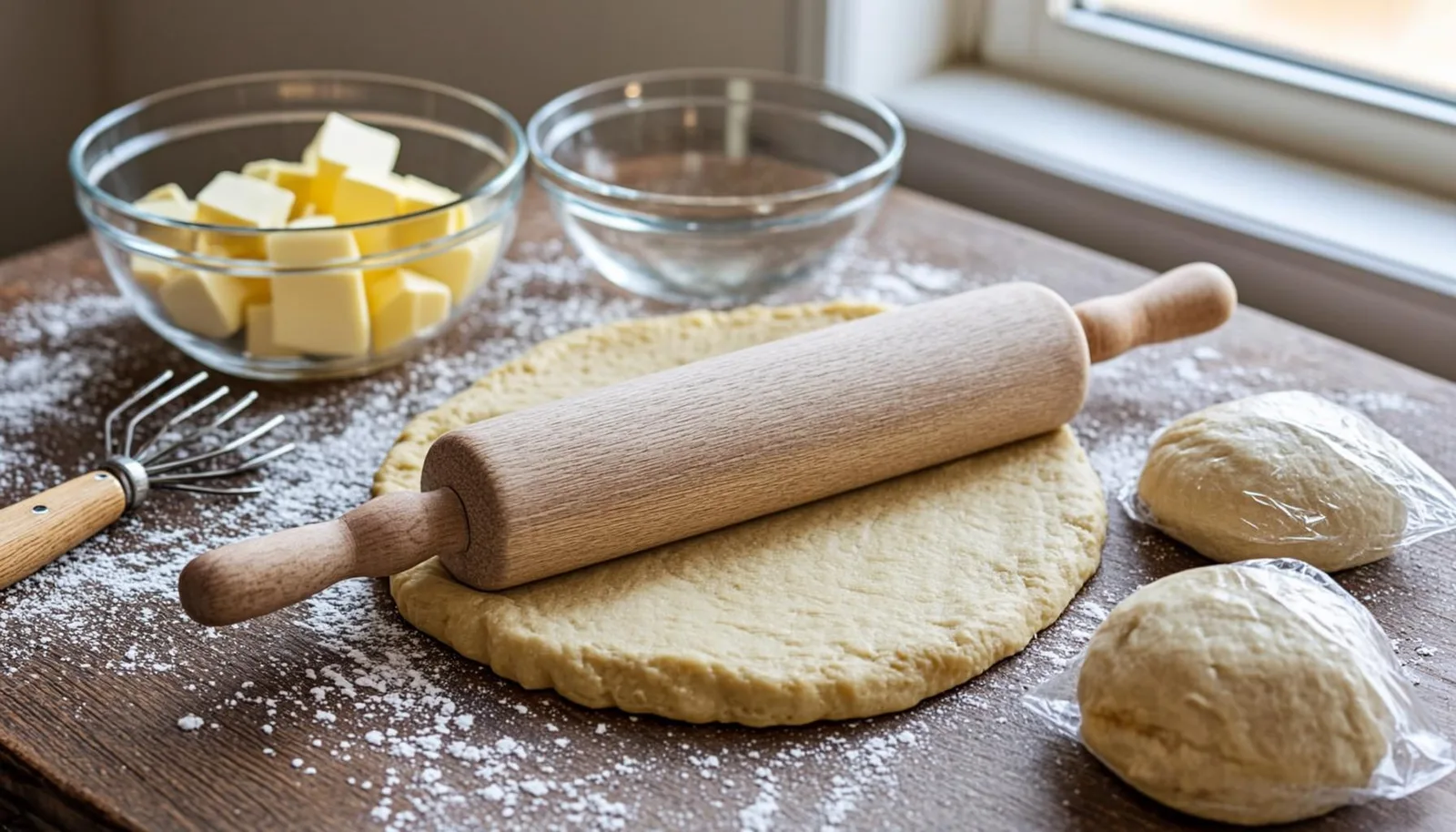
Homemade pie crust takes four ingredients, twenty minutes of work, and gives you a crust that really tastes of butter. Better still, it freezes: make your crusts in November, and the réveillon tourtières, the vegetarian lentil tourtière or a last-minute pie will be half done.
This recipe makes two 23 cm crusts, enough for one double-crust pie or two pie shells. Its proportions are based on tested recipes and on advice from Iowa State University's extension service. For the rest of the holiday menu, see our guide to traditional réveillon recipes.
- Prep
- 20 min
- Cook
- 45 min
- Servings
- 8
- Season
- Holiday season
- Rating
- Not rated yet
Ingredients
- 300 g (2 ½ cups) all-purpose flour, preferably unbleached
- 5 ml (1 tsp) salt (2 ml if using salted butter)
- 227 g (1 cup) very cold unsalted butter, cut into 1 cm cubes
- 90 to 175 ml (6 to 12 tbsp) ice water
Directions
- Mix. In a large bowl, combine the flour and salt.
- Cut in. Add the butter and work it in quickly with your fingertips or a pastry blender, until you have uneven crumbs dotted with pea-sized pieces of butter.
- Moisten. Drizzle in 90 ml (6 tbsp) of ice water while stirring with a fork, then add more water 15 ml at a time, just until a handful of dough squeezed in your hand holds together without crumbling.
- Shape. Gather the dough without kneading it, divide it in half and flatten each half into a disc.
- Rest. Wrap the discs and refrigerate them for at least 30 minutes, or up to 2 days. If they are very cold, leave them on the counter for 10 to 15 minutes before rolling.
- Roll. On a floured work surface, roll each disc from the centre outward, giving the dough a quarter turn between passes, until it is about 3 mm thick and 3 to 5 cm wider than the pie plate.
- Line. Ease the pastry into a 23 cm (9-inch) pie plate without stretching it. Trim the excess, leaving about 2.5 cm of overhang, and tuck it under the edge. Refrigerate for 30 minutes before filling or baking.
- Blind-bake. If your recipe calls for a prebaked crust, preheat the oven to 190°C (375°F). Line the cold crust with parchment paper, fill it two-thirds full with dried beans, rice or sugar and bake for 20 minutes. Remove the paper and weights. For a fully baked crust, prick the bottom with a fork and bake for another 20 to 25 minutes, until golden all over.
Tried this recipe? Rate it
Be the first to rate it.
The secret: cold, pieces of butter and very little work
It all starts with proportions. Iowa State University sums up the basics as three parts flour, two parts fat and one part cold water; the tested recipes we consulted come in at around 300 g of flour for about 225 g of fat, for a 23 cm double-crust pie. Our recipe follows that guideline. All-purpose flour is fine, preferably unbleached, according to the same source.
Next comes the cold. Iowa State University insists that the fat and water must be very cold. Pea-sized pieces of fat melt in the oven and release steam, which separates the dough into flaky layers. An American baking guide puts it another way: every piece of butter creates a small space in the crust, because it melts once the dough has already started to set. Hence the rule: very cold butter, cut into cubes, with pieces still visible in the dough.
Finally, restraint. Kneading too much or adding too much water activates the gluten and makes a tough crust, the same guide warns. Add the ice water one spoonful at a time, just until a handful of dough squeezed in your hand holds together, then stop. Does the dough look a little shaggy? That is normal.
Making it ahead: fridge, freezer and blind baking
In the fridge. The tested recipe we followed keeps discs of raw dough for 2 days in the fridge, well wrapped. If they have been in the cold for more than 30 minutes, leave them on the counter for 10 to 15 minutes before rolling.
In the freezer. Wrap each disc in plastic, then in aluminum foil, and freeze it for up to 2 months, the baking guide recommends. To use it, thaw it in the fridge, the safest method for all foods according to the Quebec government, until it is soft enough to roll but still cold. You can also freeze a whole unbaked fruit pie: 3 to 4 months according to Clemson, 2 to 4 months according to the University of Illinois. Clemson notes, however, that the bottom crust tends to get soggy. To plan your holidays, follow our make-ahead holiday freezer calendar.
Blind baking. For a filling that bakes briefly or not at all, prebake the shell. The guide's method: chill the lined crust for 30 minutes, line it with parchment paper and fill it two-thirds full with dried beans, rice or sugar, then bake for 20 minutes at 190°C (375°F). Remove the weights: the crust is ready for a filling that will finish baking in the oven. For a fully baked crust, prick the bottom with a fork and bake for another 20 to 25 minutes, until golden all over. A tip from the same guide: sugar used as a weight comes out lightly toasted and can then be reused for baking.
Nothing goes to waste. Re-roll the scraps to cut out shapes for the top of a tourtière, as a Foodland Ontario recipe suggests. Buy your flour in bulk, just the amount you need (see our tips on bulk buying), and for an apple pie, choose a variety that holds its shape when baked with our guide to Quebec apples.
True or false: 4 myths about pie crust
"You need shortening for a flaky crust." False.
Butter is enough. According to the baking guide we consulted, butter is precisely what promotes flakiness, while shortening, which melts at a higher temperature, mainly helps the crust hold its shape. Iowa State University points out that any solid fat, kept cold and in pieces, gives a flakier crust than melted or liquid fat. A Canadian food magazine swears by lard, the norm in the old days according to The Canadian Encyclopedia: a matter of taste, not a necessity.
"Dough has to rest in the cold before rolling." True.
According to Iowa State University, 30 minutes in the fridge lets the gluten relax and the flour absorb the water evenly, which makes the dough easier to roll. The cold also firms up the fat: the crust holds its shape better in the oven, and it shrinks less if you chill the lined pie plate for another 30 minutes before baking.
"The more you work the dough, the better it holds together." False.
It is the other way around: long kneading or drowning the dough in water activates the gluten and toughens the crust. Mix just enough for the dough to hold together, keeping visible pieces of butter.
"A little bite of raw dough is harmless." False.
Health Canada points out that flour is a raw ingredient that can be contaminated in the field and contain bacteria such as E. coli. It advises against tasting raw dough and recommends cooking anything made with it. Wash your hands after handling it, and bake the scraps instead of nibbling them.
Free gift: get The Quebec Recipe Advent Calendar, 24 recipes ready in 30 minutes or less with local ingredients, one a day until Christmas Eve. The same page gathers all our holiday recipes and guides.
Sources
- All-Butter Pie Crust, King Arthur Baking, 2026.
- Pie Crust (Pie Baking Guide), King Arthur Baking.
- How (and why) to prebake pie crust, PJ Hamel, King Arthur Baking, 2021.
- Classic Tourtière (pastry recipe included), Chatelaine, 2023.
- How To Make The Best Tourtière, Ever, Kristen Eppich, Chatelaine, 2023 (updated in 2025).
- Pie Baking – Simple Ingredients and Equipment, Marlene Geiger, AnswerLine, Iowa State University Extension and Outreach, 2020.
- Pie Baking – Crust Perfection, Marlene Geiger, AnswerLine, Iowa State University Extension and Outreach, 2020.
- Safe handling of flour, Health Canada, 2021.
- Refroidir, réchauffer et décongeler les aliments (cooling, reheating and thawing food; in French), Gouvernement du Québec (MAPAQ), 2025.
- Freezing Prepared Foods (HGIC 3065), Clemson Cooperative Extension, 2012.
- What Can I Freeze?, University of Illinois Extension, 2025.
- Tourtière, Sasha Chapman, The Canadian Encyclopedia, 2014 (edited in 2015).
- Tourtière-Style Pot Pie, Foodland Ontario, Government of Ontario.
Frequently asked questions
How many crusts does this recipe make?
Two 23 cm (9-inch) crusts, enough for one double-crust pie or two pie shells. For two tourtières, you need four crusts: make the recipe twice.
How long does pie dough keep?
According to the tested recipe we followed, well-wrapped discs of raw dough keep for 2 days in the fridge and up to 2 months in the freezer, wrapped first in plastic and then in aluminum foil.
How should I thaw the dough?
In the fridge, until the disc is soft enough to roll but still cold. The Quebec government advises never thawing food at room temperature.
Salted or unsalted butter?
Both work. The tested recipe uses unsalted butter and 5 ml of salt; with salted butter, cut the salt to 2 ml (½ tsp).
Can I freeze an unbaked fruit pie?
Yes: 3 to 4 months according to Clemson, 2 to 4 months according to the University of Illinois. Clemson advises not cutting vents before freezing, then baking it without thawing at 230°C (450°F) for 15 to 20 minutes, then at 190°C (375°F) for 20 to 30 minutes.