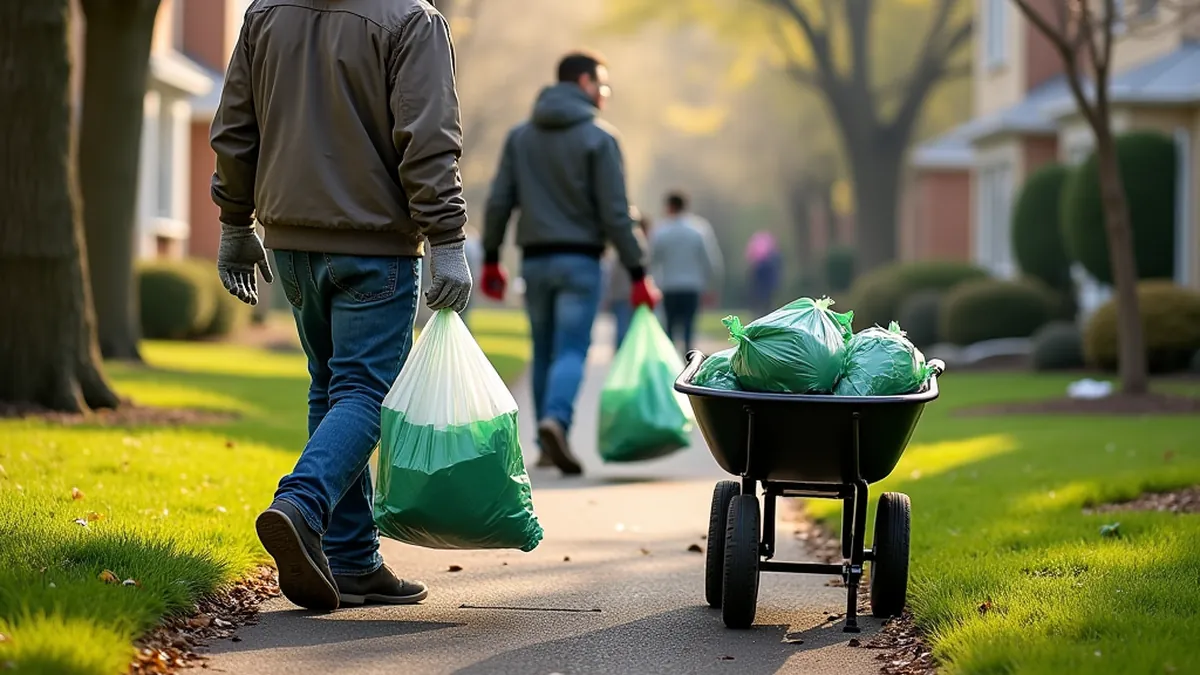
Brown bin: what you can put in it and why the rules change from one city to the next
Pet litter, paper towels, fallen leaves, compostable bags: what goes in the brown bin in Laval can be refused in Quebec City. We compared the official rules of four cities, and we explain why they differ: it all depends on the facility that receives your scraps and the contaminants it can tolerate.
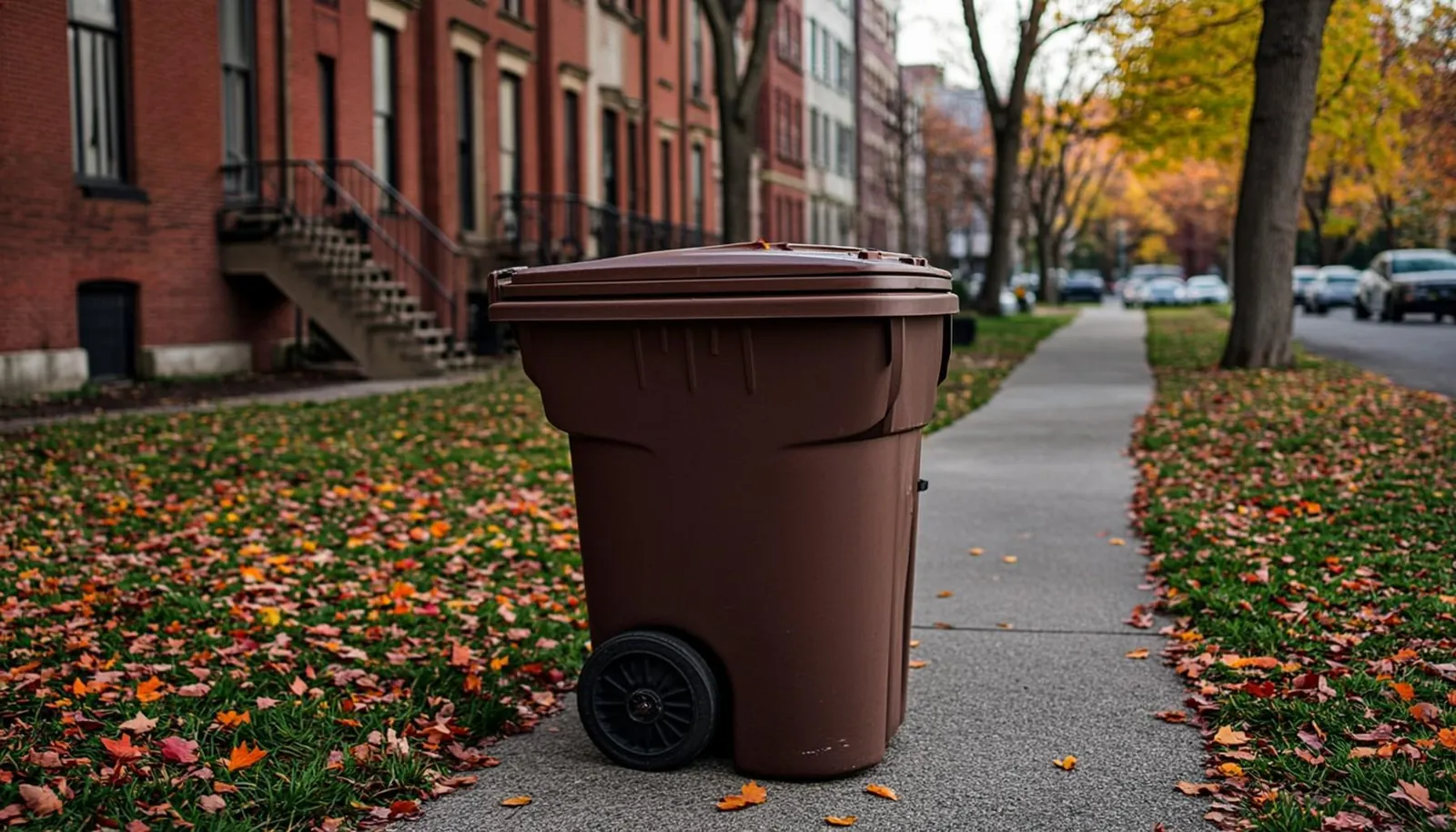
You move from Laval to Quebec City, and the cat litter you used to put in the brown bin now has to go in the garbage. Your sister in Gatineau uses certified compostable bags with no problem, while in Laval they are banned. Nobody is wrong: the answer to "brown bin, what goes in?" really does change from one city to the next.
To sort it out, in October 2026 we read the official pages of four cities: Montreal, Quebec City, Laval and Gatineau. Here is what is accepted almost everywhere, a table of the real differences, then the underlying reason: the facility that receives your scraps dictates the list. For an overview of collection in Quebec (figures, provincial strategy, what is done in France), read our article on the brown bin and organic waste collection instead.
The common ground: what is accepted almost everywhere
RECYC-QUÉBEC sums up the logic of the brown bin in two questions. Can you eat it, or is it part of something you eat? Is it yard waste, apart from branches? According to the organization, more than 800 municipalities now offer their residents a collection of organic materials, and it generally accepts:
- fruit and vegetable peels and scraps;
- meat, fish and seafood, including bones, fat and shells;
- leftovers and expired food;
- newspaper.
The four cities we checked agree on most of this food list, meat included. They also agree on one refusal: diapers are rejected everywhere. In Montreal, Laval and Gatineau, ordinary plastic bags are refused; in Quebec City, scraps go in the purple bag supplied by the city. For liquids, caution is the rule: Montreal refuses soup, milk, juice and coffee, and Laval asks residents to avoid liquid food waste.
In October, there is also the question of fallen leaves, which is far less uniform, as the table shows. RECYC-QUÉBEC also recommends grasscycling and leafcycling whenever possible, and we suggest six ways to use fallen leaves in the garden instead of bagging them.
Montreal, Quebec City, Laval, Gatineau: the table of differences
Here are the rules from the official pages, consulted in October 2026. They can change: always check your city's page.
| Rule | Montreal | Quebec City | Laval | Gatineau |
|---|---|---|---|---|
| Where the scraps go | Composting in a closed building at the Saint-Laurent CTMO (western sectors of the island) | Biomethanization | Composting at the Mironor centre, in the Laurentians | Composting at the GFL Environmental plant in Moose Creek, Ontario |
| Bags | Ideally none; otherwise paper. Certified compostable plastic only where food scraps are collected separately from yard waste | Plastic purple bag supplied by the city | Newspaper, paper bag or nothing; all plastic bags banned, even compostable ones | Certified compostable bags, paper bags or newspaper |
| Meat, fish, bones | Yes, bones included | Yes, meat included | Yes, with bones, fat and shells | Yes for meat (the page does not detail the rest) |
| Soiled paper (paper towels, tissues) | Yes | No: food scraps only, except paper coffee filters and paper tea bags | Yes, unless soaked with cleaning products | Yes (soiled paper and cardboard) |
| Leaves and grass | Only in 5 boroughs | No | Yes, with small branches | Yes |
| Litter | No, even biodegradable | No, even biodegradable or compostable | Yes (soiled litter) | No |
| Diapers | No, even certified compostable | No | No | No |
Three gaps stand out. First, litter: refused in Montreal, Quebec City and Gatineau, it is accepted in Laval. Next, soiled paper, which goes in the brown bin everywhere except Quebec City, where the purple bag takes only food scraps. In Montreal, that includes soiled pizza or chicken boxes. Finally, yard waste: Laval and Gatineau take it in the brown bin, Montreal only in Lachine, Le Plateau-Mont-Royal, L'Île-Bizard–Sainte-Geneviève, Pierrefonds-Roxboro and Saint-Laurent, and Quebec City not at all. Even soil divides them: Laval accepts grass, sand and garden soil, while Montreal refuses soil, rock and sand.
Bags: four cities, four rules
This is the question that causes the most confusion, and the one where cities differ the most.
- Montreal considers putting scraps directly in the bin, without a bag, to be the best method, even if the bin then needs cleaning more often. A paper bag is a good option, as is a sheet of newspaper folded around the scraps. A certified compostable plastic bag comes second, and only in sectors where food scraps are collected separately from yard waste. The city recognizes the logos of the Bureau de normalisation du Québec (BNQ), BPI and OK Compost, and asks residents not to overfill these bags, which are less sturdy than conventional plastic bags.
- Quebec City does the opposite: food scraps go in a plastic purple bag, supplied by the city at a rate of one roll of 40 bags per dwelling every six months, and placed in the outdoor container with the garbage bags. No brown bin, no new collection.
- Laval bans all plastic bags, including compostable and oxo-biodegradable ones. Residents use newspaper, a paper grocery bag, or nothing at all.
- Gatineau accepts certified compostable bags, as well as paper bags and newspaper. According to the city, no plastic bag breaks down, even one labelled biodegradable or oxo-biodegradable.
Two lessons for your kitchen. First, "biodegradable" does not mean compostable: Montreal points out that every compostable bag is biodegradable, but the reverse is not guaranteed, and Montreal, Laval and Gatineau rule out bags simply labelled biodegradable or oxo-biodegradable. Second, a certified compostable bag is not a universal pass: accepted in Gatineau, it is banned in Laval. Our comparison of compostable and conventional plastic helps you decode these labels.
Why it changes: it all depends on the plant at the end of the truck route
RECYC-QUÉBEC says it clearly: the facility that receives your organic materials determines what your brown bin can accept. There are two main families, and they do not have the same constraints.
Composting: air and time
Composting is a treatment that takes place in the presence of oxygen. According to RECYC-QUÉBEC, bulking materials such as wood chips are added first to let air circulate; compost is obtained after a hot, so-called thermophilic phase, between 45°C and 70°C, followed by a maturation phase. That is Laval's route: it sends its materials to the Mironor composting centre, where turning them into compost takes several months. It is also Gatineau's, whose materials are composted in Ontario, and that of western Montreal: since September 2024, the Saint-Laurent organic waste treatment centre (CTMO) has been composting, inside a closed building, the scraps of the West Island's related municipalities and four boroughs, with a capacity of 50,000 tonnes per year. The pages we consulted do not say where the scraps from Montreal's other boroughs go.
It is not a law, but in our small sample, the cities that compost are also the ones that accept soiled paper and, at least in part of their territory, leaves and grass in the brown bin.
Biomethanization: a recipe that tolerates only food
Biomethanization, or anaerobic digestion, takes place without oxygen and produces biogas along with a residue called digestate. That is Quebec City's choice. There, your table scraps are used to make a "biopulp" that will be converted into energy, and the city warns that anything that is not food waste risks contaminating it, while garbage breaks the equipment. Hence the strictest rule in the table: food, period. No paper towels, no leaves, no litter.
The purple bag follows the same logic. In its FAQ, Quebec City gives its reasons for preferring plastic to compostable bags: compostable bags do not stand up well to handling and compaction in the trucks, they take longer to break down than the time they spend in the digesters, so they would have to be removed anyway, they cannot be recycled, and they cost twice as much. Here, the bag is for transport; the city also says it is looking for a technology to recycle the purple bags after collection.
Same technology, opposite rules
The treatment method does not explain everything. Laval and Gatineau both compost, and yet they disagree on two points: Laval bans even compostable bags but accepts soiled litter, while Gatineau accepts certified compostable bags but refuses litter. Each facility has its own equipment, process and requirements for the final product. That is why a list picked up from a friend in another city is not worth much at your place.
Contaminants: what spoils a batch of compost
The other main reason for refusals is contaminants: anything that does not break down, or that leaves something in the compost or digestate that nobody wants to find in a field. The cities give their own reasons:
- Diapers: their plastic does not compost and contaminates the compost, Gatineau explains. Montreal refuses them even when they are certified compostable.
- Litter and animal excrement can carry medications or chemicals that degrade the quality of the compost, according to Gatineau. Montreal refuses even biodegradable litter, and Quebec City even compostable litter.
- Oxo-biodegradable bags are made of conventional plastic that breaks into small pieces without fully decomposing, and Montreal stresses that these fragments contaminate the compost.
- Packaging, such as plastic film or aluminum foil, is banned from the purple bag in Quebec City.
- Paper towels soaked with cleaning products are refused in Laval, even though ordinary paper towels are accepted there.
Why so strict? Because what comes out of these facilities goes back to the land. RECYC-QUÉBEC points out that returning compost or digestate to the soil is what closes the recycling loop. In Montreal, compost from the CTMO is certified under the BNQ 0413-200 standard and can be used without restriction, in agriculture, for planting trees or in flower beds; boroughs usually hand it out in spring and fall. A scrap of plastic or a trace of medication tossed in your brown bin can therefore end up in someone's vegetable garden, maybe yours.
How to check what goes in your brown bin
Rules shift. Montreal's brown bin page was updated on April 2, 2026, Laval's on April 8, 2026, and the Saint-Laurent CTMO only opened in September 2024. Before you trust a list seen at a friend's place or on social media, take three minutes:
- Go to your city's official page. Search for "brown bin", "organic materials" or "food waste" on your municipality's website (in French: "bac brun", "matières organiques" or "résidus alimentaires"), and check when the page was last updated.
- Use your city's sorting tool, if it has one. Quebec City points to its "Ça va là" tool, and Gatineau to DTRITUS.
- Go through RECYC-QUÉBEC. The organization invites you to check with your municipality for the exact list or to download its "Ça va où?" mobile app. Its website also offers an interactive map to check whether your municipality provides the collection.
- Ask where your scraps go. Composting or biomethanization, a local facility or a plant outside the region: the answer explains the logic of your list.
Moving? Do the exercise again in the first week: what was allowed in your old city can contaminate the brown bin in the new one. No collection in your building, or tempted by a countertop appliance? Our feature on electric composters such as Lomi and FoodCycler separates what these appliances promise from what they actually do. Bokashi and indoor worm composting are two other options without a yard. Finally, for the small countertop bin, our guide to composting food scraps day to day has tips against odours and fruit flies.
Sources
- La collecte municipale des matières organiques (municipal collection of organic materials; in French), RECYC-QUÉBEC, 2026 (consulted in October 2026).
- What belongs in the brown bin, Ville de Montréal, last updated April 2, 2026 (consulted in October 2026).
- Comment choisir un sac à compost (how to choose a compost bag; in French), Ville de Montréal, updated December 4, 2024 (consulted in October 2026).
- Treatment centre for organic waste: locally produced compost, Ville de Montréal, last updated June 1, 2026 (consulted in October 2026).
- Les résidus alimentaires (food waste; in French), Collecte des résidus alimentaires, Ville de Québec, 2026 (consulted in October 2026).
- Foire aux questions (FAQ; in French), Collecte des résidus alimentaires, Ville de Québec, 2026 (consulted in October 2026).
- Collecte des matières organiques (organic materials collection; in French), Ville de Laval, last updated April 8, 2026 (consulted in October 2026).
- Collectes du compost, de la récupération et des ordures (compost, recycling and garbage collection; in French), Ville de Gatineau (consulted in October 2026).
Frequently asked questions
Can meat and bones go in the brown bin?
Yes, in most municipalities. RECYC-QUÉBEC lists meat, fish and seafood, including bones, fat and shells, among the residues generally accepted. Montreal and Laval explicitly accept bones, and in Quebec City, meat goes in the purple bag. Still, check your city's list.
Are compostable bags accepted in the brown bin?
It depends on the city. Gatineau accepts certified compostable bags. Montreal allows them as a second option, only where food scraps are collected separately from yard waste, and prefers no bag or paper. Laval bans all plastic bags, even compostable ones, and Quebec City uses its own plastic purple bag.
Why is pet litter often refused in the brown bin?
According to Gatineau, litter and animal excrement can carry medications or chemicals that degrade the quality of the compost. Montreal refuses it even when it is biodegradable, and Quebec City even when it is compostable. Laval is the exception: soiled litter is accepted there.
Do paper towels go in the brown bin?
In Montreal, Laval and Gatineau, yes: all three cities accept soiled paper. Laval, however, refuses paper towels soaked with cleaning products. In Quebec City, no: the purple bag takes only food scraps, apart from paper coffee filters and paper tea bags.
How do I find out what goes in my city's brown bin?
Start with your municipality's official page, and check when it was last updated. RECYC-QUÉBEC invites you to check the exact list there or to download its "Ça va où?" app. Some cities have their own tool, such as "Ça va là" in Quebec City or DTRITUS in Gatineau. Rules change: check again after a move.