Quebec's expanded deposit: what you can already return, and what's added in March 2027
Cans and plastic bottles already go back for a refund. On March 1, 2027, Quebec's deposit system will expand to wine and spirits bottles, other glass containers, and milk and juice cartons. Here is what will be worth 10¢ or 25¢, where and how to return your containers, and what to do in the meantime with the ones that don't carry a deposit yet.
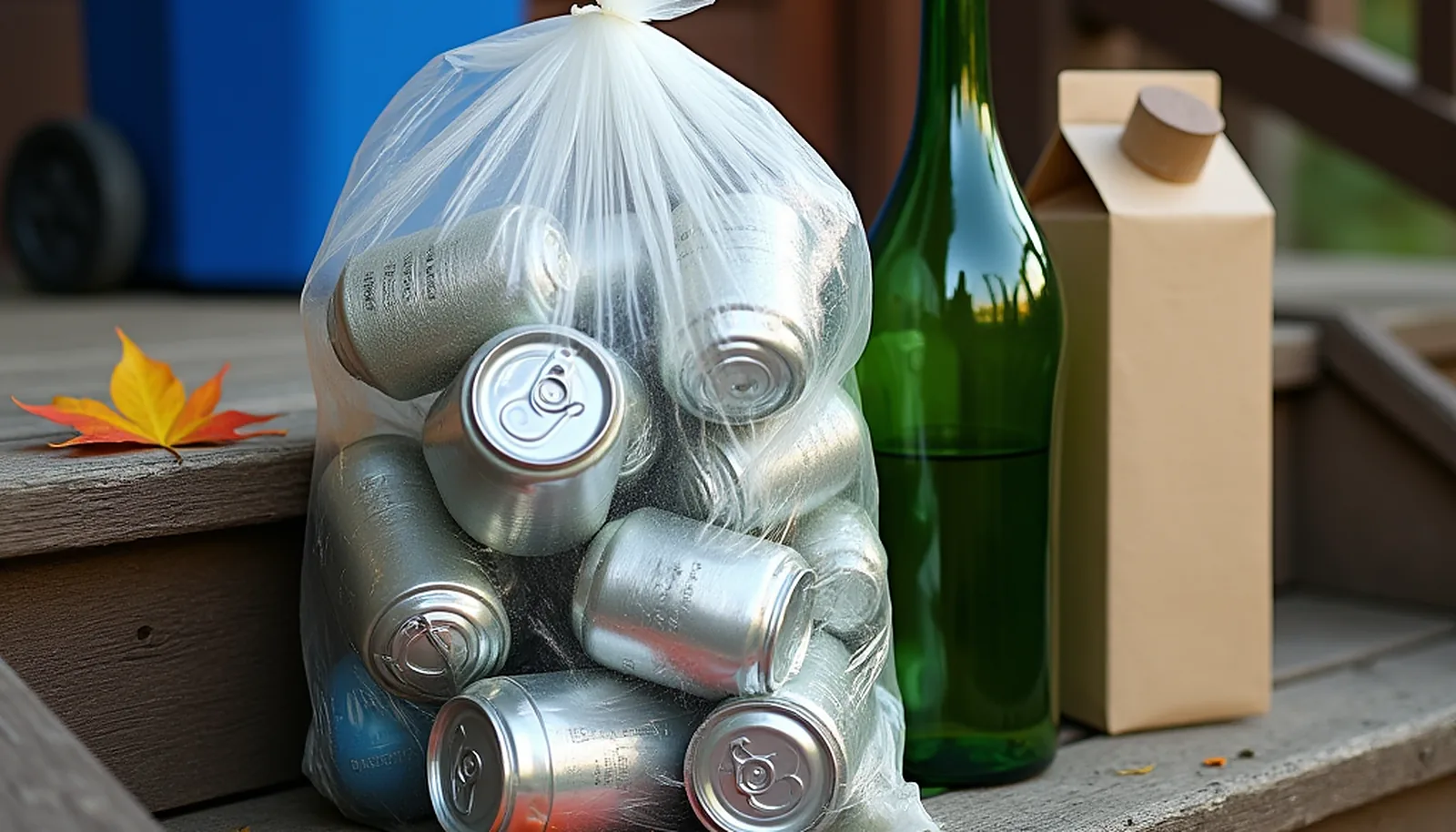
You have probably been returning cans for years, and plastic water and juice bottles since March 2025. But the wine bottle from Saturday's dinner still ends up in the recycling bin. Not for much longer: on March 1, 2027, the deposit will expand to all other ready-to-drink beverage containers from 100 mL to 2 L, including glass bottles and milk and juice cartons.
Quebec Waste Reduction Week (Semaine québécoise de réduction des déchets), coordinated by Zéro Déchet Québec from October 15 to 21, 2026, is the right time to take stock. We read the timeline from Quebec's environment ministry, the regulation and the pages of RECYC-QUÉBEC and Consignaction, the organization that runs the system: here is what you can return, what is being added, where to go and how.
What you can already return: cans, plastic and a little glass
Quebec has had a deposit system since 1984, but for a long time it mainly covered beer and soft drinks. The modernized system makes the companies that put beverages on the market responsible for organizing and financing it. They are represented by the Association québécoise de récupération des contenants de boissons (AQRCB), designated by RECYC-QUÉBEC on October 24, 2022, for ten years, and better known as Consignaction. The goal of the modernization, according to Consignaction: get 90% of deposit containers back by 2032.
According to the ministry's timeline, the expansion is happening in three phases; the first two are in effect:
- Since November 1, 2023: aluminum cans from 100 mL to 2 L that previously had no deposit (juice, sparkling water, cider, etc.) have joined beer and soft drink containers, which already carried one. The amount has been standardized at 10¢, except for glass containers from 500 mL to 2 L, at 25¢.
- Since March 1, 2025: all other ready-to-drink beverage containers made of plastic, from 100 mL to 2 L, carry a deposit, such as water, juice or milk bottles.
For glass, only beer and soft drink bottles carry a deposit for now: 10¢ up to 499 mL, 25¢ from 500 mL to 2 L. According to Consignaction's FAQ, the items that carry no deposit today include glass wine and spirits bottles, milk and juice cartons, drinkable yogurt and meal supplements.
What's added on March 1, 2027
The third phase will bring all other ready-to-drink beverage containers from 100 mL to 2 L into the deposit system, whatever they contain: those made of glass, another breakable material or fibre, multilayer cartons included. RECYC-QUÉBEC gives wine and spirits bottles and milk and juice cartons as examples. According to Quebec's Ministère des Affaires municipales et de l'Habitation, about 1 billion new containers will enter the system, which will then handle some 5 billion deposit containers a year.
This date has already moved once: in February 2025, the government amended the regulation to push back the arrival of glass, other breakable materials and fibre by two years. At the time of writing, the regulation and the ministry's timeline still set March 1, 2027.
How much will these containers be worth?
The regulation already sets the amounts that will apply to all covered containers on March 1, 2027: 25¢ for a container made of glass or another breakable material from 500 mL to 2 L, and 10¢ for all others. A 750 mL bottle of wine or spirits will therefore be worth 25¢, a 375 mL half-bottle 10¢, and a milk or juice carton 10¢. RECYC-QUÉBEC also presents these two amounts as the general rule. Consignaction's FAQ does not yet spell them out for phase 3: watch for its announcements as March approaches.
What will stay out
The regulation excludes tin cans, bags and bags-in-box: bagged milk and boxed wine will therefore remain excluded. It also leaves concentrates, broths, soups, cream, infant formula, syrups and drinkable yogurt out of its definition of covered products. Your milk carton will carry a deposit, but not your cream or broth carton. And formats under 100 mL or over 2 L will stay outside the system.
The table, container by container
Here is the situation according to the regulation, the ministry's timeline and Consignaction's FAQ, as of October 2026:
| Container | Today | Starting March 1, 2027 |
|---|---|---|
| Aluminum can from 100 mL to 2 L (beer, soft drink, juice, sparkling water, cider, etc.) | Deposit: 10¢ | No change: 10¢ |
| Plastic bottle from 100 mL to 2 L (water, juice, milk, soft drink, etc.) | Deposit: 10¢ | No change: 10¢ |
| Glass beer or soft drink bottle | Deposit: 10¢ up to 499 mL, 25¢ from 500 mL to 2 L | No change |
| Glass bottle of wine, spirits or another beverage, from 500 mL to 2 L (e.g., 750 mL) | No deposit: recycling bin | Deposit: 25¢ |
| Glass bottle from 100 to 499 mL, other than beer or soft drink (e.g., 375 mL half-bottle of wine) | No deposit: recycling bin | Deposit: 10¢ |
| Multilayer milk or juice carton, from 100 mL to 2 L | No deposit: recycling bin | Deposit: 10¢ |
| Cream, broth, soup, concentrate, syrup, infant formula, drinkable yogurt | No deposit | Still excluded |
| Tin can, bag (bagged milk) and bag-in-box (boxed wine) | No deposit | Still excluded |
| Container under 100 mL or over 2 L | No deposit | Still excluded |
Where to return your containers
According to the ministry's timeline, the network must include at least 1,200 return locations, including in remote and isolated areas. You have two main options.
At retailers
The regulation requires retailers that sell deposit beverages to take back the containers and refund the deposit, unless their sales area is 375 m² (4,036 sq. ft.) or less. That is why some convenience stores (dépanneurs) and small grocery stores no longer accept them, even though a few have teamed up with a nearby return location. In larger stores, you will often find a Zone Consignaction, a kiosk where you have your containers read one at a time, during store hours. Bring your containers sorted by material. Refillable beer bottles, for their part, go to the customer service counter.
At Consignaction and Consignaction+ sites
Consignaction also runs its own return locations. The timeline sets targets for it: at least 300 locations by September 1, 2026, and 400 by March 1, 2027, just in time for glass. There are three ways to return your containers there:
- Single-Unit Return: you feed them in one by one, as at a kiosk.
- Express Return: you drop them off, mixed, in clear bags of up to 90 L, which are generally counted within 7 to 14 days. You need the Consignaction app, and the limit is 10 bags per visit and per day at a Consignaction site, 20 at a Consignaction+.
- Bulk Return, only at Consignaction+ sites: you pour them into a machine that counts 200 to 250 of them per minute.
At the time of writing, these sites are open every day from 8 a.m. to 6 p.m., until 7 p.m. on Thursdays and Fridays. You get your refund in cash at a self-serve kiosk or by Interac e-Transfer through the app, and you can also donate the amount to an organization by contacting it. If you get a coupon, for example with Bulk Return, it does not expire; Consignaction recommends taking a photo of it and keeping it away from sunlight and friction. To find the nearest location, check Consignaction's map of return locations or its app.
The system must also serve outdoor public spaces: according to the timeline, two thirds of the places identified in the service plan must be covered by October 24, 2027, at the latest, and all of them by October 24, 2028. Want to get the kids involved in the container run? Our article on the family zero-waste challenge suggests roles by age.
How to prepare them so they are accepted
With Single-Unit Return, each container is scanned: an unreadable barcode, a crushed container or a product not registered in Quebec can be refused. The habits to adopt, according to Consignaction's FAQ:
- Empty them completely.
- Do not crush them. A crushed container is accepted, except with Express Return, but the machine may not recognize it: you will have to have it counted at the counter.
- Keep the label on plastic bottles: it is used to identify them.
- Rinse them. It is not mandatory, but it is strongly recommended.
- Sort by material for a Zone Consignaction; at Consignaction sites, you can mix them.
An eligible container refused by the machine can be taken to the service counter. However, a container bought outside Quebec is not eligible for a refund: no point bringing back a case of empty cans from Ontario.
Until March 2027: what to do with wine bottles, milk cartons and the rest
For now, wine bottles, glass spirits bottles and milk cartons go in the recycling bin. Montreal, for example, accepts them in the bin, empty and rinsed, and asks you to unscrew metal lids and put them in the bin separately. For your municipality's rules, RECYC-QUÉBEC's "Ça va où?" app tells you what to do with each material, and our article on the single list for the recycling bin explains what has changed since 2025. For the rest, our golden rules of recycling and our guide to recycling material by material cover it all.
No need to stockpile bottles in the basement while you wait for March 1. The deposit is paid at purchase, and the retailer must show the amount on your receipt. None of the official pages we consulted says whether a bottle bought before that date, with no deposit paid, will be refunded: until then, the bin is still the right place.
One date to note: if you still have refillable milk containers for which you paid the deposit before March 1, 2025, the ministry's timeline gives you until March 15, 2027, to return them and get back the amount paid at the time, for example $2 instead of $0.25.
Reduce before you return
The deposit system aims to get more containers back, not to reduce their number: every can you return was still manufactured, filled and shipped. In the 3RV-E hierarchy, reducing and reusing come before recycling. What really reduces waste: a reusable bottle and tap water instead of bottled water, and a second life for the glass bottles and jars that carry no deposit, with our tips for reusing glass packaging. Wondering what really happens to your recycling? Our article on recycling myths and facts sorts it out. And to keep going after the Week, the 30-day zero-waste challenge offers one small habit a day.
Sources
- Nouveau déploiement de la consigne applicable aux contenants de boissons « prêt-à-boire » de 100 ml à 2 l (timeline of the new deposit rollout for ready-to-drink beverage containers; in French), Ministère de l'Environnement, de la Lutte contre les changements climatiques, de la Faune et des Parcs (consulted in October 2026).
- La modernisation de la consigne (modernizing the deposit system; in French), Ministère de l'Environnement, de la Lutte contre les changements climatiques, de la Faune et des Parcs, 2026 (consulted in October 2026).
- Règlement visant l'élaboration, la mise en œuvre et le soutien financier d'un système de consigne de certains contenants (regulation on the deposit system for certain containers, chapter Q-2, r. 16.1; in French), LégisQuébec, text updated to June 1, 2026 (consulted in October 2026).
- Consigne (deposit; in French), RECYC-QUÉBEC, 2025 (consulted in October 2026).
- Frequently Asked Questions, Consignaction (Association québécoise de récupération des contenants de boissons) (consulted in October 2026).
- Déploiement des lieux de retour des contenants consignés : contribution des municipalités (rolling out deposit return locations: the municipalities' contribution; in French), Muni-Express No. 13, Ministère des Affaires municipales et de l'Habitation, June 16, 2026 (consulted in October 2026).
- What to put in the recycling bin, Ville de Montréal, last updated November 5, 2025 (consulted in October 2026).
- Semaine québécoise de réduction des déchets (Quebec Waste Reduction Week; in French), Zéro Déchet Québec, 2026 (consulted in October 2026).
Frequently asked questions
How much will the deposit on a wine bottle be in 2027?
Starting March 1, 2027, the regulation sets the deposit at 25¢ for a glass container of 500 mL to 2 L, such as a 750 mL wine bottle, and at 10¢ for a smaller glass container, such as a 375 mL half-bottle. Until then, wine bottles carry no deposit: they go in the recycling bin.
Will milk cartons carry a deposit?
Yes. Starting March 1, 2027, multilayer milk and juice cartons from 100 mL to 2 L will carry a deposit of 10¢, according to the regulation. Bagged milk, cream and broth will remain excluded. Until then, cartons go in the recycling bin.
Where do I return my deposit cans and bottles?
To retailers with a sales area over 375 m², which are required to take them back, often at a Zone Consignaction kiosk, or to a Consignaction or Consignaction+ site. The map of return locations is on Consignaction's website and in its app. Stores of 375 m² or less, such as some convenience stores, are no longer required to accept them.
Do I need to rinse containers before returning them?
It is not mandatory, but Consignaction strongly recommends it. Empty them completely, avoid crushing cans and plastic bottles, and keep the label on plastic bottles: the machine has to be able to identify them.
Does a can bought in Ontario get the deposit back?
No. According to Consignaction, a container bought outside Quebec is not eligible for a refund. The Quebec deposit is paid at purchase, from a retailer here, and that is the amount refunded when you return the container.