The single list for Quebec's recycling bin: what has changed since 2025
Since January 1, 2025, Éco Entreprises Québec has run curbside recycling and a single list of materials applies across Quebec. Here is why the rules changed, what goes in the bin now, what is still refused, and a timeline that isn't over: more additions are planned by 2031.
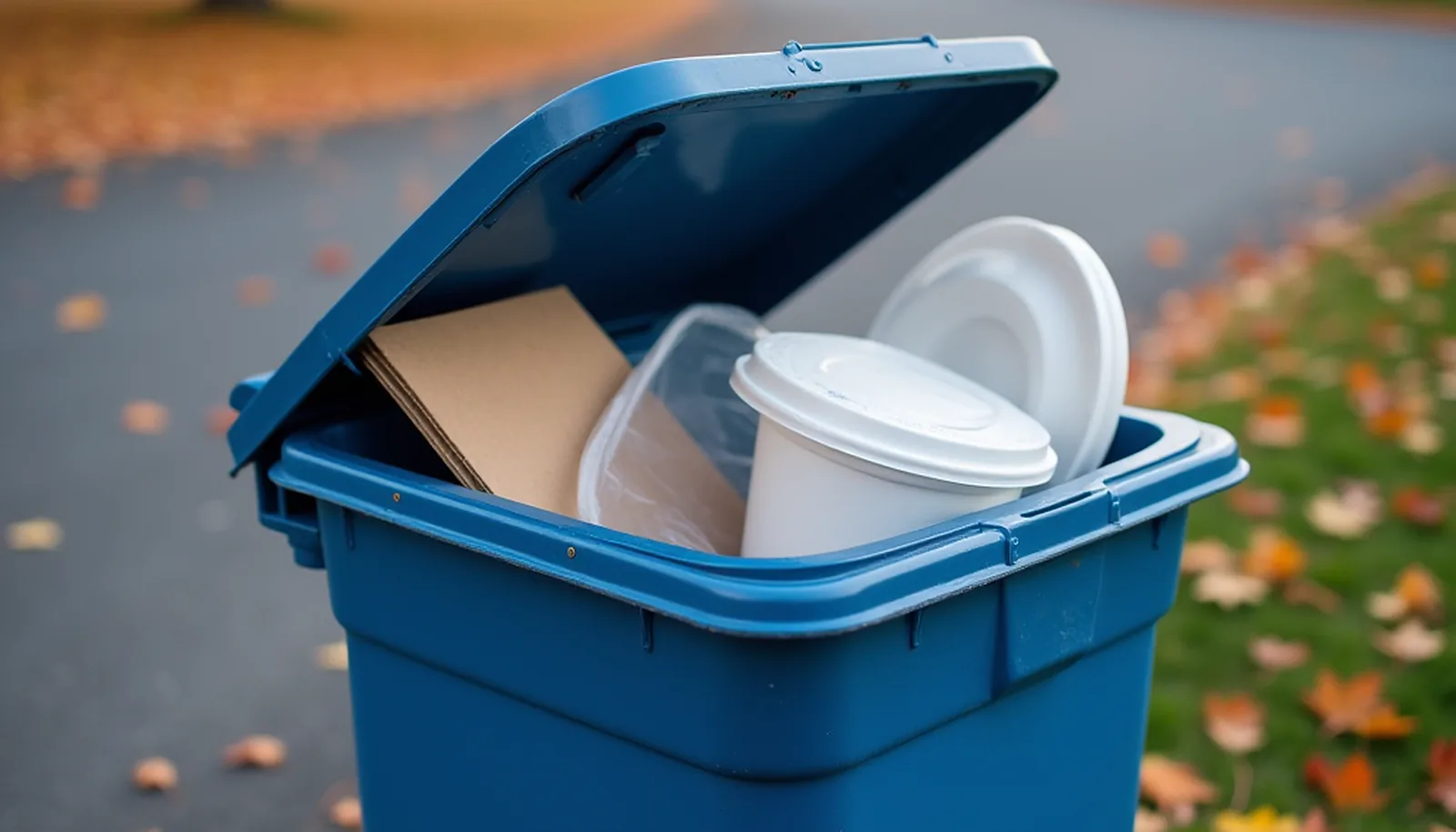
Your yogurt tub goes in the recycling bin whether you live in Gatineau, Sherbrooke or Montreal. That sounds trivial, but it is recent: until the end of 2024, the rules were not unified, and what went in the bin depended on where you lived. Since January 1, 2025, a single list applies across Quebec, and the companies that put packaging on the market are the ones running the system.
Reducing comes before recycling: that is the common thread of our 7 habits for Quebec Waste Reduction Week. But what ends up in the bin matters too. Here is what changed and why, what goes in the bin now, what still doesn't, and a timeline that runs to 2031. For sorting material by material and preparing each container, our guide to recycling properly in Quebec already covers it all.
Why the list changed: companies pay and run the system
The reform rests on extended producer responsibility (EPR): a company that puts containers, packaging or printed matter on the market in Quebec is responsible for them, from their design to the end of their useful life. The regulation that applies this principle to curbside recycling, known in Quebec as selective collection, has been in force since July 2022, and RECYC-QUÉBEC designated Éco Entreprises Québec (ÉEQ) to run the system on behalf of these companies: brand owners, distributors and other businesses that market these products.
Before, municipalities organized collection and sorting themselves, and a compensation regime reimbursed part of the bill. That regime was abolished on December 31, 2024. Since January 1, 2025, ÉEQ has planned and overseen the whole chain. In practice, the organization:
- funds 100% of the collection service, with money from the companies;
- awards sorting contracts to more than twenty sorting centres, and holds them to higher performance and quality standards;
- sells the bales of sorted materials to recycling companies, with a traceability process to make sure they are actually recycled or recovered;
- spreads the same instructions everywhere, under the Bac Impact banner.
Your municipality has not left the picture. Under an agreement with ÉEQ, it still handles collection and transport, manages the collection calendar and replaces damaged bins. The City of Montreal points out that the reform eases the financial burden on municipalities. Another important detail: the regulation forbids going backwards. A material already accepted in a territory before July 7, 2022 must remain accepted when ÉEQ takes over.
What goes in the bin now
In front of the bin, only one question matters: is it a container, packaging or printed matter? If yes, it goes in, with a few exceptions. Three habits changed with the single list:
- The number in the triangle no longer counts. Since January 1, 2025, all plastic containers and packaging go in the bin, whatever their number, except biodegradable or compostable plastics. If you still wonder what those numbers are for, we decode them in another article.
- No more bag of bags. Plastic bags go loose in the bin. According to Bac Impact, sorting centre equipment has evolved, and there is no longer any need to bundle them.
- Polystyrene food trays are accepted, like those for fruit, vegetables or meat. Only protective foam is still excluded.
The deepest change, though, is the least visible. Bac Impact asks you to put all containers, packaging and printed matter in the bin, even those that are not recycled yet. The reason: they are all covered by EPR, and building up volumes helps create markets for them. The City of Montreal makes the same point: the new system is meant to encourage companies to find recycling solutions and to create outlets for materials that cannot be recycled yet. So it is no longer up to you to guess whether a package is recyclable: if it is not one of the exceptions, it goes in the bin. Your chip bag, for example.
What still doesn't go in
The single list has its exceptions, and they apply everywhere. Among packaging, Bac Impact names three:
- aerosol containers, to be taken to a drop-off point that accepts them;
- protective polystyrene foam, the kind that surrounds appliances and furniture: it crumbles and disrupts sorting centre operations, so it goes to a municipal drop-off point;
- biodegradable and compostable plastics, usually identified by one of those two words: they are not recyclable and they contaminate other materials. Bac Impact advises asking your municipality what to do with them.
The rest of the refusals stem from a simple rule: an object is not packaging, even if it is made of the same material. Dishes, utensils, coolers, toolboxes, clothes and books you keep for years do not belong in the bin: they go to reuse or to a drop-off point. Light bulbs are dangerous at the sorting centre, and batteries have their own drop-off points (see where to take your old batteries). For bulkier items, our article on what you can bring to the ecocentre helps you prepare the trip.
That leaves deposit containers: in the bin, they will be recycled, but you lose your refund. Take them to a Consignaction return point instead. Since March 1, 2025, that includes plastic bottles of ready-to-drink beverages from 100 ml to 2 L, such as water and juice. Wine and spirits bottles and multilayer milk or juice cartons do not carry a deposit yet: they go in the bin until the deposit system extends to them, on March 1, 2027. Our article on the expanded deposit system has the details.
The timeline, from the 2021 law to the 2031 additions
The transition happened in stages, and it isn't over. Here are the dates that affect your bin, according to documents from Quebec's environment ministry and the Gazette officielle du Québec.
| Date | What happens |
|---|---|
| March 17, 2021 | Assent to the law that hands curbside recycling over to producers |
| July 7, 2022 | The curbside recycling regulation comes into force |
| October 24, 2022 | RECYC-QUÉBEC designates ÉEQ as the management body |
| December 31, 2024 | End of the municipal compensation regime |
| January 1, 2025 | ÉEQ takes over the system; one list for all of Quebec |
| December 31, 2025 | Final deadline for municipal collection and transport contracts |
| June 30, 2026 | Amended regulation: new deadlines to serve the whole territory |
| January 1, 2027 at the latest | Mandatory acceptance of rigid or flexible polystyrene, hooks and hangers |
| March 1, 2027 | Deposit extended to wine and spirits bottles and multilayer cartons |
| January 1, 2029 at the latest | Mandatory acceptance of single-use items for preparing or eating food, such as straws and utensils |
| April 1, 2030 at the latest | Service for the entire residential sector |
| January 1, 2031 at the latest | Mandatory acceptance of compostable or degradable plastics |
Twelve more months for municipalities. The law set December 31, 2024 as the end date for municipal collection and transport contracts. In December 2023, Quebec pushed that deadline back to December 31, 2025 to avoid service interruptions, since some municipalities would not have had time to complete their calls for tenders. The ministry did specify that this postponement did not delay the modernized system, which came into force as planned on January 1, 2025. So the same truck may have kept coming by your place in 2025 under the old contract, even though the list had already changed.
Not everywhere yet. The list is the same wherever curbside recycling is offered, but the service does not yet cover the whole territory. The regulation originally required all residences to be served by January 1, 2025 at the latest. An amendment adopted urgently, without prior consultation, and in force since June 30, 2026, pushes the deadline for the entire residential sector back to April 1, 2030, and the one for the northern villages of Nunavik to April 1, 2036. Quebec cites logistical and financial difficulties, particularly in isolated territories.
Additions to come, but not in your bin yet. The 2027, 2029 and 2031 dates are maximum deadlines. Some of these materials are already in the bin: polystyrene food trays have gone in since 2025. For the rest, the ministry's timeline does not say how these materials will be recovered in practice. In October 2026, Bac Impact still refuses protective foam, utensils and compostable plastics: until its instructions or your municipality's change, follow them.
What still differs from one city to the next
The list is shared; the logistics, much less so. Here is what can still vary depending on where you live:
- Collection frequency. ÉEQ now sets it according to each community's reality. In Montreal, the city still collects recyclables every week. Your municipality manages the calendar and lets you know about schedule changes.
- The container. ÉEQ supplies blue bins to municipalities, and the blue bin is gradually replacing clear bags and bins of other colours. In Montreal, green bins are still emptied as usual; a blue bin marked Bac Impact replaces them when they are damaged beyond repair.
- Enforcement. In Montreal, a new inspection team checks that the right materials end up in the right bins.
- What doesn't go in the bin. Drop-off points, ecocentres and how to get rid of compostable plastics depend on your municipality.
- The brown bin. The reform covers containers, packaging and printed matter, not food scraps. Brown bin rules still change from one city to the next, as our comparison of the brown bin in Montreal, Quebec City, Laval and Gatineau shows.
What it changes for you, in practice
Day to day, the single list makes life easier. You no longer have to relearn the rules when you move or visit family in another region: a container, packaging or printed matter goes in the bin wherever collection is offered. Five reflexes sum up what changed:
- Stop looking for the number under your plastic containers: it no longer decides anything.
- Put bags in loose, without tying them together.
- Put all your packaging in the bin, even what isn't recycled yet, except the three exceptions: aerosols, protective foam and compostable plastics.
- Return your deposit containers instead of putting them in the bin: they will be recycled either way, but the money stays in your pocket.
- When in doubt about an item, don't guess: Bac Impact points to RECYC-QUÉBEC's "Ça va où?" tool.
One thing does not change: a well-sorted bin is still a full bin. The single list simplifies recycling; it does not replace reducing. In the 3RV-E waste hierarchy, reducing and reusing come before recycling. And to avoid the mistakes that spoil a bin, our 8 golden rules of recycling and our look at recycling myths and facts make a good complement.
Sources
- Foire aux questions (frequently asked questions; in French), Bac Impact (Éco Entreprises Québec), 2026 (consulted in October 2026).
- Mieux récupérer pour bien recycler (recover better to recycle well; in French), Bac Impact (Éco Entreprises Québec), 2026 (consulted in October 2026).
- La collecte sélective modernisée (modernized curbside recycling; in French), Éco Entreprises Québec, 2026 (consulted in October 2026).
- Rollout of the Modernized Selective Collection System, Ministère de l'Environnement, de la Lutte contre les changements climatiques, de la Faune et des Parcs (consulted in October 2026).
- Décret concernant le report de la date du 31 décembre 2024 pour les contrats de collecte et de transport : présentation (decree postponing the December 31, 2024 deadline for collection and transport contracts: presentation; in French), Ministère de l'Environnement, de la Lutte contre les changements climatiques, de la Faune et des Parcs, December 21, 2023 (consulted in October 2026).
- Décret 938-2026 : Règlement modifiant le Règlement portant sur un système de collecte sélective de certaines matières résiduelles (regulation amending the selective collection regulation; in French), Gazette officielle du Québec, June 30, 2026 (consulted in October 2026).
- Recyclable materials: A simplified and standardized collection, Ville de Montréal, last updated May 28, 2025 (consulted in October 2026).
- Nouveau déploiement de la consigne appliquée aux contenants de boissons prêts-à-boire de 100 ml à 2 l : ligne du temps (new rollout of the deposit system for ready-to-drink beverage containers: timeline; in French), Ministère de l'Environnement, de la Lutte contre les changements climatiques, de la Faune et des Parcs (consulted in October 2026).
Frequently asked questions
Is the recycling bin list really the same everywhere in Quebec?
Yes. Since January 1, 2025, a single list applies across Quebec, according to Bac Impact and the City of Montreal. Two caveats: the service is not yet offered across the whole territory, since the entire residential sector must be served by April 1, 2030 at the latest, and collection frequency, the calendar and the type of bin still vary from place to place.
Who runs and pays for the recycling bin since 2025?
Éco Entreprises Québec (ÉEQ), designated by RECYC-QUÉBEC in 2022, runs the system on behalf of the companies that put containers, packaging and printed matter on the market. ÉEQ funds 100% of the collection service, awards the sorting contracts and sells the sorted materials. Municipalities still handle collection and transport.
Why put packaging that isn't recycled yet in the bin?
Because all containers, packaging and printed matter are covered by extended producer responsibility. According to Bac Impact, putting them in the bin builds up volumes of these materials, which helps create markets for them. In front of a package, the question is no longer "is it recyclable?" but "is it a container, packaging or printed matter?".
What will change in the bin in 2027?
The system must accept rigid or flexible polystyrene, as well as hooks and hangers used to display a product, by January 1, 2027 at the latest. That is a regulatory deadline, not a sorting instruction: in October 2026, Bac Impact still refuses protective foam, so wait until its instructions change. On March 1, 2027, the deposit system will also extend to wine and spirits bottles and to multilayer milk or juice cartons.
Why are compostable plastics refused in the recycling bin?
According to Bac Impact, they are not recyclable and they contaminate other recyclable materials. You can usually spot them by the word "compostable" or "biodegradable". Ask your municipality what to do with them. The regulation requires the system to accept them by January 1, 2031 at the latest, but in the meantime, follow the current instruction.