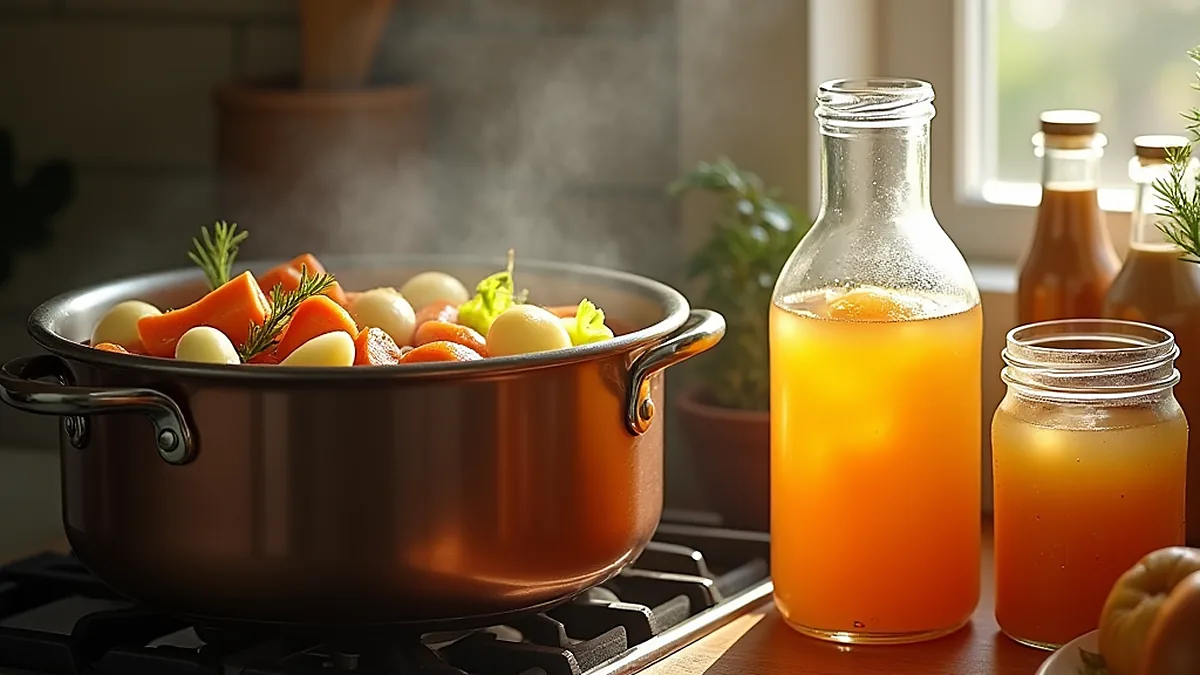
Hot mulled cider, with or without alcohol
Apple juice, whole spices, an orange and 30 minutes over low heat: here is a hot cider everyone can drink at the réveillon. For adults, there is a variation made with Quebec cider, with one thing set straight: no, alcohol does not completely evaporate when heated.
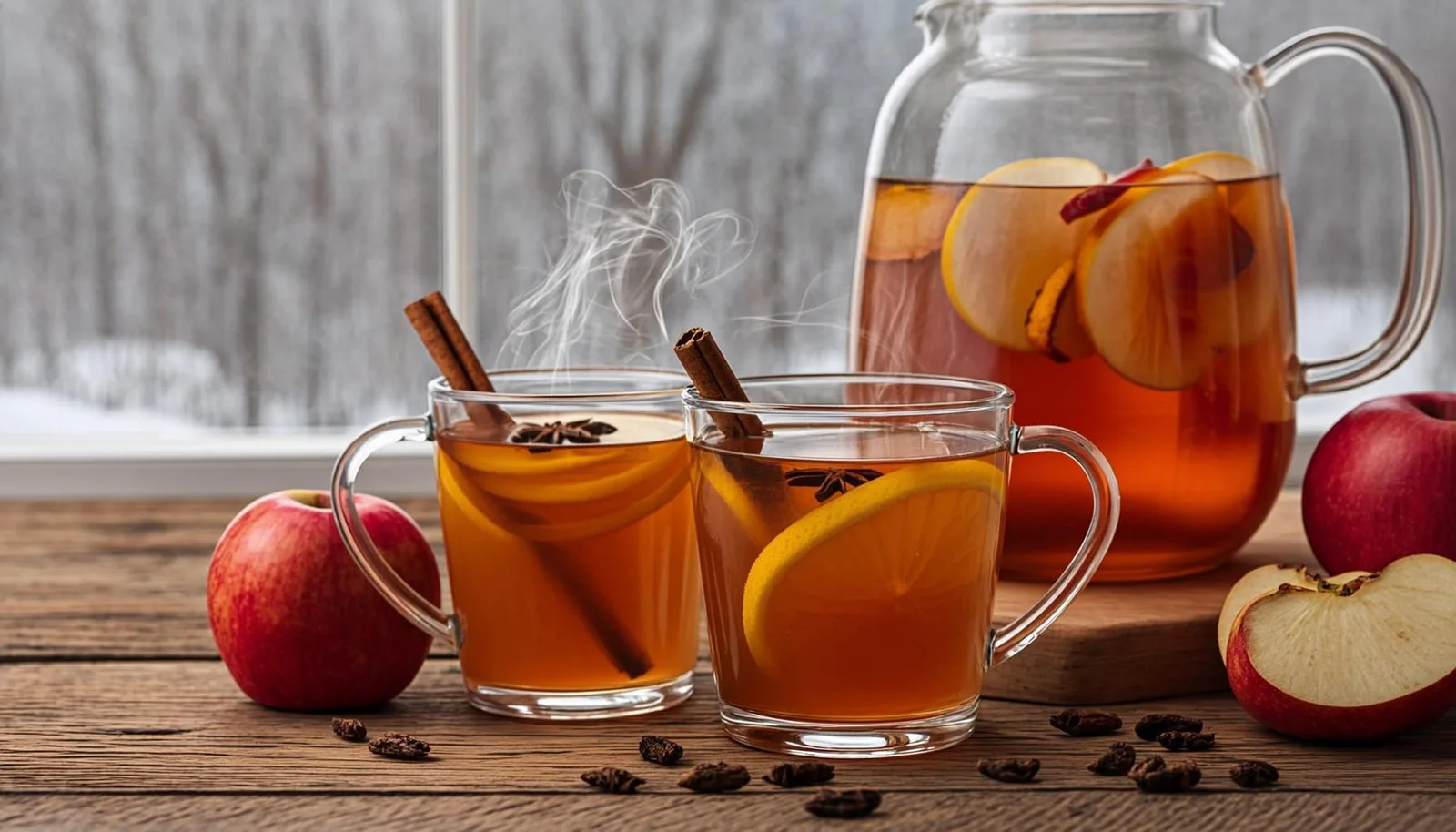
A pot of hot cider simmering on the stove, and the whole house smells of cinnamon and orange. It is the perfect welcome drink for the holidays: it takes 10 minutes to prepare, it stays warm all evening and, in its basic version, everyone can drink it, from the kids to the grandparents. All you need is apple juice, whole spices, an orange and half an hour over low heat.
One clarification before you take out the pot: our basic version contains no alcohol. In English, "hot apple cider" usually means a non-alcoholic drink, and that is the drink we are making here, with apple juice. The variation made with Quebec cider, for adults who want it, is explained further down. This drink has its place in our traditional Quebec réveillon menu, dish by dish.
- Prep
- 10 min
- Cook
- 40 min
- Servings
- 8
- Season
- Holiday season
- Rating
- Not rated yet
Ingredients
- 2 L (8 cups) pure, pasteurized apple juice
- 1 orange (or 2 clementines), thinly sliced
- 3 cinnamon sticks
- 8 whole cloves
- 6 whole allspice berries
- 2 star anise, optional
- 30 to 60 ml (2 to 4 tbsp) maple syrup, optional
Variation with alcohol (adults only)
- Quebec cider, to replace all or part of the juice, in a separate pot
Directions
- Prepare. Wash the orange and cut it into thin slices. To remove the spices in one go, tie them in a square of cheesecloth or in a coffee filter tied with string.
- Heat. In a large pot, combine the apple juice, orange and spices. Heat over medium-high heat until the juice steams.
- Infuse. Turn the heat down to the lowest setting and simmer gently for 30 minutes.
- Taste. Remove the orange and spices with a slotted spoon. Taste, then add maple syrup only if the cider needs it.
- Serve. Pour into mugs, with a fresh orange slice or a cinnamon stick. For a buffet, keep the cider warm in a slow cooker set to low.
- Vary. For adults, make a second, clearly labelled pot, replacing all or part of the juice with Quebec cider, with the same spices, over low heat. Always keep the alcohol-free version close at hand.
- Store. Let leftovers cool, then refrigerate them within 2 hours in a closed jar. Drink them within 2 or 3 days.
Tried this recipe? Rate it
Be the first to rate it.
Cider or apple juice? The word that changes everything
In Quebec, the French word "cidre" refers to an alcoholic drink. The Grand dictionnaire terminologique of the Office québécois de la langue française (OQLF) defines it as an alcoholic beverage obtained by fermenting apple juice, and Quebec's cider regulation sets its alcohol content between 1.5% and 15% by volume. The common belief that "cidre" and "jus de pomme" (apple juice) mean the same thing in Quebec is therefore false. The confusion comes from English: the OQLF notes that English kept the term "apple cider" for a non-alcoholic drink made from apple juice. According to the OQLF, that is probably where the "cidre de pomme" sometimes seen in French comes from. So if you shop in French, look for "jus de pomme" for the basic version.
On the juice side, one detail matters for safety. At the orchard, at a roadside stand or at the market, you will often find freshly pressed juice. According to Health Canada, "fresh-squeezed" usually means the juice is unpasteurized, and unpasteurized juice can contain bacteria such as E. coli or Salmonella. Another common belief to forget: keeping it in the fridge or freezing it does not make it safe, because pasteurization is the only process that kills these bacteria. Health Canada therefore recommends that children, older adults, pregnant women and people with weakened immune systems drink only pasteurized juice. The good news: most juice sold in refrigerated display cases and all shelf-stable juice, in cans, bottles or boxes, is pasteurized.
The Quebec cider variation, and how much alcohol remains
For an adult version, replace all or part of the juice with Quebec cider. The Producteurs de cidre du Québec describe classic cider, often made with apples such as McIntosh or Cortland, as light and low in tannins most of the time, either still or sparkling. Make this variation in a separate, clearly labelled pot, and keep the alcohol-free version for children, pregnant people and anyone who will be driving. Health Canada points out that during pregnancy, no amount of alcohol, of any type, is considered safe.
And forget the idea that alcohol completely evaporates when heated: it is false. The nutrient retention factor table of the United States Department of Agriculture (USDA) shows that alcohol stirred into a hot liquid keeps 85% of its alcohol. Simmered for 15 minutes, 40% remains; 30 minutes, 35%; one hour, 25%; two hours, 10%. Even after two and a half hours of cooking, 5% remains. An alcoholic cider simmered for half an hour therefore keeps about a third of its alcohol: it is still an alcoholic drink, and should be served as one.
Keeping it warm, storing it and wasting nothing
There is no need to boil it. The University of Maine simply heats the juice until it steams, then lets it simmer for 30 minutes over low heat before removing the orange and cinnamon. For a party, Mississippi State University suggests keeping the cider warm in a slow cooker set to low. Whole spices are the heart of the recipe: to choose them well and store them, see our guide to holiday spices. Oregon State University Extension points out that spices sold in bulk may cost less and let you buy just the amount you need; our tips on buying in bulk will help.
Taste before sweetening. The University of Maine and Oregon recipes add no sugar to the juice, and the Mississippi recipe leaves it up to you, from none at all to one cup of brown sugar for almost 4 litres. A drizzle of maple syrup is often enough; our guide to replacing sugar with maple syrup explains how to measure it. Find it too sweet? The Oregon recipe stretches the juice with water: two parts juice to one part water.
Any left over? Let it cool, then store it in the fridge in a closed jar. Health Canada says to throw out any cooked food left at room temperature for more than two hours, to eat leftovers within two or three days, or to freeze them for later. And if you have made pies or applesauce, keep the apple peels and cores: they turn into a delicious homemade apple cider vinegar. To round out the drinks table, our homemade cooked eggnog can be made the day before, and ginger molasses cookies go very well with a cup of hot cider.
Free gift: get The Quebec Recipe Advent Calendar, 24 recipes ready in 30 minutes or less with local ingredients, one a day until Christmas Eve. The same page gathers all our holiday recipes and guides.
Sources
- Cidre (terminology record for "cider"; in French), Grand dictionnaire terminologique, Office québécois de la langue française, 2018.
- Regulation respecting cider and other apple-based alcoholic beverages (chapter S-13, r. 4), LégisQuébec, Government of Quebec.
- Types de cidre (types of Quebec cider; in French), Les Producteurs de cidre du Québec.
- USDA Table of Nutrient Retention Factors, Release 6, Nutrient Data Laboratory, USDA Agricultural Research Service, 2007.
- Potential risks of drinking unpasteurized juice and cider, Health Canada, 2025.
- Food safety tips for leftovers, Health Canada, 2025.
- Health risks of alcohol, Health Canada, 2025.
- Spiced Hot Apple Cider, University of Maine Cooperative Extension, 2023.
- The Food Factor: How to Make Spiced Cider, Natasha Haynes, Mississippi State University Extension.
- Hot Apple Orange Cider (Food Hero), Oregon State University Extension Service, 2020 (revised in 2025).
Frequently asked questions
Does hot mulled cider contain alcohol?
Not our basic version, which is made with apple juice. In Quebec, the French word "cidre" refers to an alcoholic beverage, according to the Office québécois de la langue française. The variation made with Quebec cider does contain alcohol, even once heated.
Does the alcohol evaporate when you heat the cider?
Not completely. According to the USDA retention table, alcohol stirred into a hot liquid keeps 85% of its alcohol. After 30 minutes of simmering, 35% remains, and 5% is still there after two and a half hours.
Can I use unpasteurized apple juice from the orchard?
Not if you are hosting children, older adults, pregnant women or people with weakened immune systems: Health Canada recommends they drink only pasteurized juice. Keeping it in the fridge or freezing it does not make it safe.
Can I make it ahead?
Yes. Let it cool, put it in the fridge in a closed jar and drink it within two or three days, as Health Canada recommends for leftovers. Reheat it in a saucepan or in the slow cooker when it is time to serve.
Do I really need whole spices?
That is what the recipes we consulted call for. According to Mississippi State University, whole spices are strong and a little goes a long way. It suggests tying them in cheesecloth or in a coffee filter tied with string, so you can lift them out in one go.