Homemade eggnog, cooked to avoid Salmonella
Traditional eggnog is made with raw eggs, and that is where Salmonella can hide. Cooked gently like a custard, to 74°C, it keeps all its velvety texture without the risk of raw eggs. The basic version is alcohol-free.
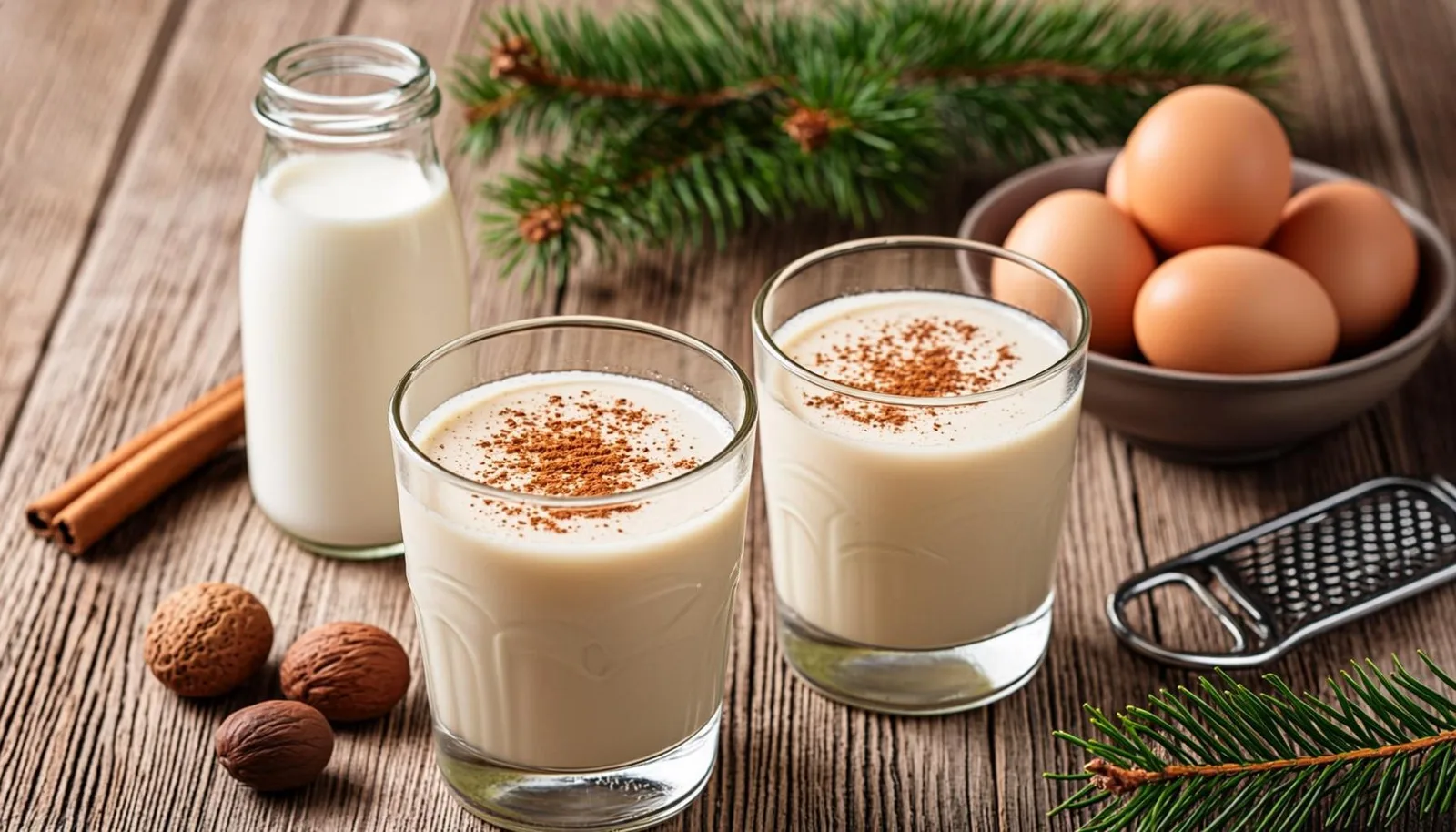
Creamy, sweet, scented with nutmeg: eggnog is the ultimate holiday drink. The problem is that many old recipes make it with raw eggs. The solution is simple and gives an even silkier result: gently cook the eggs with the milk, like a custard, to a temperature that eliminates Salmonella, then chill quickly and add the cold cream.
Our basic version is alcohol-free, so everyone can enjoy it. It is made the day before and has its place in our traditional Quebec réveillon menu, dish by dish.
- Prep
- 15 min
- Cook
- 15 min
- Servings
- 6
- Season
- Holiday season
- Rating
- Not rated yet
Ingredients
- 4 large eggs
- 75 ml (1/3 cup) sugar
- 500 ml (2 cups) 3.25% milk
- 250 ml (1 cup) 15% cream (or 35%, for a richer eggnog), well chilled
- 5 ml (1 tsp) pure vanilla extract
- 1 ml (1/4 tsp) freshly grated nutmeg, plus more for serving
Maple version
- 75 to 125 ml (1/3 to 1/2 cup) maple syrup, instead of the sugar
Variation with alcohol (adults only)
- 15 ml (1 tbsp) rum or brandy per serving, added to the glass
Directions
- Prepare. Fill a large bowl with cold water and ice cubes. Keep a fine sieve, a clean bowl that fits in the ice bath and a kitchen thermometer close at hand.
- Whisk. In a heavy-bottomed saucepan, whisk the eggs and sugar until smooth. Whisk in the milk.
- Cook. Heat over low heat, stirring constantly with a spatula and scraping the bottom well, for about 15 minutes, without letting it boil. Start checking the temperature after 10 minutes.
- Check. Remove the pan from the heat as soon as the thermometer reads 74°C (165°F) in the centre of the mixture. The eggnog then coats a metal spoon, and a line drawn with your finger stays clean.
- Chill. Immediately strain the mixture through the fine sieve into the bowl set in the ice bath. Add the cold cream, vanilla and nutmeg, then stir for a few minutes to release the heat.
- Refrigerate. Pour into a clean jar, close it and refrigerate for several hours, ideally overnight.
- Serve. Stir, pour into small glasses and grate a little nutmeg on top. For the adult version, add the alcohol to the glass at serving time. Do not leave the eggnog at room temperature for more than 2 hours.
- Store. Put leftovers back in the fridge right away and finish them within 2 or 3 days. Do not freeze the eggnog.
Tried this recipe? Rate it
Be the first to rate it.
Why cook eggnog, and to what temperature
First common belief to forget: a clean, fresh, properly graded egg cannot contain Salmonella. It is false. In Canada, Canada A eggs are washed and sanitized, which removes dirt and bacteria on the shell, according to the Canadian Food Inspection Agency. But Health Canada points out that Salmonella can sometimes get inside the egg, or already be inside when it is laid, and that an egg can be contaminated even if it looks clean. The risk is greater for pregnant people, children 5 years old and under, people 60 and over and people with weakened immune systems, which are exactly the guests we welcome at the réveillon.
The good news is that heat solves the problem. For homemade eggnog, Health Canada says to heat the egg-and-milk mixture to at least 71°C (160°F), and its general rule for eggs and egg-based dishes is 74°C (165°F). The USDA also aims for 71°C, and Iowa State University warns that if you go much higher, the eggs are likely to curdle. Our recipe aims for 74°C, which covers both benchmarks, with very low heat and a spatula that never stops moving. If small lumps appear, a pass through a fine sieve or the blender takes care of it. The spoon test is a good guide, since the cooked mixture coats a metal spoon, but only a thermometer confirms the temperature. The maple recipe from the Producteurs de lait du Québec, for example, relies on the spoon: add a thermometer to it.
Alcohol and pasteurized eggs: what really protects you
Second common belief: alcohol makes raw-egg eggnog safe. It is false for eggnog you drink the same day. Iowa State University explains that alcohol slows the growth of bacteria, but in the amounts used in recipes, it is not enough to kill them. In the experiment that is often cited, carried out by microbiologists at Rockefeller University, it was after three weeks in the cold that the alcoholic eggnog had become sterile. Neither Health Canada nor the USDA recognizes alcohol as a method: they say to cook the mixture or to use pasteurized eggs. If you want an adult version, add the alcohol to the glass at serving time, and keep the pitcher alcohol-free for children and pregnant people: according to Health Canada, no amount of alcohol is considered safe during pregnancy.
What about pasteurized eggs? Health Canada recommends pasteurized egg products instead of raw eggs in dishes that are not heated, such as eggnog. The USDA notes that pasteurization destroys Salmonella without cooking the eggs, but that these products are still best used in a cooked recipe, especially for people at higher risk. In the United States, Iowa State University says pasteurized eggs are found next to regular eggs; we found no official source confirming that pasteurized in-shell eggs are commonly sold in Quebec. Check for the word "pasteurized" on the package. The same caution applies to recipes that fold in raw beaten egg whites: Iowa State recommends pasteurized whites or, more simply, whipped cream added at serving time.
Chilling, storing and wasting nothing
Once cooked, eggnog must cool quickly. The Quebec government recommends chilling cooked food to 4°C or lower as soon as possible, by placing the container in an ice water bath and stirring. At the buffet, do not leave it out for more than two hours at room temperature: Health Canada applies this limit to raw or cooked eggs. To keep the bowl cold, the American Egg Board suggests setting it in crushed ice. Our article on the 2-hour rule at the holiday buffet explains how to organize it.
Third common belief: homemade eggnog freezes well and keeps for the whole holiday season. False as well. The USDA gives 2 to 4 days in the fridge for homemade eggnog and advises against freezing it; Health Canada recommends eating leftovers within two or three days. So make the amount you need, the day before, in a clean Mason jar: our tips on reusing glass jars apply. Any left over? The American Egg Board uses it in French toast or pancake batter, cooked through. Our recipe uses whole eggs, so no egg whites are left over; if you follow a recipe made with yolks, the USDA says raw egg whites keep 2 to 4 days in the fridge and 12 months in the freezer. For other dishes, see our guide to holiday leftovers in the fridge and freezer.
On the local side, eggs produced in Quebec and sold in grocery stores carry a traceability code starting with QC on each shell, according to the Fédération des producteurs d'œufs du Québec. To choose and store nutmeg well, see our guide to holiday spices; for the maple version, our guide to replacing sugar with maple syrup. For guests who prefer a hot drink, also serve our hot mulled cider, with or without alcohol.
Free gift: get The Quebec Recipe Advent Calendar, 24 recipes ready in 30 minutes or less with local ingredients, one a day until Christmas Eve. The same page gathers all our holiday recipes and guides.
Sources
- Egg safety, Health Canada, 2024.
- Holiday food safety, Health Canada, 2017.
- Safer food choices for people at greater risk of food poisoning, Health Canada, 2026.
- Food safety tips for leftovers, Health Canada, 2025.
- Health risks of alcohol, Health Canada, 2025.
- Egg grading, Canadian Food Inspection Agency, 2019.
- Chilling, reheating and thawing food, Government of Quebec, 2026.
- Shell Eggs from Farm to Table, Food Safety and Inspection Service, USDA, 2024.
- Egg Products and Food Safety, Food Safety and Inspection Service, USDA.
- Homemade Eggnog Made Safe, Marlene Geiger, AnswerLine, Iowa State University Extension and Outreach, 2022.
- Tout sur le lait de poule (all about eggnog, with a maple recipe; in French), Les Producteurs de lait du Québec.
- Classic Cooked Eggnog, American Egg Board.
- Comment m'assurer que j'achète bien des œufs produits au Québec? (how to make sure your eggs come from Quebec; in French), Fédération des producteurs d'œufs du Québec, 2026.
Frequently asked questions
What temperature should eggnog be cooked to?
Health Canada gives two benchmarks: at least 71°C (160°F) for the egg-and-milk mixture of homemade eggnog, and 74°C (165°F) for egg-based dishes in general. The USDA and Iowa State University also aim for 71°C. Our recipe aims for 74°C, which covers both, measured with a thermometer, over low heat and stirring constantly.
Does alcohol kill Salmonella in raw-egg eggnog?
No, not in eggnog you drink the same day. According to Iowa State University, alcohol slows the growth of bacteria but is not enough to kill them. Neither Health Canada nor the USDA recognizes it as a method: cook the mixture or use pasteurized egg products.
Can I make no-cook eggnog with pasteurized eggs?
Yes, that is what Health Canada recommends for dishes that are not heated. The USDA adds that these products are still best used in a cooked recipe, especially for people at higher risk. An opened carton of liquid eggs should be used within 3 days and should not be frozen.
How long does homemade eggnog keep?
From 2 to 4 days in the fridge according to the USDA, which advises against freezing it. Health Canada recommends eating leftovers within two or three days: aim for the shorter time.
Can Canadian eggs contain Salmonella?
Yes. Canada A eggs are washed and sanitized, which removes bacteria on the shell. But Health Canada points out that Salmonella can sometimes be inside the egg when it is laid, even when the egg looks clean.