Highbush cranberry (pimbina): a sweet and sour sauce for game
Tart, bright red and a little wild, highbush cranberries make a sweet and sour sauce that stands up to game. You mash the berries, remove their flat seeds, then cook the purée with a shallot, cider vinegar and maple syrup. In under an hour, it is ready for venison, duck, roast pork or tourtière.
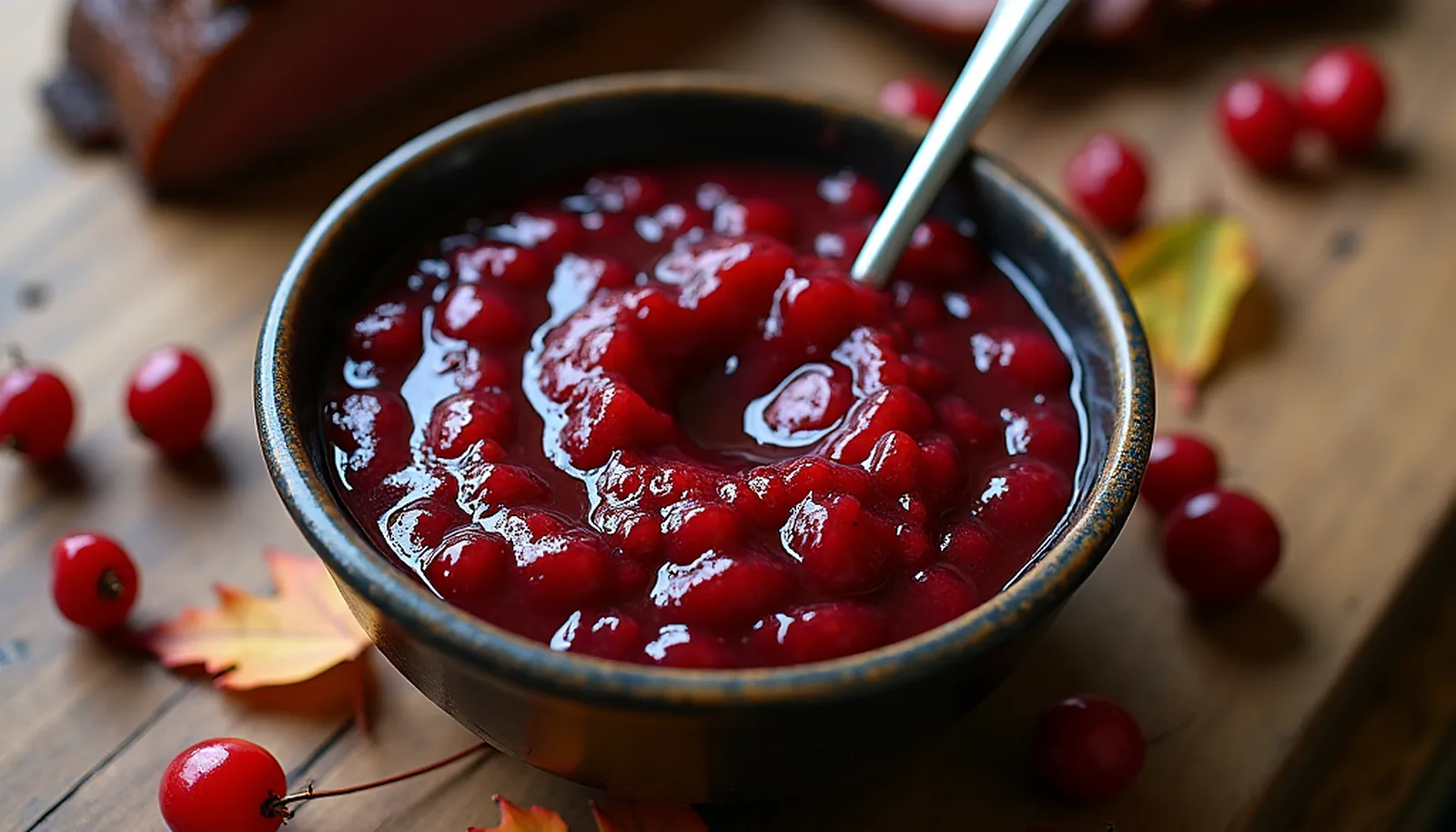
Pimbina, as highbush cranberry is called in Quebec, is the fruit of the American cranberrybush: clusters of small, bright red, very tart berries that often cling to the branches all winter. Cooked, freed of its flat seed and softened with maple syrup, it makes a deep red sweet and sour sauce that does for game what cranberry sauce does for turkey. The vinegar, explains American forager and chef Alan Bergo, gives it the bite it needs to stand up to fatty meat.
The method: mash the berries cold, strain out the seeds and skins, then cook the purée. Before you pick, make sure you can identify the shrub: it is all in our guide mountain ash and highbush cranberry (pimbina): fruit to forage after the frost, always cooked.
- Prep
- 30 min
- Cook
- 25 min
- Servings
- 8
- Season
- October and November
- Rating
- Not rated yet
Ingredients
Highbush cranberry purée
- 1 litre (4 cups) stemmed highbush cranberries (pimbina), fresh or frozen
- 250 ml (1 cup) water
Sauce
- 15 ml (1 tbsp) butter
- 1 French shallot, finely chopped
- 125 ml (1/2 cup) maple syrup
- 60 ml (1/4 cup) cider vinegar
- Zest of 1/2 orange, removed in strips
- 1 cinnamon stick
- 1 ml (1/4 tsp) ground allspice
- 1 pinch ground cloves
- 5 ml (1 tsp) grated fresh ginger (optional)
- 2 ml (1/2 tsp) salt
- Freshly ground pepper
- 60 ml (1/4 cup) unsweetened applesauce, as needed
Directions
- Stem. Remove the stems and leaves, discard any mouldy or shrivelled berries, then rinse the berries in cold water. If they are frozen, thaw them in the fridge first.
- Mash. In a large bowl, mash the berries with the water using a potato masher until they have all burst. Do not use a blender: crushed seeds make the sauce bitter.
- Strain the purée. Pass everything through a food mill with a fine disc, or press it through a fine-mesh sieve with the back of a ladle. Discard the seeds and skins. You should get about 500 ml (2 cups) of purée, depending on how juicy the berries are.
- Soften. In a medium stainless steel saucepan, melt the butter over medium heat and cook the shallot for 3 to 4 minutes, until tender.
- Simmer. Add the purée, maple syrup, vinegar, orange zest, cinnamon, allspice, cloves, ginger and salt. Bring to a boil, then simmer uncovered for 15 to 20 minutes, stirring often, until the sauce coats the back of a spoon. Turn on the range hood: the smell of cooking highbush cranberries is normal.
- Adjust. Remove the zest and the cinnamon stick, then taste. Add a little maple syrup if the sauce is too tart, a splash of vinegar if it is too sweet, and pepper. Too runny? Add the applesauce and simmer for 2 minutes. Too thick? Thin it with a little water.
- Serve or refrigerate. Serve the sauce warm with game, pork, poultry or tourtière. Otherwise, let it cool, pour it into a clean jar and refrigerate it within 2 hours.
Tried this recipe? Rate it
Be the first to rate it.
Picking, seeds and smell: what the sources say
The right shrub. According to the Office québécois de la langue française, the word pimbina, of Algonquian origin, refers to two viburnums: the American cranberrybush (Viburnum trilobum, also called Viburnum opulus var. americanum), mainly in western and central Quebec, and the squashberry (Viburnum edule), in the east and north. The American cranberrybush has opposite, three-lobed leaves that look like maple leaves, with glands at the top of the leaf stalk, and clusters of bright red berries 8 to 10 mm across, each holding a single flat seed, according to the USDA and Natural Resources Canada. Its European cousin, the guelder rose (Viburnum opulus), has rather bitter fruit according to the USDA, and Alan Bergo notes that nurseries often sell it under the name of American cranberrybush: see highbush cranberry or guelder rose: how to tell them apart. Toxic look-alikes, such as bittersweet nightshade (Solanum dulcamara) and red baneberry (Actaea rubra), which the Quebec Poison Control Centre lists as toxic plants, are covered in the small red fall berries not to confuse with rose hips. When in doubt, do not pick.
Before or after the frost? The USDA advises picking the berries slightly before they are fully ripe, while still tart; after a hard frost, they are softer and more palatable, but give off a musty smell when cooked. Manitoba Agriculture adds that after a frost, they contain less pectin: a problem for jelly, but not for this sauce, which does not need to set. Pick away from roads, ask permission on private land and leave some for the birds, which, according to the USDA, generally only eat them after they have frozen and thawed several times. More seasonal ideas in our foraging calendar.
The seeds. Sources disagree on when to remove them. The University of Alaska Fairbanks, whose guide covers squashberry (Viburnum edule), the other pimbina, mashes the berries and simmers them for 10 minutes before pressing them through a sieve. Alan Bergo, on the other hand, removes the seeds before any cooking: when heated, they make the juice noticeably bitter. Grower Dale Secher, on the Uncommon Fruit website hosted by the University of Wisconsin–Madison, also places much of the fruit's astringency in the seeds. We followed these last two: mash cold, strain, then cook.
Always cooked. Opinions differ on the raw fruit (see the FAQ); at Écodici, highbush cranberries are always eaten cooked and strained. If someone has swallowed berries from a shrub that was not properly identified, call the Quebec Poison Control Centre at 1 800 463-5060.
The smell. Manitoba Agriculture compares the smell of the fruit to dirty feet. That is normal, it says: the smell disappears during cooking, and a bit of orange or lemon peel helps get rid of it. Hence the zest in the recipe, and the range hood turned on.
What to serve it with
Serve it warm, on the side, or pour a few spoonfuls into the hot pan after cooking the meat, for a quick pan sauce.
- Game: venison, moose or elk tenderloin or roast, wild duck or goose, partridge.
- Pork: pork loin roast, tenderloin or chops, a pairing Alan Bergo suggests.
- Poultry: turkey, guinea fowl, farm-raised duck. The University of Alaska serves its spiced version with poultry and meat.
- Tourtière: instead of fruit ketchup, with our traditional tourtière (Quebec meat pie).
- Baked beans: the University of Alaska suggests adding some to baked beans.
Variations. For a smooth sauce, blend it once cooked. For a ketchup-style sauce, closer to the University of Alaska's version, replace the shallot with an onion and add more vinegar and syrup, to taste: the University of Alaska uses about two and a half times as much vinegar and sugar per cup of berries. For a rounder sauce, replace half the water with dry white wine, as in Alan Bergo's recipe, or with apple cider.
Storage
In the fridge. Let the sauce cool, then refrigerate it within 2 hours, in a clean, closed jar, at 4°C or lower. Health Canada recommends eating refrigerated leftovers ideally within 2 to 4 days: it is a general rule, for all leftovers. For a homemade cranberry relish, closer to this sauce, the University of Illinois Extension allows 5 to 7 days, and Alan Bergo keeps his for a week; we stick with the most cautious rule.
In the freezer. Freeze the sauce in small portions, in rigid containers, leaving about 1.25 cm (1/2 inch) of headspace, as the University of Alaska recommends for the purée. None of the sources consulted gives a storage time for this sauce. For fruit frozen at -18°C, the National Center for Home Food Preservation (NCHFP) gives 8 to 12 months for fruits and vegetables, the shorter time for best quality, and the University of Alaska Fairbanks up to two years for highbush cranberries; beyond that, it should still be safe but loses quality. Thaw it in the fridge.
No jars in the pantry. This sauce has not been tested for canning. Health Canada says to use only current, tested home canning recipes, without changing the quantities: keep it in the fridge or the freezer.
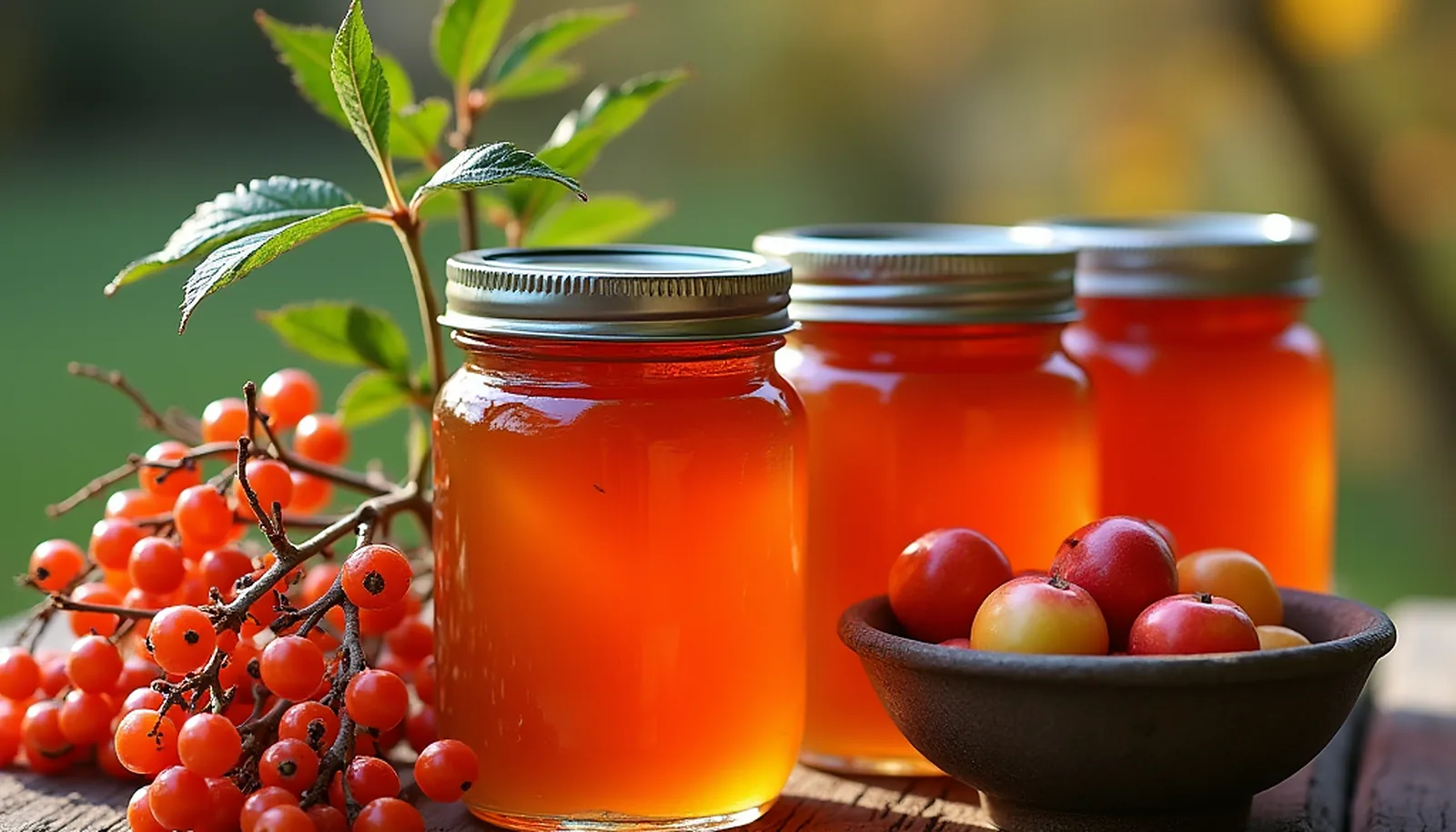
Still have some picking time? The other fruit of the post-frost season, mountain ash, makes a lovely mountain ash and crabapple jelly.
Sources
- Highbush Cranberries (FNH-00112): purée, spiced sauce, freezing, Sarah R-P. Lewis, Cooperative Extension Service, University of Alaska Fairbanks, 2022.
- Highbush Cranberry Sauce, Alan Bergo, Forager Chef, 2020.
- Highbush Cranberry & Guelder Rose (seeds, taste, nursery mix-ups), Alan Bergo, Forager Chef, 2025.
- Plant Guide: Highbush Cranberry, Viburnum opulus var. americanum, Guy Nesom, USDA NRCS, 2001.
- Cranberry viburnum (fact sheet: leaves, petiole glands, fruit), Natural Resources Canada.
- Highbush Cranberry Production in Manitoba (harvest, pectin, smell), Manitoba Agriculture, Government of Manitoba.
- Viorne trilobée (Grand dictionnaire terminologique entry; in French), Office québécois de la langue française, 2003.
- American Cranberrybush (F2148), Joseph Zeleznik, NDSU Extension, North Dakota State University, 2024.
- American Highbush Cranberry (Viburnum trilobum), Dale Secher, Uncommon Fruit, Center for Integrated Agricultural Systems, University of Wisconsin–Madison.
- Plantes toxiques chez nous? Recommandations (toxic plants leaflet; in French), Quebec Poison Control Centre, 2017.
- Plantes: list of toxic plants (brochure; in French), Poison Centre, Belgium.
- Viorne obier: plante à baies toxique (guelder rose; in French), Centre antipoison de Lille (Lille Poison Centre), CHU de Lille, 2021.
- Viburnum opulus L.: A Review of Phytochemistry and Biological Effects, D. Kajszczak, M. Zakłos-Szyda and A. Podsędek, Nutrients, 2020.
- Food safety and you, Health Canada, 2026.
- Using Leftovers (leftovers storage chart), University of Illinois Extension.
- Home canning safety, Health Canada, 2024.
- How Long Can I Store Frozen Foods?, National Center for Home Food Preservation, University of Georgia.
- Contact us (24/7 emergency line), Quebec Poison Control Centre.
Frequently asked questions
Can you eat highbush cranberries raw?
Sources disagree. North Dakota State University says the berries can be eaten straight off the shrub, grower Dale Secher finds them too tart and astringent to eat fresh, and the Belgian Poison Centre lists viburnums among the plants that are toxic if eaten, especially their berries, without naming a species or a level of severity; France's Lille Poison Centre considers them of low toxicity. To be safe, we always eat them cooked and strained. If someone has swallowed berries from a shrub that was not properly identified, call the Quebec Poison Control Centre at 1 800 463-5060.
My kitchen smells like dirty feet while the berries cook. Is that normal?
Yes. Manitoba Agriculture considers the smell normal and says it disappears during cooking, while the USDA reports a musty smell that develops when berries picked after a hard frost are cooked. A scientific review of the guelder rose, its cousin, attributes the smell of its fruit to volatile compounds with notes of old cheese and dirty socks. Orange zest helps. However, a sauce that is clearly bitter, not just tart, can come from crushed or heated seeds, or from guelder rose berries: check your method and your shrub.
Can I use frozen berries?
Yes. Thaw them in the fridge, as Health Canada recommends, then mash and strain them like fresh berries. The University of Alaska advises freezing them spread out on a baking sheet, then in bags, and gives them up to two years of good quality.
I do not have a food mill. How do I remove the seeds?
A fine-mesh sieve and the back of a ladle do the job, more slowly. Avoid the blender, which would crush the seeds. If the berries are hard to strain, you can do as the University of Alaska does: mash them, simmer them for 10 minutes in the water, then strain them. According to Alan Bergo, though, the sauce may turn out more bitter.
Can I can this sauce for the pantry?
No. It has not been tested for canning, and Health Canada says to use only current, tested home canning recipes, without changing the quantities. Keep it in the fridge, ideally for 2 to 4 days, or freeze it in portions.