Old-fashioned Quebec holiday doughnuts
Old-fashioned doughnuts start with a simple baking powder and nutmeg dough, rolled out, cut and fried. The challenge is not the recipe, it is the frying: here is the right temperature, what to do if the oil catches fire and how to get rid of used oil.
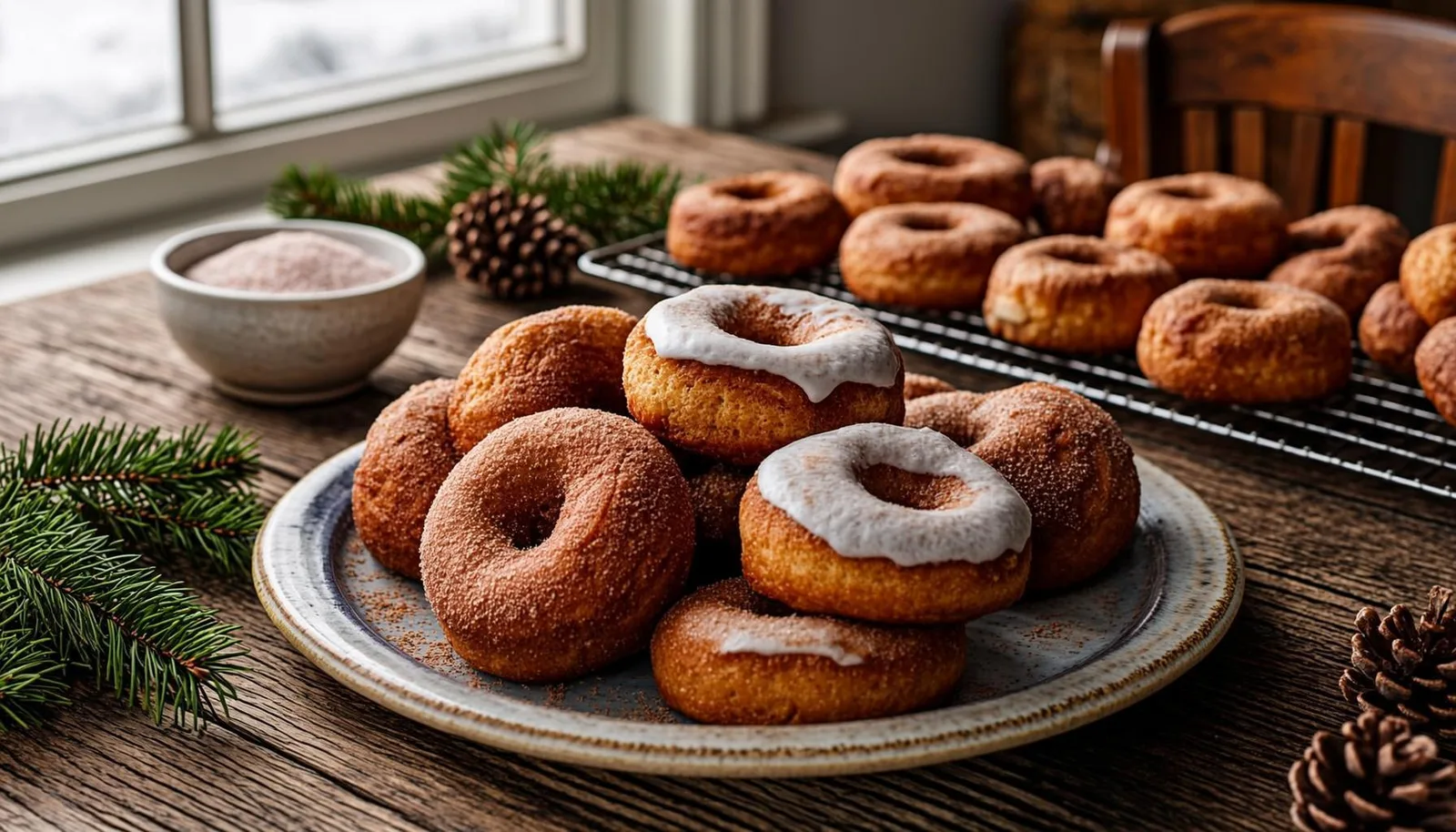
An old-fashioned doughnut starts with a very simple dough: eggs, sugar, milk, a little butter, flour, baking powder and a pinch of nutmeg. You roll it out, cut it with a cutter, fry it, then roll the still-warm doughnuts in sugar. No yeast and no long wait: the dough rises thanks to the baking powder.
The recipe is easy; it is the frying that needs attention. This version follows the Quebec government's guidelines for frying safely at home, and it can be made ahead. It rounds out the sweet side of our guide to traditional Quebec réveillon recipes. To choose and store your nutmeg, see our guide to holiday spices.
- Prep
- 30 min
- Cook
- 30 min
- Servings
- 18 to 24
- Season
- Holiday season
- Rating
- Not rated yet
Ingredients
Dough
- 2 large eggs
- 250 ml (1 cup) sugar
- 45 ml (3 tbsp) butter, melted and slightly cooled
- 250 ml (1 cup) milk
- 5 ml (1 tsp) vanilla
- 1.1 L (4 ½ cups) all-purpose flour, plus more for rolling
- 15 ml (1 tbsp) baking powder
- 2 ml (½ tsp) ground nutmeg
- 2 ml (½ tsp) salt
For frying
- About 2 L (8 cups) canola or soybean oil, depending on your fryer's capacity
Coating
- 125 ml (½ cup) sugar, or icing sugar
- 5 ml (1 tsp) ground cinnamon (optional)
Directions
- Whisk. In a large bowl, whisk the eggs and sugar until the mixture turns pale. Stir in the melted butter, milk and vanilla.
- Mix. In another bowl, combine the flour, baking powder, nutmeg and salt. Add them to the liquid mixture and stir just until you have a soft, even dough. Do not overwork it.
- Chill. Cover and refrigerate the dough for at least 1 hour, or overnight. Well chilled, it is less sticky and easier to roll out.
- Roll. On a well-floured work surface, roll out half the dough to about 1 cm (½ inch) thick. Keep the other half in the fridge.
- Cut. Cut out the doughnuts with a doughnut cutter of about 7.5 cm (3 inches), flouring it before each cut. Re-roll the scraps only once more and keep the holes: they get fried too.
- Heat. Heat the oil to 185°C (365°F) in a certified deep fryer with a thermostat, without going over the maximum fill line. Keep a lid within reach and never leave the fryer unattended.
- Fry. Gently lower 3 or 4 doughnuts at a time into the oil, without crowding. Fry for about 1 minute per side, turning them with a skimmer, until golden brown. If they brown too quickly, turn the thermostat down a little.
- Drain. Place the doughnuts on paper towels or brown paper. Let the oil come back up to 185°C before the next batch.
- Coat. Mix the sugar and cinnamon. Roll the still-warm doughnuts in the mixture, or dust them with icing sugar once cooled.
- Cool. Turn off the fryer and let the oil cool for about 2 hours before straining or emptying it. Never pour it down the sink.
Tried this recipe? Rate it
Be the first to rate it.
Frying at home: the right temperature, and never water on oil
The published recipes we consulted fry their doughnuts between 175 and 190°C (350 and 375°F), for about 1 to 1½ minutes per side. We aim for 185°C (365°F), frying 3 or 4 at a time, without crowding. Readers of one Yankee Magazine recipe found that their doughnuts browned too quickly: if that happens to you, lower the temperature a little.
When it comes to equipment, the Quebec government is clear: it recommends a CSA- or ULC-certified fryer with a thermostat, and it says never to use a cooking pot to fry. Two of the recipes we consulted nevertheless fry their doughnuts in a pot on the stove. Never leave the fryer unattended, a rule also given by the United States Department of Agriculture (USDA), and keep a lid within reach.
Common belief: "When the oil smokes, it is ready." False. Oil that smokes has reached its smoke point. The Quebec government says to lower the temperature when that happens; if the smoke continues, the oil should not be eaten, and you should never keep heating it. According to its figures, vegetable frying fat smokes from 175°C, sunflower oil at 210°C and soybean oil at 220°C. The USDA puts canola oil at around 435°F, or about 224°C. For frying at 185°C, canola or soybean oil therefore leaves a good margin, while vegetable shortening would smoke before getting there.
Common belief: "You put out an oil fire with water." False. It is the worst thing you can do: water makes the burning oil splatter and spreads the fire, warn the Quebec government and the USDA. If the oil catches fire, quickly place a properly sized lid on the container, turn off the elements, oven and range hood if possible, and never move the container. Call the fire department even if the fire seems to be out: according to the Quebec government, it may have spread into the range hood duct. If the fire grows, get out and dial 911. The USDA also advises keeping a kitchen fire extinguisher nearby.
After frying: reusing the oil, then getting rid of it without clogging the sink
Common belief: "Frying oil can be reused." True. The USDA advises straining it through cheesecloth or a sieve, then storing it in a sealed container, away from light, for up to 3 months; the fridge preserves its quality better. Throw it out as soon as it becomes cloudy, foams or smells bad. Before emptying or cleaning the fryer, let it cool for about 2 hours, again according to the USDA.
Common belief: "You can pour frying oil down the sink with hot water." False. With or without hot water, the USDA says never to pour oil down the sink: it congeals and causes backups. Instead, it suggests checking whether there is a drop-off point near you, since recovered oil can be turned into biodiesel or soap. In Montreal, vegetable oil is among the household hazardous waste accepted at ecocentres, and the city points out that this waste must never go into the sewer. Elsewhere, check your municipality's rules, for example with RECYC-QUÉBEC's Ça va où? tool. In the meantime, keep the cooled oil in a tightly closed container. For other year-end sorting puzzles, read our article After the holidays: what goes where?
Storing, freezing and varying the doughnuts
The Quebec government classifies bakery products as low-risk perishable foods. One of the recipes we consulted keeps its doughnuts well wrapped for about two days at room temperature and recommends freezing the rest. It is the best way to make a big batch without waste: freeze them plain, in a tightly sealed bag, on the day you make them. The USDA points out that frozen food stays safe indefinitely but loses moisture and flavour over time; for doughnuts, University of Missouri Extension recommends eating them within 3 to 4 weeks. Thaw them in the fridge or for a few seconds in the microwave, then roll them in sugar. Our make-ahead holiday dishes calendar helps you fit this batch in at the right time, and our article on holiday leftovers covers the rest of the fridge.
Variations. Add a little cinnamon to the nutmeg, as in Yankee's cider doughnuts, or flavour the dough with lemon zest, as in another of the recipes we consulted. That one even suggests serving the doughnuts dipped in maple syrup. One thing to avoid: tasting the raw dough. Health Canada points out that raw eggs can carry Salmonella and raw flour can carry E. coli bacteria. To fill the holiday cookie tin, also try our ginger molasses cookies or our chocolate maple yule log.
Free gift: get The Quebec Recipe Advent Calendar, 24 recipes ready in 30 minutes or less with local ingredients, one a day until Christmas Eve. The same page gathers all our holiday recipes and guides.
Sources
- Old-Fashioned Cake Doughnuts, King Arthur Baking.
- Mary's Doughnuts, Yankee Magazine (NewEngland.com), 2009.
- Vermont Apple Cider Doughnuts, Yankee Magazine (NewEngland.com), 2022.
- Protecting against fire hazards when cooking, Gouvernement du Québec, 2025.
- Deep Fat Frying and Food Safety, Food Safety and Inspection Service, USDA, 2024.
- Leftovers and Food Safety, Food Safety and Inspection Service, USDA, 2020.
- Résidus domestiques dangereux (household hazardous waste; in French), Ville de Montréal, 2026.
- Quoi faire avec chaque matière (what to do with each material; in French), RECYC-QUÉBEC.
- Durée de conservation (storage times; in French), Gouvernement du Québec, 2025.
- Holiday food safety, Health Canada, 2017.
- How to Freeze Home-Prepared Foods (GH1505), University of Missouri Extension, revised 2021.
Frequently asked questions
What temperature should doughnuts be fried at?
The published recipes we consulted range from 175 to 190°C (350 to 375°F). We aim for 185°C (365°F), in a fryer with a thermostat. If the doughnuts brown too quickly, lower the temperature a little.
Can I fry doughnuts in a pot?
The Quebec government says never to use a cooking pot to fry food and recommends a CSA- or ULC-certified fryer with a thermostat. Never leave the fryer unattended.
What should I do if the oil catches fire?
Never use water. Quickly place a properly sized lid on the container, turn off the elements, oven and range hood if possible, and do not move the container. Call the fire department even if the fire seems to be out, and get out and dial 911 if it spreads.
How many times can frying oil be reused?
The USDA does not give a specific number. Strain the cooled oil, keep it in a sealed container away from light for up to 3 months, ideally in the fridge, and throw it out as soon as it becomes cloudy, foams or smells bad.
Can doughnuts be frozen?
Yes. One of the recipes we consulted recommends freezing the doughnuts you will not eat within about two days. For the best quality, University of Missouri Extension recommends eating them within 3 to 4 weeks. They stay safe longer in the freezer, according to the USDA, but they dry out and lose flavour.